

Hello All. I hope this thread finds you all well. The videos and other material contain content that many may find offensive. I apologize in advance should any of this material do just that to anyone. Some vids are purely documentaries and others have a little drama mixed in for effect.
Body Shock: The Man Who Ate His Lover
If a movie can punch you in the soul, this one does, many times over. The true story that is the basis for this film is easily one of the most staggering news stories ever, and one watches this tale unfold with an almost surreal separation, not even being able to grasp the sickness it would take to be able to commit such acts
So this documentary is the story of Armin Meiwes, or as he so affectionately dubbed: The Rotenburg Cannibal, and his quest to find a man to eat. Also, how his quest ended successfully. Yeah, honestly, that really is the best summary you could read for this film.

Child Of Rage: A Six-Year-Old Victim Of Reactive Attachment Disorder Tells Her Story
Child of Rage: A Story of Abuse is a 1990 documentary produced by HBO that tells the story of Beth Thomas, a six-year-old girl who is a victim of Reactive Attachment Disorder (RAD) – an inability to give or receive affection caused by early childhood neglect and abuse.
Beth was severely sexually abused by her sadistic father, and her mother died when she was just a year old. In Child of Rage, Beth is interviewed by a therapist. As she explains her abuse in detail, her voice stays eerily calm and flat. Her tone remains the same when she describes abusing her brother, her adopted family's animals and killing the entire family in general. She shows no remorse for her thoughts or actions.
Does Beth overcome the disorder with the help of her therapist and caring adoptive parents? Check out this bone-chilling documentary in its entirety below, but beware – it's not for the faint of heart.
Capturing The Friedmans: Pedophilia Rips Apart A Family And Their Community
Capturing The Friedmans: Pedophilia rips apart a family and their community
Capturing The Friedmans (2003) tells the story of a seemingly normal middle class family from Great Neck, NY whose world was turned upside down when teacher and patriarch Arnold Friedman was caught sending and receiving child pornography in the mail in 1987.
While building a case against Friedman, investigators interviewed several children who took computer classes at the family home. Soon, Arnold and his youngest son, Jesse (then 19), were accused of multiple accounts of child molestation and sodomy.
Were the allegations true? Were the kids coached? Were their stories inconsistent? Capturing The Friedmans doesn't take a stand, but Arnold Friedman confessed before committed suicide in prison in 1995. Although he initially plead guilty, Jesse maintains his innocence to this day.
High On Crack Street: Lost Lives In Lowell
This film follows the lives of three crack addicts living and struggling in Lowell, MA. Shocking subject matter includes unwanted pregnancies, prostitution, and the motives behind why these people do what they do for their fix. It’s a humanistic look into a situation that most will never see – and there’s no happy ending. One of the primary subjects Brenda died within six months of filming, and the other two have done little to remedy their situations. While there are more shocking documentaries out there, this one is particularly alarming in that it shows just how destructive crack can be.
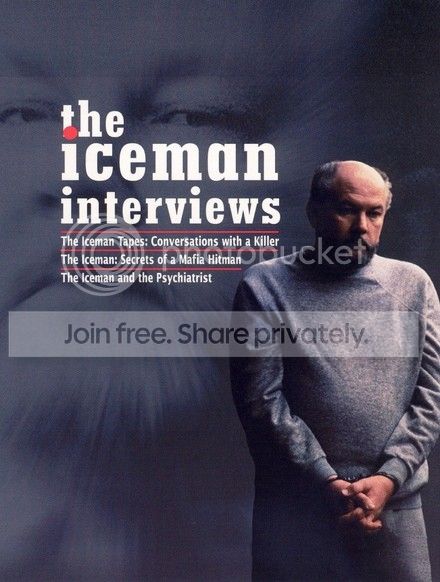
The Iceman Tapes
Richard ‘the Iceman’ Kuklinski was a mafia hit man and serial killer who was arrested in 1986. Kuklinski is believed to have begun killing men for the mob in the 1950s and he is interviewed by a psychiatrist and he attempts to explain why he did what he did, shedding light on his motivations, his past and his experiences. It’s a shocking and alarming insight into the mind of a cold-blooded killer. Sometimes chilling, sometimes callous, Kuklinski makes no apologies for his actions. There’s no remorse and the subject matter is rather cruel and stark at times, but the material offers us a frank look into the mind of a man who killed countless others.
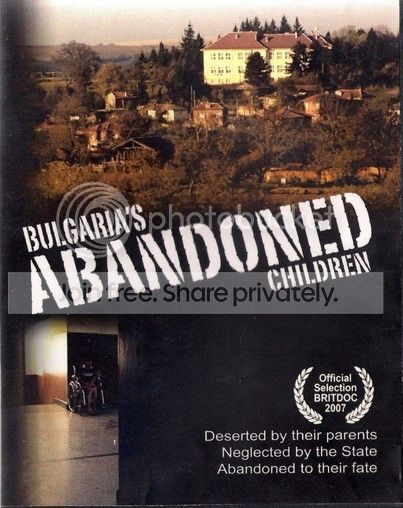
Bulgaria’s Abandoned Children
This documentary focuses on children in Bulgaria with disabilities, most of which are abandoned. The subject matter is shocking, and the government’s reaction to these children is both disturbing and enlightening. Unable to care for these children, the government dumps them in underfunded, poorly maintained and mismanaged orphanages. The lives of those who are not disabled are equally tormented, and many are unfairly lumped into situations from which there is no escape. The public awareness from this documentary has had monumentally positive effects, but the lives of these children are tragic and the government’s ignorance is just overwhelming.
Interview With A Cannibal
This disturbing documentary is a fascinating conversation with an admitted cannibal named Issei Sagawa. Deemed clinically insane, Sagawa was admitted to a clinical institution for his crimes without being charged, as the French court system dictated. Sagawa was later released to Japanese custody, but they found him to be sane. When France wouldn’t release his documents they had no recourse but to release him for his crimes – and now he’s something of a minor celebrity in Japan. In 1981 Sagawa murdered and cannibalized a Dutch woman while living in Paris. This TV documentary explores all the horrible aspects of Sagawa’s mentality and the reasons behind his actions as he openly talks about what it is to be him.
Burden Of Dreams
While the films of Werner Herzog might seem to be a natural fit for a list like this, even his most dire and extreme documentary work is imbued with a certain stripe of playfulness that amplifies their wonder at the expense of their blunt force (save for perhaps “Lessons of Darkness,” which observed the aftermath of the first Kuwaiti War from a God’s-eye view). Of course, documentaries about Werner Herzog are a different story altogether. Les Blank’s “Burden of Dreams” is the most insane making-of documentary that any feature film has ever inspired (it makes “Heart of Darkness” look like a studio EPK). The production of Herzog’s “Fitzcarraldo” was one of the most notoriously troubled in movie history, spanning four brutal years in the jungles of Peru, where Mick Jagger was recast, one of the locales offered to murder lead actor Klaus Kinski, and the physical feats involved in shooting began to become more impressively demented than those of the story the film was written to tell.
How To Die In Oregon
Peter Richardson’s right to life doc goes from 0 to “weeping uncontrollably” faster than any other movie ever made. That may sound like hyperbole, but it’s hard to compete with a film that opens by observing a terminally ill cancer patient taking a lethal dose of Secanol in real-time. The man’s death, which transpires before our eyes with grace and dignity, appropriately sets the stage for the film to come, which engages with the fight to legalize physician-assisted suicide in the titular stage. Essential viewing that is nevertheless extremely difficult to watch, “How to Die in Oregon” absolutely obliterates the conventional definition of a “happy ending,” giving a face to one of the preeminent issues our time.
Aokigahara / Suicide Forest
Lying at the base of Mount Fuji, Aokigahara Forest has a rather unsettling reputation as a suicide hotspot . This documentary follows a geologist as he performs a walk through of the forest, looking for both those who have, and may soon, succumb to depression. Spotting an abandoned car in the parking lot on the way in, passing signs dissuading suicide, and taking an ill trodden path into the bewildering forest, it isn’t long before we’re shown our first images of forsaken souls—all of whom hang from Aokigahara’s thick ligatures. From this point onwards, it only gets worse. I encourage all with a strong heart to watch this bleak, but brief, portrayal of the utter desperation in full.
Atomic Wounds
For all the propaganda and scaremongering that occurred during the Cold War, it is difficult for us to imagine the human effects of nuclear weapons—besides the massive loss of life, of course. We tend to imagine nukes as pulverizing all whom stand in it’s way, but a nuclear weapon doesn’t simply destroy, it poisons, it burns, it corrupts. Those unlucky enough not to be obliterated are left to suffer a horrific and painful death—often over months, years or even decades, rather then minutes or seconds. ‘Atomic Wounds’ takes us on an up close and personal trip to the victims of Nagasaki and Hiroshima, documenting the terrifying effects of atomic warfare on those who were not struck down in the initial cataclysm. It is difficult to watch this film without asking “how could we ever do this to our fellow man?” We often forget that the victims of Nagasaki and Hiroshima we’re living and breathing humans, just like you and I. We see a statistic. This film ensures that we remember that there is only misery under those numbers.
The Killing of America (1982)
A warning up front, ‘The Killing of America’ consistently provides the viewer with very real, and very graphic footage of criminal activity. From riots to outright murder, this documentary is far from shy of presenting the truth as is, with no sugar coating. “What truth?” you ask? Well, the fact that the United States was the most violent first world nation on earth. ‘The Killing of America’ attempts to understand why this was the case, and although it may seem outdated one should remember that the US is still one of the most violent first world nations on earth—despite the fact that violent crime has fallen considerably each year since it’s peak in the early 1990s. This documentary thus gives us an uncompromising look at america’s dark past—and perhaps also provides us with one piece of the puzzle that bugs us today.
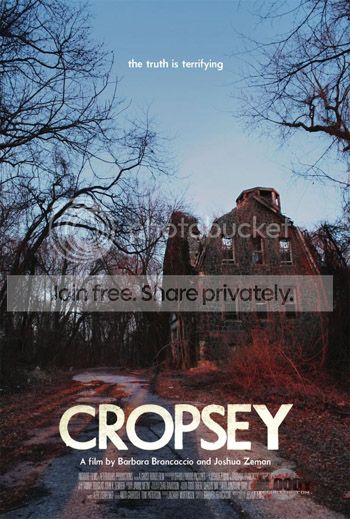
Cropsy (Fuckin' Awesome!!)
Cropsey is a documentary on a fascinating and equally disturbing concept: what if one of the many American urban legends about sinister child snatchers turned out to be true? In this case, the boogeyman is the eponymous Cropsey, an escaped mental patient who supposedly kidnaps and kills kids in New York. The documentary begins by exploring this urban legend before moving its focus onto the true-life story of Andre Rand, a Staten Island maniac accused of murdering 5 children in the 70’s and 80’s. These two figures, Cropsey and Rand, are used as a gateway for delving into the darker parts of small-town America. A word of warning: don’t watch this documentary in the dark.
Bride Kidnapping In Kyrgyzstan
This online documentary examines one of the most heinous cultural abuses towards women still in existence today: Kyrgyzstan bride kidnapping. Ever since the fall of the Soviet Union, the practice of kidnapping young women and coercing them into marriages against their will has spiked significantly. While any film about such a terrible thing would be disturbing in its own right, this documentary pushes the boundaries of good taste by having a camera crew accompany a group of men during an actual kidnapping. Yes, you read that right: the film crew solicited their services as wedding photographers to a family, participated in a kidnapping, documented the wedding, and did nothing to help. The film crew claims that they didn’t interfere with the kidnapping because the woman was already planning on marrying one of her abductors, but that doesn’t excuse the fact that they participated in an act that is illegal under Kyrgyzstan law and condemned by the rest of the world. The kidnapping footage is, of course, extremely difficult to watch. Perhaps the most disturbing moment takes place immediately after the men have snatched the young woman and are taking her to the wedding. One of them laughs and addresses the sobbing young woman: “Girls will be happy if they get married crying.”
Killer Legends
The Boogeyman, The Killer Clown, and The Hook Man: all urban legends we’ve seen time and again in horror films. They don’t exist, right? This documentary unlocks the creepy truth about which are fiction and which could very well be fact. [Where to stream Killer Legends]
The Jeffrey Dahmer Files
Decades after the brutal serial killer took the nation by storm, director Chris James Thompson uncovers who Jeffrey Dahmer really was through archival footage and interviews with those who knew him leading up to and after his 1991 arrest
The Act Of Killing
Though this documentary wouldn’t necessarily be categorized as “scary,” it’s downright terrifying how close Oscar-nominated filmmakers Joshua Oppenheimer and Christine Cynn got to the danger. Retired Indonesian death-squad leaders open up about genocide and their favorite ways to kill people based on what they’ve seen in American cinema: musical numbers being among their favorite to reenact — with a brutal twist.
Crumb
The man of the film’s title is the controversial comic book artist, Robert Crumb. The documentary is a strange and intimate portrait of his life, family and upbringing. In the 1960s his style became renowned, the cover of Janis Joplin’s ‘Cheap Thrills’ record, and his iconic “Keep on Truckin'” illustration to name a few famous examples.
Though Terry Zwigoff’s direction is not contentious in itself, his personal familiarity with Crumb allows the film to explore depths it might otherwise abandon. Crumb examines the impulses, the sexual fantasies, racist and sexist themes, and debauchery that pervade his artwork, with an enraptured eye. The interviewees are both charming and unsettling, most notably Robert’s reclusive and suicidal brother, Charles, whose mental illness and self-proclaimed “paedophiliac tendencies”, in his teenage years, have left him house-bound for decades.
Examining Robert’s provocative artwork, as the film does, is interesting in itself, but Crumb steps into contention as it delves into the inspirations and disturbing mental processes behind it all.
Bus 174 (English Subs)
A film about a poor Brazilian man, invisible in his own society, who on June 12, 2000, made himself be seen. On this day, on a busy street in Rio de Janeiro, Sandro do Nascimento hijacked the 174 Bus, and took its passengers hostage, in a scene that played out over four hours, to millions of viewers, live on Brazilian national television.
Inadequate police-control, itself a central theme of the film, meant that crowds were close enough to film the event, and every significant moment is shown in extensive detail.
Filmmakers José Padilha and Felipe Lacerda present every side of the story and, by exploring Nascimento’s arduous past, try to trace the factors which led up to the hijacking. Bus 174 exposes some difficult truths about the severe shortcomings in Rio’s law enforcement and prison system.
At the film’s climax, rather than cut the most graphic details of the conflict, when gunshots are exchanged, the harrowing footage is slowed and repeated from various angles. What is dubious is whether this probing approach is genuinely investigative, or whether it exploits the disturbing nature of the footage for the benefit of dramatic tension. Please allow a few seconds for the first video to load.
Aileen: Life and Death Of A Serial Killer
In Nick Broomfield’s documentary, Aileen Wuornos approaches the final days leading up to her execution, after more than a decade on Death Row for murdering seven men.
In such a predicament, and evidently with a degree of mental instability, Aileen provides the film with a disturbing character portrait. However, it is the relationship between Broomfield and his subject that is more disconcerting and controversial.
In search of the truth about the case, and seemingly to achieve a more psychological engagement with Aileen, Broomfield gets emotionally closer to her than would be considered ethical in documentary filmmaking. He then abuses her trust for the sake of his material, by pretending he has switched the camera off at one point and, later in the film, by asking the wrong question and exposing his duplicity just moments before she is taken away to be executed.
This dishonest and questionable attitude, even considering Aileen’s atrocious crimes, is further complicated by the fact that Broomfield includes this final interview in the film. In his approach to documentary, deceiving his subjects seems a necessary part of the process.
The videos and other material contain content that many may find offensive. I apologize in advance should any of this material do just that to anyone. Some vids are purely documentaries and others have a little drama mixed in for effect.Body Shock: The Man Who Ate His Lover
If a movie can punch you in the soul, this one does, many times over. The true story that is the basis for this film is easily one of the most staggering news stories ever, and one watches this tale unfold with an almost surreal separation, not even being able to grasp the sickness it would take to be able to commit such acts
So this documentary is the story of Armin Meiwes, or as he so affectionately dubbed: The Rotenburg Cannibal, and his quest to find a man to eat. Also, how his quest ended successfully. Yeah, honestly, that really is the best summary you could read for this film.

Child Of Rage: A Six-Year-Old Victim Of Reactive Attachment Disorder Tells Her Story
Child of Rage: A Story of Abuse is a 1990 documentary produced by HBO that tells the story of Beth Thomas, a six-year-old girl who is a victim of Reactive Attachment Disorder (RAD) – an inability to give or receive affection caused by early childhood neglect and abuse.
Beth was severely sexually abused by her sadistic father, and her mother died when she was just a year old. In Child of Rage, Beth is interviewed by a therapist. As she explains her abuse in detail, her voice stays eerily calm and flat. Her tone remains the same when she describes abusing her brother, her adopted family's animals and killing the entire family in general. She shows no remorse for her thoughts or actions.
Does Beth overcome the disorder with the help of her therapist and caring adoptive parents? Check out this bone-chilling documentary in its entirety below, but beware – it's not for the faint of heart.

Capturing The Friedmans: Pedophilia Rips Apart A Family And Their Community
Capturing The Friedmans: Pedophilia rips apart a family and their community
Capturing The Friedmans (2003) tells the story of a seemingly normal middle class family from Great Neck, NY whose world was turned upside down when teacher and patriarch Arnold Friedman was caught sending and receiving child pornography in the mail in 1987.
While building a case against Friedman, investigators interviewed several children who took computer classes at the family home. Soon, Arnold and his youngest son, Jesse (then 19), were accused of multiple accounts of child molestation and sodomy.
Were the allegations true? Were the kids coached? Were their stories inconsistent? Capturing The Friedmans doesn't take a stand, but Arnold Friedman confessed before committed suicide in prison in 1995. Although he initially plead guilty, Jesse maintains his innocence to this day.

High On Crack Street: Lost Lives In Lowell
This film follows the lives of three crack addicts living and struggling in Lowell, MA. Shocking subject matter includes unwanted pregnancies, prostitution, and the motives behind why these people do what they do for their fix. It’s a humanistic look into a situation that most will never see – and there’s no happy ending. One of the primary subjects Brenda died within six months of filming, and the other two have done little to remedy their situations. While there are more shocking documentaries out there, this one is particularly alarming in that it shows just how destructive crack can be.

The Iceman Tapes
Richard ‘the Iceman’ Kuklinski was a mafia hit man and serial killer who was arrested in 1986. Kuklinski is believed to have begun killing men for the mob in the 1950s and he is interviewed by a psychiatrist and he attempts to explain why he did what he did, shedding light on his motivations, his past and his experiences. It’s a shocking and alarming insight into the mind of a cold-blooded killer. Sometimes chilling, sometimes callous, Kuklinski makes no apologies for his actions. There’s no remorse and the subject matter is rather cruel and stark at times, but the material offers us a frank look into the mind of a man who killed countless others.
Bulgaria’s Abandoned Children
This documentary focuses on children in Bulgaria with disabilities, most of which are abandoned. The subject matter is shocking, and the government’s reaction to these children is both disturbing and enlightening. Unable to care for these children, the government dumps them in underfunded, poorly maintained and mismanaged orphanages. The lives of those who are not disabled are equally tormented, and many are unfairly lumped into situations from which there is no escape. The public awareness from this documentary has had monumentally positive effects, but the lives of these children are tragic and the government’s ignorance is just overwhelming.
Interview With A Cannibal
This disturbing documentary is a fascinating conversation with an admitted cannibal named Issei Sagawa. Deemed clinically insane, Sagawa was admitted to a clinical institution for his crimes without being charged, as the French court system dictated. Sagawa was later released to Japanese custody, but they found him to be sane. When France wouldn’t release his documents they had no recourse but to release him for his crimes – and now he’s something of a minor celebrity in Japan. In 1981 Sagawa murdered and cannibalized a Dutch woman while living in Paris. This TV documentary explores all the horrible aspects of Sagawa’s mentality and the reasons behind his actions as he openly talks about what it is to be him.

Burden Of Dreams
While the films of Werner Herzog might seem to be a natural fit for a list like this, even his most dire and extreme documentary work is imbued with a certain stripe of playfulness that amplifies their wonder at the expense of their blunt force (save for perhaps “Lessons of Darkness,” which observed the aftermath of the first Kuwaiti War from a God’s-eye view). Of course, documentaries about Werner Herzog are a different story altogether. Les Blank’s “Burden of Dreams” is the most insane making-of documentary that any feature film has ever inspired (it makes “Heart of Darkness” look like a studio EPK). The production of Herzog’s “Fitzcarraldo” was one of the most notoriously troubled in movie history, spanning four brutal years in the jungles of Peru, where Mick Jagger was recast, one of the locales offered to murder lead actor Klaus Kinski, and the physical feats involved in shooting began to become more impressively demented than those of the story the film was written to tell.
How To Die In Oregon
Peter Richardson’s right to life doc goes from 0 to “weeping uncontrollably” faster than any other movie ever made. That may sound like hyperbole, but it’s hard to compete with a film that opens by observing a terminally ill cancer patient taking a lethal dose of Secanol in real-time. The man’s death, which transpires before our eyes with grace and dignity, appropriately sets the stage for the film to come, which engages with the fight to legalize physician-assisted suicide in the titular stage. Essential viewing that is nevertheless extremely difficult to watch, “How to Die in Oregon” absolutely obliterates the conventional definition of a “happy ending,” giving a face to one of the preeminent issues our time.
Aokigahara / Suicide Forest
Lying at the base of Mount Fuji, Aokigahara Forest has a rather unsettling reputation as a suicide hotspot . This documentary follows a geologist as he performs a walk through of the forest, looking for both those who have, and may soon, succumb to depression. Spotting an abandoned car in the parking lot on the way in, passing signs dissuading suicide, and taking an ill trodden path into the bewildering forest, it isn’t long before we’re shown our first images of forsaken souls—all of whom hang from Aokigahara’s thick ligatures. From this point onwards, it only gets worse. I encourage all with a strong heart to watch this bleak, but brief, portrayal of the utter desperation in full.
Atomic Wounds
For all the propaganda and scaremongering that occurred during the Cold War, it is difficult for us to imagine the human effects of nuclear weapons—besides the massive loss of life, of course. We tend to imagine nukes as pulverizing all whom stand in it’s way, but a nuclear weapon doesn’t simply destroy, it poisons, it burns, it corrupts. Those unlucky enough not to be obliterated are left to suffer a horrific and painful death—often over months, years or even decades, rather then minutes or seconds. ‘Atomic Wounds’ takes us on an up close and personal trip to the victims of Nagasaki and Hiroshima, documenting the terrifying effects of atomic warfare on those who were not struck down in the initial cataclysm. It is difficult to watch this film without asking “how could we ever do this to our fellow man?” We often forget that the victims of Nagasaki and Hiroshima we’re living and breathing humans, just like you and I. We see a statistic. This film ensures that we remember that there is only misery under those numbers.
The Killing of America (1982)
A warning up front, ‘The Killing of America’ consistently provides the viewer with very real, and very graphic footage of criminal activity. From riots to outright murder, this documentary is far from shy of presenting the truth as is, with no sugar coating. “What truth?” you ask? Well, the fact that the United States was the most violent first world nation on earth. ‘The Killing of America’ attempts to understand why this was the case, and although it may seem outdated one should remember that the US is still one of the most violent first world nations on earth—despite the fact that violent crime has fallen considerably each year since it’s peak in the early 1990s. This documentary thus gives us an uncompromising look at america’s dark past—and perhaps also provides us with one piece of the puzzle that bugs us today.
Cropsy (Fuckin' Awesome!!)
Cropsey is a documentary on a fascinating and equally disturbing concept: what if one of the many American urban legends about sinister child snatchers turned out to be true? In this case, the boogeyman is the eponymous Cropsey, an escaped mental patient who supposedly kidnaps and kills kids in New York. The documentary begins by exploring this urban legend before moving its focus onto the true-life story of Andre Rand, a Staten Island maniac accused of murdering 5 children in the 70’s and 80’s. These two figures, Cropsey and Rand, are used as a gateway for delving into the darker parts of small-town America. A word of warning: don’t watch this documentary in the dark.
Bride Kidnapping In Kyrgyzstan
This online documentary examines one of the most heinous cultural abuses towards women still in existence today: Kyrgyzstan bride kidnapping. Ever since the fall of the Soviet Union, the practice of kidnapping young women and coercing them into marriages against their will has spiked significantly. While any film about such a terrible thing would be disturbing in its own right, this documentary pushes the boundaries of good taste by having a camera crew accompany a group of men during an actual kidnapping. Yes, you read that right: the film crew solicited their services as wedding photographers to a family, participated in a kidnapping, documented the wedding, and did nothing to help. The film crew claims that they didn’t interfere with the kidnapping because the woman was already planning on marrying one of her abductors, but that doesn’t excuse the fact that they participated in an act that is illegal under Kyrgyzstan law and condemned by the rest of the world. The kidnapping footage is, of course, extremely difficult to watch. Perhaps the most disturbing moment takes place immediately after the men have snatched the young woman and are taking her to the wedding. One of them laughs and addresses the sobbing young woman: “Girls will be happy if they get married crying.”

Killer Legends
The Boogeyman, The Killer Clown, and The Hook Man: all urban legends we’ve seen time and again in horror films. They don’t exist, right? This documentary unlocks the creepy truth about which are fiction and which could very well be fact. [Where to stream Killer Legends]

The Jeffrey Dahmer Files
Decades after the brutal serial killer took the nation by storm, director Chris James Thompson uncovers who Jeffrey Dahmer really was through archival footage and interviews with those who knew him leading up to and after his 1991 arrest

The Act Of Killing
Though this documentary wouldn’t necessarily be categorized as “scary,” it’s downright terrifying how close Oscar-nominated filmmakers Joshua Oppenheimer and Christine Cynn got to the danger. Retired Indonesian death-squad leaders open up about genocide and their favorite ways to kill people based on what they’ve seen in American cinema: musical numbers being among their favorite to reenact — with a brutal twist.

Crumb
The man of the film’s title is the controversial comic book artist, Robert Crumb. The documentary is a strange and intimate portrait of his life, family and upbringing. In the 1960s his style became renowned, the cover of Janis Joplin’s ‘Cheap Thrills’ record, and his iconic “Keep on Truckin'” illustration to name a few famous examples.
Though Terry Zwigoff’s direction is not contentious in itself, his personal familiarity with Crumb allows the film to explore depths it might otherwise abandon. Crumb examines the impulses, the sexual fantasies, racist and sexist themes, and debauchery that pervade his artwork, with an enraptured eye. The interviewees are both charming and unsettling, most notably Robert’s reclusive and suicidal brother, Charles, whose mental illness and self-proclaimed “paedophiliac tendencies”, in his teenage years, have left him house-bound for decades.
Examining Robert’s provocative artwork, as the film does, is interesting in itself, but Crumb steps into contention as it delves into the inspirations and disturbing mental processes behind it all.
Bus 174 (English Subs)
A film about a poor Brazilian man, invisible in his own society, who on June 12, 2000, made himself be seen. On this day, on a busy street in Rio de Janeiro, Sandro do Nascimento hijacked the 174 Bus, and took its passengers hostage, in a scene that played out over four hours, to millions of viewers, live on Brazilian national television.
Inadequate police-control, itself a central theme of the film, meant that crowds were close enough to film the event, and every significant moment is shown in extensive detail.
Filmmakers José Padilha and Felipe Lacerda present every side of the story and, by exploring Nascimento’s arduous past, try to trace the factors which led up to the hijacking. Bus 174 exposes some difficult truths about the severe shortcomings in Rio’s law enforcement and prison system.
At the film’s climax, rather than cut the most graphic details of the conflict, when gunshots are exchanged, the harrowing footage is slowed and repeated from various angles. What is dubious is whether this probing approach is genuinely investigative, or whether it exploits the disturbing nature of the footage for the benefit of dramatic tension. Please allow a few seconds for the first video to load.

Aileen: Life and Death Of A Serial Killer
In Nick Broomfield’s documentary, Aileen Wuornos approaches the final days leading up to her execution, after more than a decade on Death Row for murdering seven men.
In such a predicament, and evidently with a degree of mental instability, Aileen provides the film with a disturbing character portrait. However, it is the relationship between Broomfield and his subject that is more disconcerting and controversial.
In search of the truth about the case, and seemingly to achieve a more psychological engagement with Aileen, Broomfield gets emotionally closer to her than would be considered ethical in documentary filmmaking. He then abuses her trust for the sake of his material, by pretending he has switched the camera off at one point and, later in the film, by asking the wrong question and exposing his duplicity just moments before she is taken away to be executed.
This dishonest and questionable attitude, even considering Aileen’s atrocious crimes, is further complicated by the fact that Broomfield includes this final interview in the film. In his approach to documentary, deceiving his subjects seems a necessary part of the process.