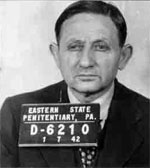

Dr. Morris Bolber

America's most prolific team of killers-for-profit were active in Philadelphia during the 1930s, claiming an estimated 30 to 50 victims before the ring's various members were apprehended. Students of the case, in retrospect, are prone to cite the gang's activities as evidence that modern homicide statistics may be woefully inaccurate. If 20,000 murders are reported in a given year, they say, it is entirely possible that 20,000 more go unreported, overlooked by the authorities. The basic murder method was conceived in 1932, by Dr. Morris Bolber and his good friend, Paul Petrillo. After one of Bolber's female patients aired complaints about her husband's infidelity, the doctor and Petrillo planned for Paul to woo the lonely lady, gaining her cooperation in a plan to kill her wayward spouse and split $10,000 in insurance benefits. The victim, Anthony Giscobbe, was a heavy drinker, and it proved a simple matter for his wife to strip him as he lay unconscious, leaving him beside an open window in the dead of winter while he caught his death of cold. The grieving widow split her cash with Bolber and Petrillo, whereupon her "lover" promptly went in search of other restless, greedy wives. It soon became apparent that Italian husbands, caught up in the middle of the Great Depression, carried little life insurance on their own. Petrillo called upon his cousin Herman, an accomplished local actor, to impersonate potential victims and apply for heavy policies. Once several payments had been made, the husbands were eliminated swiftly and efficiently through "accidents" or "natural causes." Dr. Bolber's favorite methods included poison and blows to the head with a sandbag, producing cerebral hemorrhage, but methods were varied according to victims. One target, a roofer named Lorenzo, was hurled to his death from an eight-story building, the Petrillo cousins first handing him some French post cards to explain his careless distraction. After roughly a dozen murders, the gang recruited faith healer Carino Favato, known as the Witch in her home neighborhood. Favato had dispatched three of her own husbands before going into business full-time as a "marriage consultant," poisoning unwanted husbands for a fee. Impressed by Dr. Bolber's explanation of the life insurance scam, Favato came on board and brought the gang a list of her prospective clients. By the latter part of 1937, Bolber's ring polished off 50 victims, at least 30 of which were fairly well documented by subsequent investigation. The roof fell in when an ex-convict approached Herman Petrillo, pushing a new get-rich scheme. Unimpressed, Petrillo countered with a pitch for his acquaintance to secure potential murder victims, and the felon panicked, running to police. As members of the gang were rounded up, they "squealed" on one another in the hope of finding leniency, their clients chiming in as ripples spread throughout a stunned community. While several wives were sent to prison, most escaped by testifying for the state. The two Petrillos were condemned and put to death, while Bolber and Favato each drew terms of life imprisonment .
The Philadelphia poison ring was a murder for hire gang led by the Petrillo cousins, Herman and Paul Petrillo, in 1938. The leaders were ultimately convicted of 114 poison-murders and were executed by electric chair in 1941. Paul's cousin, Morris Bolber, was among the 14 others in the gang, all of whom were sentenced to life imprisonment.
Herman and Paul Petrillo were cousins and both were experienced in the world of elaborate crimes. Herman was an expert counterfeiter and Paul was running an insurance scam business. In Philadelphia, they joined forces with Morris Bolber to establish a "matrimonial agency." The three men were ostensibly helping recently-widowed women to remarry, move on with their lives, and establish life insurance policies for their new husbands; however, the agency functioned as a conduit to collect money from the life insurance policies.
Vincent P. McDevitt was an Assistant District Attorney in Philadelphia. In early 1939, the District Attorney, Charles F. Kelley, assigned him to the homicide case of Ferdinando Alfonsi, who had died on 27 October 1938. McDevitt immediately had information from two undercover detectives, agents Landvoight and Phillips. From them, McDevitt had an informant, one George Meyer, who ran a local upholstery cleaning business. Meyer encountered Herman Petrillo when he was trying to obtain money for his business. Petrillo had offered to provide him with a large sum of money, legal tender and counterfeit, if Meyer would perform the hit on Alfonsi. Landvoight and Meyer had played along with the murder plot, with Meyer hoping for an advance pay-out and Landvoight hoping to finally bust Petrillo's counterfeiting crimes. Working undercover, Landvoight helped Meyer "play along," as the Petrillos plotted the murder that they wanted Meyer to carry out.
The Murder
The plan was to steal or buy a car, take Alfonsi out to a dark country road and hit him with the car, thus making the murder looking accidental. Herman Petrillo preferred the idea to steal the car rather than buy one, but Landvoight and Phillips were hoping to convince Petrillo to give them money to buy a car for the murder, as it would give them the opportunity that had so long prayed for, to arrest him on counterfeit charges. In the end, Petrillo sold them some fake tender, ostensibly for buying a means of transportation to the planned crime scene. The "play along" plan continued until Meyer, on a whim of curiosity and concern, decided to visit the intended murder victim. At the front door of the house where Alfonsi lived, Meyer learned from an old woman who had opened the door that Alfonsi was gravely ill. After notifying Phillips, he returned with Phillips and Landvoight to the Alfonsi house. They found Alfonsi to be bizarrely ill, suffering symptoms of bulging eyes, immobility, and being unable to speak. At their next meeting with Herman Petrillo, after Petrillo handed Phillips an envelope full of counterfeit bills, Phillips asked about the plan to murder Alfonsi. Petrillo replied that there was no reason to worry about it anymore; it was being handled, apparently.
Investigation
Ferdinando Alfonsi expired after being admitted to the National Stomach Hospital. The cause of death was heavy metal poisoning. The autopsy revealed tremendous arsenic levels. The detectives assigned to the case were Michael Schwartz, Anthony Franchetti, and Samuel Riccardi. They instantly thought of the rumors, already well-developed, about a highly-organized arsenic killing spree surging through the city. Indeed, there were distinct patterns. The victims tended to be Italian immigrants, as Alfonsi was, and to have high levels of arsenic in their bloodstreams.
Herman Petrillo and Mrs. Alfonsi were both arrested. Mrs. Alfonsi had purchased a sizable life insurance policy for her husband, an immigrant who could not read English and had been unaware of the policy. Moreover, the Alfonsi case fit with a rapidly-emerging common Modus operandi in a lot of other homicide investigations. Most importantly, each case involved a fresh life insurance policy with a double indemnity clause and a nearly-direct lead to one of the Petrillo cousins, and each cause of death was listed as some sort of violent accident.
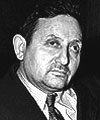
America's most prolific team of killers-for-profit were active in Philadelphia during the 1930s, claiming an estimated 30 to 50 victims before the ring's various members were apprehended. Students of the case, in retrospect, are prone to cite the gang's activities as evidence that modern homicide statistics may be woefully inaccurate. If 20,000 murders are reported in a given year, they say, it is entirely possible that 20,000 more go unreported, overlooked by the authorities. The basic murder method was conceived in 1932, by Dr. Morris Bolber and his good friend, Paul Petrillo. After one of Bolber's female patients aired complaints about her husband's infidelity, the doctor and Petrillo planned for Paul to woo the lonely lady, gaining her cooperation in a plan to kill her wayward spouse and split $10,000 in insurance benefits. The victim, Anthony Giscobbe, was a heavy drinker, and it proved a simple matter for his wife to strip him as he lay unconscious, leaving him beside an open window in the dead of winter while he caught his death of cold. The grieving widow split her cash with Bolber and Petrillo, whereupon her "lover" promptly went in search of other restless, greedy wives. It soon became apparent that Italian husbands, caught up in the middle of the Great Depression, carried little life insurance on their own. Petrillo called upon his cousin Herman, an accomplished local actor, to impersonate potential victims and apply for heavy policies. Once several payments had been made, the husbands were eliminated swiftly and efficiently through "accidents" or "natural causes." Dr. Bolber's favorite methods included poison and blows to the head with a sandbag, producing cerebral hemorrhage, but methods were varied according to victims. One target, a roofer named Lorenzo, was hurled to his death from an eight-story building, the Petrillo cousins first handing him some French post cards to explain his careless distraction. After roughly a dozen murders, the gang recruited faith healer Carino Favato, known as the Witch in her home neighborhood. Favato had dispatched three of her own husbands before going into business full-time as a "marriage consultant," poisoning unwanted husbands for a fee. Impressed by Dr. Bolber's explanation of the life insurance scam, Favato came on board and brought the gang a list of her prospective clients. By the latter part of 1937, Bolber's ring polished off 50 victims, at least 30 of which were fairly well documented by subsequent investigation. The roof fell in when an ex-convict approached Herman Petrillo, pushing a new get-rich scheme. Unimpressed, Petrillo countered with a pitch for his acquaintance to secure potential murder victims, and the felon panicked, running to police. As members of the gang were rounded up, they "squealed" on one another in the hope of finding leniency, their clients chiming in as ripples spread throughout a stunned community. While several wives were sent to prison, most escaped by testifying for the state. The two Petrillos were condemned and put to death, while Bolber and Favato each drew terms of life imprisonment .
The Philadelphia poison ring was a murder for hire gang led by the Petrillo cousins, Herman and Paul Petrillo, in 1938. The leaders were ultimately convicted of 114 poison-murders and were executed by electric chair in 1941. Paul's cousin, Morris Bolber, was among the 14 others in the gang, all of whom were sentenced to life imprisonment.
Herman and Paul Petrillo were cousins and both were experienced in the world of elaborate crimes. Herman was an expert counterfeiter and Paul was running an insurance scam business. In Philadelphia, they joined forces with Morris Bolber to establish a "matrimonial agency." The three men were ostensibly helping recently-widowed women to remarry, move on with their lives, and establish life insurance policies for their new husbands; however, the agency functioned as a conduit to collect money from the life insurance policies.
Vincent P. McDevitt was an Assistant District Attorney in Philadelphia. In early 1939, the District Attorney, Charles F. Kelley, assigned him to the homicide case of Ferdinando Alfonsi, who had died on 27 October 1938. McDevitt immediately had information from two undercover detectives, agents Landvoight and Phillips. From them, McDevitt had an informant, one George Meyer, who ran a local upholstery cleaning business. Meyer encountered Herman Petrillo when he was trying to obtain money for his business. Petrillo had offered to provide him with a large sum of money, legal tender and counterfeit, if Meyer would perform the hit on Alfonsi. Landvoight and Meyer had played along with the murder plot, with Meyer hoping for an advance pay-out and Landvoight hoping to finally bust Petrillo's counterfeiting crimes. Working undercover, Landvoight helped Meyer "play along," as the Petrillos plotted the murder that they wanted Meyer to carry out.
The Murder
The plan was to steal or buy a car, take Alfonsi out to a dark country road and hit him with the car, thus making the murder looking accidental. Herman Petrillo preferred the idea to steal the car rather than buy one, but Landvoight and Phillips were hoping to convince Petrillo to give them money to buy a car for the murder, as it would give them the opportunity that had so long prayed for, to arrest him on counterfeit charges. In the end, Petrillo sold them some fake tender, ostensibly for buying a means of transportation to the planned crime scene. The "play along" plan continued until Meyer, on a whim of curiosity and concern, decided to visit the intended murder victim. At the front door of the house where Alfonsi lived, Meyer learned from an old woman who had opened the door that Alfonsi was gravely ill. After notifying Phillips, he returned with Phillips and Landvoight to the Alfonsi house. They found Alfonsi to be bizarrely ill, suffering symptoms of bulging eyes, immobility, and being unable to speak. At their next meeting with Herman Petrillo, after Petrillo handed Phillips an envelope full of counterfeit bills, Phillips asked about the plan to murder Alfonsi. Petrillo replied that there was no reason to worry about it anymore; it was being handled, apparently.
Investigation
Ferdinando Alfonsi expired after being admitted to the National Stomach Hospital. The cause of death was heavy metal poisoning. The autopsy revealed tremendous arsenic levels. The detectives assigned to the case were Michael Schwartz, Anthony Franchetti, and Samuel Riccardi. They instantly thought of the rumors, already well-developed, about a highly-organized arsenic killing spree surging through the city. Indeed, there were distinct patterns. The victims tended to be Italian immigrants, as Alfonsi was, and to have high levels of arsenic in their bloodstreams.
Herman Petrillo and Mrs. Alfonsi were both arrested. Mrs. Alfonsi had purchased a sizable life insurance policy for her husband, an immigrant who could not read English and had been unaware of the policy. Moreover, the Alfonsi case fit with a rapidly-emerging common Modus operandi in a lot of other homicide investigations. Most importantly, each case involved a fresh life insurance policy with a double indemnity clause and a nearly-direct lead to one of the Petrillo cousins, and each cause of death was listed as some sort of violent accident.