WonderingMind
Just another human being
Got a little bit of history for ya. The darkest days of my beloved hometown.
--------------------------------------------------------------------------------

Magdeburg, May 10th 1631. The wealthy, large, mighty and proud protestant fortress along the river Elbe, surrounded and completely cut off, after over half a year of mercyless siege, went down to it's knees and faced complete and utter obliteration by the frustrated and hungry armies of the catholic church, wich, in this case, consisted mostly of mercenaries from Croatia, Hungary, France, Spain and Italy, led by Pappenheim, with the aid of count Tilly, whose force was unable to stop the advances of Gustav II Adolf, King of Sweden, in the north, whose arrival Magdeburg feverishly awaited under the immense pressure from all sides. The news of it's following downfall, and the unspeakable cruelty with wich it was 'celebrated' by the victors, shocked Europe entirely.
I will guide you through the story with actual diary quotes and testimonies of survivors and witnesses from both sides of the conflict.
------
Magdeburg, May 9th 1631, siege, nothing new in this long war. The force, consisting of ~ 30.000 men, has kept Magdeburg in this state for over half a year, creating a bitter test of endurance, for both sides. A population of over 30.000 people is locked in, defended by thick walls, heavy artillery and civil defense corps', drilled and trained by some stationary Swedish soldiers, awaiting the relieving aid of King Gustav II Adolf, whos armies already advanced to Potsdam, only few day's march away.

The last days were silent and among the guards on this evening is 12 year old Daniel Friese, alongside his father, the town clerk of Magdeburg, visiting the defensive walls. He wrote:
"We went from the Ladenmacher gate, at the wall of Neustadt (far right on the above picture), all the way to the rivergate, at the Elbe (far left). On this day, the password was 'angel'. Along the wall and on every post, the guards were tightly stacked and well equipped. Noone would've guessed, that the city is to be taken the next morning. Even more so, since a horseman messenger of count Tilly is in town, and armistice is in order, during his stay.
But the silence is treacherous. On the opposite banks of the river Elbe, hidden behind dense treelines, one of the many mercenary armies has setup camp, closing a perfect circle around the city and tightening the belt more and more.

A group of Tilly's men have captured a swedish messenger who was supposed to deliver the news of Gustav Adolfs arrival in the near future. Knowing, that the city is lost for him, if the Swedes were to intervene, he send out a messenger of himself - the horseman wich was described in little Daniels diary - giving Magdeburg the last ultimatum to surrender, without notifying them of the consequence, wich would be an all-out attack, would they refuse (Wich is a very risky move and was therefore avoided in the past, since Magdeburg had the reputation of being impregnable).
----
Magdeburg, May 10th 1631, 4 o'clock in the morning, heated debates are being held in the townshall. All night have the councilmen been fighting about the pros and cons of a capitulation. Should they buy their freedom or trust in King Gustav Adolf to arrive as promised?

They are proud, the people of Magdeburg. They have played a major role in past conflicts between catholics and protestants. Ever since, the city has drawn well known scholars and preachers into it's midst and quickly became stronghold and heartland of the protestant reformation. 1524, Martin Luther preached his first sermons and wrote the first protestant ecclesiastical history here. Ever since, the maiden of Magdeburg, symbol in the cities coat of arms, proudly defied all advances by the catholic church.
A free Hansa town, with free people and staple right. One of the biggest and wealthiest in Germany. The Elbe faciliating trade with all of Europe.
They refuse to let this city fall into the catholic's hands and in the end, the decision is made: Magdeburg does not capitulate and waits for the Swedish forces.
----
Mercenary Camp, May 10th 1631, 6 o'clock in the morning,the order for attack has been given. The armies prepare for battle. Georg Ackermann, a mercenary wo has fought in many battles, during his 10 years in the army; first on the protestant side, now on the catholic. Later, he will write:
"Before the onset, the general has had us all served with fine rheinish wine, wich gave good courage..."
At 7 o'clock, the onset began. A Hail of six canonshots into the city are the signal for everyone. Cptn. Georg Ackerman is at the furthest front with his men.
"... there was such a horrendous thundering and blasting of the muskets, mortars and canons, that we could barely hear or see ... only because reinforcements kept pushing from behind and after hundreds lay dead (enemies), we could finally drive them back to the city gate."
City guards did notice the enemy's movements during the night and prepared for battle. However, come sunrise, the enemy still hasn't made a move, so the guards dismissed what they saw, because usually attacks where made at dawn. But after hours of nothing happening, some commanders went to rest, others, according to the usual practice, were allowed to go home and only about half of them stayed at their post - resulting in them being poorly prepared and arguably quickly overpowered by sheer numbers, when the enemies forces launched their full-scale attack. Even following the swift and surprising attack, the mercenaries could advance steadily, because the guards still needed time to regroup and get ready for the counterstrike.
Soon the northern walls are taken and riders enter the city, leading the way for thousands more to come and swarm the streets. They have to act fast and precice. Tilly knows, that once Magdeburg is organized, conquering the city becomes simply impossible.
After hours, the mercenaries still only conquered one part of Magdeburg. Still their furious yells echoe through every street and panic grabs a hold of the civilian population.
After 13 years of war they know what happens, when enemy soldiers reach their houses. Frantically, they hide what is precious to them and lock their doors, hoping, the citie's defenders would preserve them from harm.
Daniel Friese later remembers:
"Through the unusually loud and heavy shooting, one would know that it has become very dangerous. But we children prayed all the while - prayed to god that he may keep us save in his grace."
But still, all is not lost. Driven by desperation, a lot of citizens throw themselves against the mercenaries who already pillage what they conquer. They manage to push the attackers back again and again. It steadily becomes harder and more frustrating for the invaders to gain ground. From basement windows there would be muskete fire barrages that take out douzens of mercenaries. Home made quicklime bombs would be thrown into incoming armies making their horses panic and damage the fighter's lungs so they can't fight as long, whenever they could, to increase the pain, sometimes, they are also filled with caltrops. They would tauten chains at knee level, to continually put the invaders to work, while they fought the cities defenders.
Ackerman writes:
"Fighting in the alleyways, wich sometimes were tapestried with chains, wore all 9 of our storm troops, each of them 3000 men strong, out so badly, that we could barely gasp."
Fire becomes a crucial part of the battle, since all of the houses, except some churches, are made of wood. Since the enemie's army swarms in from all sides at once and tries to climb the walls, while bombarding the houses with firepots, several fires start to grow out of control nearly everywhere. The plan was to get the civilians to fight the fires, not them. But noone would stop the fight. Not until two hours later, when they had to give up. Their desperate resistance, only adding to the anger of the invaders. A battle for the city now becomes a battle for survival. Each for himself. A battle noone can win against thousands of more enemies to come. Fresh, unharmed by battle. Only driven by the will to relieve stress, anger, frustration and sedate every lustful thought they massaged for a long time.
From here on out there are no boundaries, no taboos. It is time to claim the price, these men have been lusting for for months. Their commander said, that they are free to do what they want for 3 days, if they manage to conquer the city by storm. It's their reward for what they payed.
Daniel Friese:
"It looked, as if furies rampaged everywhere. Then we hear the imperials chanting in the streets 'Victory, Victory!' and they started to break in all the doors, like living devils. We poor townsfolk, almost died from fear alone."

Eyewhitnesses report:
"Under such reckless rage have many thousand noninvolved, innocent men, women and children been murdered in the most pitiful of ways...

Daniel Friese, hiding with his parents and sister in the attic of their house:
"Crate and box have they smashed in our house and that of our dear neighbour. Through the bricks we could see how our poor neighbours were beaten, tortured and wheeled (Breaking wheel)... We have all seen ourselves in the hour of death."

(I tried, but In the next one, it's next to impossible to translate the impact, the words he's using have, in German. They express, in the strongest of ways, what a heartbreaking sight it must've been and how it damaged him to see this.)
Eyewhitness report:
"Piteously mewling toddlers, lying by their dead mothers, get pierced on long skewers. Sticking on them, still alive and screaming, they are paraded triumphantly, carried through the alleys and finally flung into flame."
Those with nothing else to lose flee in every thinkable direction from the murderous soldiers. Children crawled into little shafts were their family used to store coals. Pure fear drove them in there.
Others, mostly women and young girls, even leaped to their death, in fear of the barbaric rape and murder they have whitnessed, chased by men, that equalled to nothing else than untamed animals in their eyes.
And yet there were only 2 secure places in the city...
Der Dom zu Magdeburg (Cathedral of Magdeburg)
And
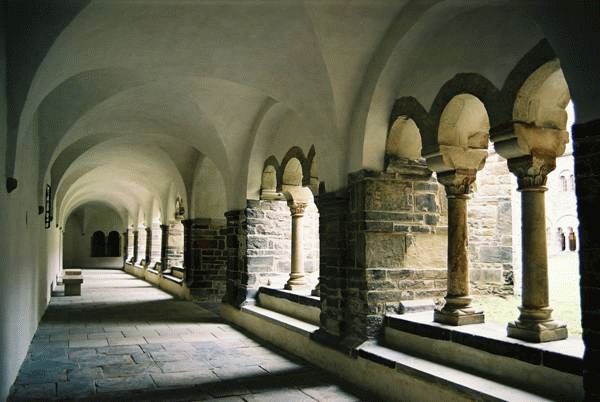
Das Kloster 'Unser lieben Frauen' (The Women's Monastery)
...
under the aegis of catholic monks. One of them, later, has written everything down.
"The monastery, the cloister and all the rooms, were so filled, you could neither turn nor move in them. Most of the women were undressed by the men outside, so they could barely cover their bareness. Even worse, some of them wheren't able to escape the soldiers in honour and undefiled. Those who have seen these women, can not resist to grieve deeply, and feel pity. "
The sheer brutality and scale of the massacre, even becomes too much for some of Tilly's officers. But Tilly rejects them, says, the soldier needs something, for the hardships he endured.
Ackermann:
"Suddenly a stormwind breaks lose and the fires can not be tamed anymore. They grow so far out of control, that there could be neither help nor savior. But the general only mourned for his lovely cathedral, so much, that he ordered 500 men to try and quench them anyway."
But while the flames consume the city, pillaging, rape and murder continue, without a break. But ... also miracles happen. Pastor Andreas Kramer gets attacked inside the church. He picks up the bible from a pedastal, quickly opens it to widen the space, he could shield himself with and used it to block a couple of strickes and a stab. Gettin struck once, he goes down and the mercenaries leave him be. He survives. This bible, from this day on, until his death becomes the most precious thing in his life. Until this day it is stored safely in the archives of Mühlhausen, still tainted with his blood, still spoiled by saber cuts - called the 'Magdeburger Blutbibel' (Bloodbible of Magdeburg)

Why this event is considered to be a wonder, you ask? Well ...
the page, were the sabre cuts end, the one he spontaneosly opened to defend himself
Makes you think, huh?
Maybe not.
Of over 30.000 citizens, following sickness and aftermath casualties of the incident. About 350 survived. Close to noone had a clean death. Almost all of them were sadistically butchered for entertainment.
(You may keep every last spelling or grammar mistake that you find. This has been quite a piece of work and I'll only add in the future, because I still didn't document everything about the incident)
--------------------------------------------------------------------------------

Magdeburg, May 10th 1631. The wealthy, large, mighty and proud protestant fortress along the river Elbe, surrounded and completely cut off, after over half a year of mercyless siege, went down to it's knees and faced complete and utter obliteration by the frustrated and hungry armies of the catholic church, wich, in this case, consisted mostly of mercenaries from Croatia, Hungary, France, Spain and Italy, led by Pappenheim, with the aid of count Tilly, whose force was unable to stop the advances of Gustav II Adolf, King of Sweden, in the north, whose arrival Magdeburg feverishly awaited under the immense pressure from all sides. The news of it's following downfall, and the unspeakable cruelty with wich it was 'celebrated' by the victors, shocked Europe entirely.
I will guide you through the story with actual diary quotes and testimonies of survivors and witnesses from both sides of the conflict.
------
Magdeburg, May 9th 1631, siege, nothing new in this long war. The force, consisting of ~ 30.000 men, has kept Magdeburg in this state for over half a year, creating a bitter test of endurance, for both sides. A population of over 30.000 people is locked in, defended by thick walls, heavy artillery and civil defense corps', drilled and trained by some stationary Swedish soldiers, awaiting the relieving aid of King Gustav II Adolf, whos armies already advanced to Potsdam, only few day's march away.
The last days were silent and among the guards on this evening is 12 year old Daniel Friese, alongside his father, the town clerk of Magdeburg, visiting the defensive walls. He wrote:
"We went from the Ladenmacher gate, at the wall of Neustadt (far right on the above picture), all the way to the rivergate, at the Elbe (far left). On this day, the password was 'angel'. Along the wall and on every post, the guards were tightly stacked and well equipped. Noone would've guessed, that the city is to be taken the next morning. Even more so, since a horseman messenger of count Tilly is in town, and armistice is in order, during his stay.
But the silence is treacherous. On the opposite banks of the river Elbe, hidden behind dense treelines, one of the many mercenary armies has setup camp, closing a perfect circle around the city and tightening the belt more and more.
A group of Tilly's men have captured a swedish messenger who was supposed to deliver the news of Gustav Adolfs arrival in the near future. Knowing, that the city is lost for him, if the Swedes were to intervene, he send out a messenger of himself - the horseman wich was described in little Daniels diary - giving Magdeburg the last ultimatum to surrender, without notifying them of the consequence, wich would be an all-out attack, would they refuse (Wich is a very risky move and was therefore avoided in the past, since Magdeburg had the reputation of being impregnable).
----
Magdeburg, May 10th 1631, 4 o'clock in the morning, heated debates are being held in the townshall. All night have the councilmen been fighting about the pros and cons of a capitulation. Should they buy their freedom or trust in King Gustav Adolf to arrive as promised?
They are proud, the people of Magdeburg. They have played a major role in past conflicts between catholics and protestants. Ever since, the city has drawn well known scholars and preachers into it's midst and quickly became stronghold and heartland of the protestant reformation. 1524, Martin Luther preached his first sermons and wrote the first protestant ecclesiastical history here. Ever since, the maiden of Magdeburg, symbol in the cities coat of arms, proudly defied all advances by the catholic church.
A free Hansa town, with free people and staple right. One of the biggest and wealthiest in Germany. The Elbe faciliating trade with all of Europe.
They refuse to let this city fall into the catholic's hands and in the end, the decision is made: Magdeburg does not capitulate and waits for the Swedish forces.
----
Mercenary Camp, May 10th 1631, 6 o'clock in the morning,the order for attack has been given. The armies prepare for battle. Georg Ackermann, a mercenary wo has fought in many battles, during his 10 years in the army; first on the protestant side, now on the catholic. Later, he will write:
"Before the onset, the general has had us all served with fine rheinish wine, wich gave good courage..."
At 7 o'clock, the onset began. A Hail of six canonshots into the city are the signal for everyone. Cptn. Georg Ackerman is at the furthest front with his men.
"... there was such a horrendous thundering and blasting of the muskets, mortars and canons, that we could barely hear or see ... only because reinforcements kept pushing from behind and after hundreds lay dead (enemies), we could finally drive them back to the city gate."
City guards did notice the enemy's movements during the night and prepared for battle. However, come sunrise, the enemy still hasn't made a move, so the guards dismissed what they saw, because usually attacks where made at dawn. But after hours of nothing happening, some commanders went to rest, others, according to the usual practice, were allowed to go home and only about half of them stayed at their post - resulting in them being poorly prepared and arguably quickly overpowered by sheer numbers, when the enemies forces launched their full-scale attack. Even following the swift and surprising attack, the mercenaries could advance steadily, because the guards still needed time to regroup and get ready for the counterstrike.
Soon the northern walls are taken and riders enter the city, leading the way for thousands more to come and swarm the streets. They have to act fast and precice. Tilly knows, that once Magdeburg is organized, conquering the city becomes simply impossible.
After hours, the mercenaries still only conquered one part of Magdeburg. Still their furious yells echoe through every street and panic grabs a hold of the civilian population.
After 13 years of war they know what happens, when enemy soldiers reach their houses. Frantically, they hide what is precious to them and lock their doors, hoping, the citie's defenders would preserve them from harm.
Daniel Friese later remembers:
"Through the unusually loud and heavy shooting, one would know that it has become very dangerous. But we children prayed all the while - prayed to god that he may keep us save in his grace."
But still, all is not lost. Driven by desperation, a lot of citizens throw themselves against the mercenaries who already pillage what they conquer. They manage to push the attackers back again and again. It steadily becomes harder and more frustrating for the invaders to gain ground. From basement windows there would be muskete fire barrages that take out douzens of mercenaries. Home made quicklime bombs would be thrown into incoming armies making their horses panic and damage the fighter's lungs so they can't fight as long, whenever they could, to increase the pain, sometimes, they are also filled with caltrops. They would tauten chains at knee level, to continually put the invaders to work, while they fought the cities defenders.
Ackerman writes:
"Fighting in the alleyways, wich sometimes were tapestried with chains, wore all 9 of our storm troops, each of them 3000 men strong, out so badly, that we could barely gasp."
Fire becomes a crucial part of the battle, since all of the houses, except some churches, are made of wood. Since the enemie's army swarms in from all sides at once and tries to climb the walls, while bombarding the houses with firepots, several fires start to grow out of control nearly everywhere. The plan was to get the civilians to fight the fires, not them. But noone would stop the fight. Not until two hours later, when they had to give up. Their desperate resistance, only adding to the anger of the invaders. A battle for the city now becomes a battle for survival. Each for himself. A battle noone can win against thousands of more enemies to come. Fresh, unharmed by battle. Only driven by the will to relieve stress, anger, frustration and sedate every lustful thought they massaged for a long time.
From here on out there are no boundaries, no taboos. It is time to claim the price, these men have been lusting for for months. Their commander said, that they are free to do what they want for 3 days, if they manage to conquer the city by storm. It's their reward for what they payed.
Daniel Friese:
"It looked, as if furies rampaged everywhere. Then we hear the imperials chanting in the streets 'Victory, Victory!' and they started to break in all the doors, like living devils. We poor townsfolk, almost died from fear alone."
Eyewhitnesses report:
"Under such reckless rage have many thousand noninvolved, innocent men, women and children been murdered in the most pitiful of ways...
Daniel Friese, hiding with his parents and sister in the attic of their house:
"Crate and box have they smashed in our house and that of our dear neighbour. Through the bricks we could see how our poor neighbours were beaten, tortured and wheeled (Breaking wheel)... We have all seen ourselves in the hour of death."
(I tried, but In the next one, it's next to impossible to translate the impact, the words he's using have, in German. They express, in the strongest of ways, what a heartbreaking sight it must've been and how it damaged him to see this.)
Eyewhitness report:
"Piteously mewling toddlers, lying by their dead mothers, get pierced on long skewers. Sticking on them, still alive and screaming, they are paraded triumphantly, carried through the alleys and finally flung into flame."
Those with nothing else to lose flee in every thinkable direction from the murderous soldiers. Children crawled into little shafts were their family used to store coals. Pure fear drove them in there.
Others, mostly women and young girls, even leaped to their death, in fear of the barbaric rape and murder they have whitnessed, chased by men, that equalled to nothing else than untamed animals in their eyes.

And yet there were only 2 secure places in the city...
Der Dom zu Magdeburg (Cathedral of Magdeburg)

And
Das Kloster 'Unser lieben Frauen' (The Women's Monastery)
...
under the aegis of catholic monks. One of them, later, has written everything down.
"The monastery, the cloister and all the rooms, were so filled, you could neither turn nor move in them. Most of the women were undressed by the men outside, so they could barely cover their bareness. Even worse, some of them wheren't able to escape the soldiers in honour and undefiled. Those who have seen these women, can not resist to grieve deeply, and feel pity. "
The sheer brutality and scale of the massacre, even becomes too much for some of Tilly's officers. But Tilly rejects them, says, the soldier needs something, for the hardships he endured.
Ackermann:
"Suddenly a stormwind breaks lose and the fires can not be tamed anymore. They grow so far out of control, that there could be neither help nor savior. But the general only mourned for his lovely cathedral, so much, that he ordered 500 men to try and quench them anyway."
But while the flames consume the city, pillaging, rape and murder continue, without a break. But ... also miracles happen. Pastor Andreas Kramer gets attacked inside the church. He picks up the bible from a pedastal, quickly opens it to widen the space, he could shield himself with and used it to block a couple of strickes and a stab. Gettin struck once, he goes down and the mercenaries leave him be. He survives. This bible, from this day on, until his death becomes the most precious thing in his life. Until this day it is stored safely in the archives of Mühlhausen, still tainted with his blood, still spoiled by saber cuts - called the 'Magdeburger Blutbibel' (Bloodbible of Magdeburg)
Why this event is considered to be a wonder, you ask? Well ...
the page, were the sabre cuts end, the one he spontaneosly opened to defend himself
Makes you think, huh?
Maybe not.
Of over 30.000 citizens, following sickness and aftermath casualties of the incident. About 350 survived. Close to noone had a clean death. Almost all of them were sadistically butchered for entertainment.
(You may keep every last spelling or grammar mistake that you find. This has been quite a piece of work and I'll only add in the future, because I still didn't document everything about the incident)