
• Adults Only Website 18+

    If you are under 18 you are not permitted to submit personal information to us or use this website. If discovered you will be banned.

    We will ban and report anyone posting illegal content.

    We will ban any forum user who breaks our terms.

    Freedom of speech should be wide open as long as it doesn't incite violence.

    We have a 15 year old thriving community here with 400,000+ members and hundreds of people online at any given moment, we encourage you to join!, there are 1000's of topics to discuss. Please be aware before registering and read our terms of service and privacy policy.

    By dismissing this notice and proceeding, you agree to the above.

A groundbreaking discovery dating back 1.6 million years challenges our existing knowledge of human evolution.

Humans have always been storytellers. Weaving tales, exchanging knowledge, and planning for the future are quintessentially human endeavors that have shaped the course of our species. But when did this remarkable ability to communicate through language first emerge? Recent research suggests a far earlier origin than previously thought, shedding light on the fascinating journey of human evolution.

Dr. Steven Mithen, an esteemed archaeologist from the University of Reading, has delved deep into the annals of prehistory to uncover the roots of human speech. Contrary to conventional wisdom, which pegged the advent of language to around 200,000 years ago, Mithen's groundbreaking analysis suggests a much more ancient beginning—approximately 1.6 million years ago, in the cradle of humanity, somewhere nestled in the vast expanse of eastern or southern Africa.

In his quest to unveil the origins of language, Mithen meticulously examined a plethora of evidence spanning archaeology, genetics, neurology, and linguistics. The culmination of his research paints a vivid picture of our ancestors' journey towards spoken communication.

Central to Mithen's findings is the pivotal role played by our evolving brains. As our cranial capacity expanded over millennia, so too did the intricacies of our neural architecture. One key milestone was the emergence of Broca's area—an enigmatic region nestled within the frontal lobe, believed to be the epicenter of language production and comprehension. This cognitive leap paved the way for our ancestors to transcend primitive gestures and embark on the transformative journey of verbal expression.

But the evolution of language was not a solitary endeavor. It was intricately woven into the fabric of our species' survival and adaptation. The emergence of bipedalism, coupled with cranial changes, heralded a shift in the configuration of our vocal tract—laying the foundation for articulate speech. Language, it seems, was nature's answer to the challenges posed by our relatively feeble physiques. Through coordinated hunting and communal living, early humans leveraged the power of speech to conquer the wilderness and thrive in diverse environments.

The archaeological record serves as a silent witness to this evolutionary saga. From the storied landscapes of Tanzania's Olduvai Gorge to the windswept expanses of the Sahara, traces of our ancestors' ingenuity and linguistic prowess endure. Sophisticated stone tools, passed down through generations, attest to the transmission of knowledge—a testament to the transformative power of language in shaping human destiny.

But what of the language itself? Mithen postulates that the linguistic landscape of our ancestors was a far cry from the rich tapestry of modern tongues. Rather, it comprised a rudimentary lexicon of sounds and gestures, gradually evolving to accommodate the complexities of human interaction. Yet, amidst this linguistic primordial soup, echoes of our distant past resonate. Mithen suggests that the roots of modern languages may trace back to those ancient murmurs—words that sought to encapsulate the essence of the world around us.

As we peer through the mists of time, Mithen's research invites us to ponder the profound legacy of our linguistic ancestors. Their quest for communication laid the groundwork for the rich tapestry of human culture and civilization that we inhabit today. From the campfires of our ancient ancestors to the digital realms of the 21st century, the human tongue remains an enduring symbol of our shared humanity—a testament to the indomitable spirit of curiosity and innovation that defines us as a species.

In the grand tapestry of human history, the story of language is but a single thread—one that binds us across continents and millennia. As we unravel the mysteries of our past, let us not forget the humble origins of our most cherished gift—the gift of speech.

In crafting this narrative, we embark on a journey of discovery—a journey that transcends the boundaries of time and space, uniting us in our quest for understanding. For in the whispers of our ancestors, we find echoes of our own humanity—a reminder that, despite the passage of ages, the essence of who we are remains unchanged.

Screenshot_20240324_184339_Chrome.webp
Screenshot_20240324_184252_Chrome.webp


Humans have always been storytellers. Weaving tales, exchanging knowledge, and planning for the future are quintessentially human endeavors that have shaped the course of our species. But when did this remarkable ability to communicate through language first emerge? Recent research suggests a far earlier origin than previously thought, shedding light on the fascinating journey of human evolution.

Dr. Steven Mithen, an esteemed archaeologist from the University of Reading, has delved deep into the annals of prehistory to uncover the roots of human speech. Contrary to conventional wisdom, which pegged the advent of language to around 200,000 years ago, Mithen's groundbreaking analysis suggests a much more ancient beginning—approximately 1.6 million years ago, in the cradle of humanity, somewhere nestled in the vast expanse of eastern or southern Africa.

In his quest to unveil the origins of language, Mithen meticulously examined a plethora of evidence spanning archaeology, genetics, neurology, and linguistics. The culmination of his research paints a vivid picture of our ancestors' journey towards spoken communication.

Central to Mithen's findings is the pivotal role played by our evolving brains. As our cranial capacity expanded over millennia, so too did the intricacies of our neural architecture. One key milestone was the emergence of Broca's area—an enigmatic region nestled within the frontal lobe, believed to be the epicenter of language production and comprehension. This cognitive leap paved the way for our ancestors to transcend primitive gestures and embark on the transformative journey of verbal expression.

But the evolution of language was not a solitary endeavor. It was intricately woven into the fabric of our species' survival and adaptation. The emergence of bipedalism, coupled with cranial changes, heralded a shift in the configuration of our vocal tract—laying the foundation for articulate speech. Language, it seems, was nature's answer to the challenges posed by our relatively feeble physiques. Through coordinated hunting and communal living, early humans leveraged the power of speech to conquer the wilderness and thrive in diverse environments.

The archaeological record serves as a silent witness to this evolutionary saga. From the storied landscapes of Tanzania's Olduvai Gorge to the windswept expanses of the Sahara, traces of our ancestors' ingenuity and linguistic prowess endure. Sophisticated stone tools, passed down through generations, attest to the transmission of knowledge—a testament to the transformative power of language in shaping human destiny.

But what of the language itself? Mithen postulates that the linguistic landscape of our ancestors was a far cry from the rich tapestry of modern tongues. Rather, it comprised a rudimentary lexicon of sounds and gestures, gradually evolving to accommodate the complexities of human interaction. Yet, amidst this linguistic primordial soup, echoes of our distant past resonate. Mithen suggests that the roots of modern languages may trace back to those ancient murmurs—words that sought to encapsulate the essence of the world around us.

As we peer through the mists of time, Mithen's research invites us to ponder the profound legacy of our linguistic ancestors. Their quest for communication laid the groundwork for the rich tapestry of human culture and civilization that we inhabit today. From the campfires of our ancient ancestors to the digital realms of the 21st century, the human tongue remains an enduring symbol of our shared humanity—a testament to the indomitable spirit of curiosity and innovation that defines us as a species.

In the grand tapestry of human history, the story of language is but a single thread—one that binds us across continents and millennia. As we unravel the mysteries of our past, let us not forget the humble origins of our most cherished gift—the gift of speech.

In crafting this narrative, we embark on a journey of discovery—a journey that transcends the boundaries of time and space, uniting us in our quest for understanding. For in the whispers of our ancestors, we find echoes of our own humanity—a reminder that, despite the passage of ages, the essence of who we are remains unchanged.
View attachment 765696View attachment 765697

images (17).webp
 
There's nothing groundbreaking in that article. It's absolute shit. It says nothing at all about his research. It's just a lot of words that amount to nothing.

"In his quest to unveil the origins of language, Mithen meticulously examined a plethora of evidence spanning archaeology, genetics, neurology, and linguistics. The culmination of his research paints a vivid picture of our ancestors' journey towards spoken communication."

What evidence has he examined? It tells us nothing of how he went about making his "discovery".

I went and read a few more random articles on that website and they are absolute shit as well. If you stripped out all the adjectives from any of those articles you'd end up with nary a paragraphs worth of uninformative horse shit.
 
Humans have always been storytellers. Weaving tales, exchanging knowledge, and planning for the future are quintessentially human endeavors that have shaped the course of our species. But when did this remarkable ability to communicate through language first emerge? Recent research suggests a far earlier origin than previously thought, shedding light on the fascinating journey of human evolution.

Dr. Steven Mithen, an esteemed archaeologist from the University of Reading, has delved deep into the annals of prehistory to uncover the roots of human speech. Contrary to conventional wisdom, which pegged the advent of language to around 200,000 years ago, Mithen's groundbreaking analysis suggests a much more ancient beginning—approximately 1.6 million years ago, in the cradle of humanity, somewhere nestled in the vast expanse of eastern or southern Africa.

In his quest to unveil the origins of language, Mithen meticulously examined a plethora of evidence spanning archaeology, genetics, neurology, and linguistics. The culmination of his research paints a vivid picture of our ancestors' journey towards spoken communication.

Central to Mithen's findings is the pivotal role played by our evolving brains. As our cranial capacity expanded over millennia, so too did the intricacies of our neural architecture. One key milestone was the emergence of Broca's area—an enigmatic region nestled within the frontal lobe, believed to be the epicenter of language production and comprehension. This cognitive leap paved the way for our ancestors to transcend primitive gestures and embark on the transformative journey of verbal expression.

But the evolution of language was not a solitary endeavor. It was intricately woven into the fabric of our species' survival and adaptation. The emergence of bipedalism, coupled with cranial changes, heralded a shift in the configuration of our vocal tract—laying the foundation for articulate speech. Language, it seems, was nature's answer to the challenges posed by our relatively feeble physiques. Through coordinated hunting and communal living, early humans leveraged the power of speech to conquer the wilderness and thrive in diverse environments.

The archaeological record serves as a silent witness to this evolutionary saga. From the storied landscapes of Tanzania's Olduvai Gorge to the windswept expanses of the Sahara, traces of our ancestors' ingenuity and linguistic prowess endure. Sophisticated stone tools, passed down through generations, attest to the transmission of knowledge—a testament to the transformative power of language in shaping human destiny.

But what of the language itself? Mithen postulates that the linguistic landscape of our ancestors was a far cry from the rich tapestry of modern tongues. Rather, it comprised a rudimentary lexicon of sounds and gestures, gradually evolving to accommodate the complexities of human interaction. Yet, amidst this linguistic primordial soup, echoes of our distant past resonate. Mithen suggests that the roots of modern languages may trace back to those ancient murmurs—words that sought to encapsulate the essence of the world around us.

As we peer through the mists of time, Mithen's research invites us to ponder the profound legacy of our linguistic ancestors. Their quest for communication laid the groundwork for the rich tapestry of human culture and civilization that we inhabit today. From the campfires of our ancient ancestors to the digital realms of the 21st century, the human tongue remains an enduring symbol of our shared humanity—a testament to the indomitable spirit of curiosity and innovation that defines us as a species.

In the grand tapestry of human history, the story of language is but a single thread—one that binds us across continents and millennia. As we unravel the mysteries of our past, let us not forget the humble origins of our most cherished gift—the gift of speech.

In crafting this narrative, we embark on a journey of discovery—a journey that transcends the boundaries of time and space, uniting us in our quest for understanding. For in the whispers of our ancestors, we find echoes of our own humanity—a reminder that, despite the passage of ages, the essence of who we are remains unchanged.

View attachment 765696View attachment 765697

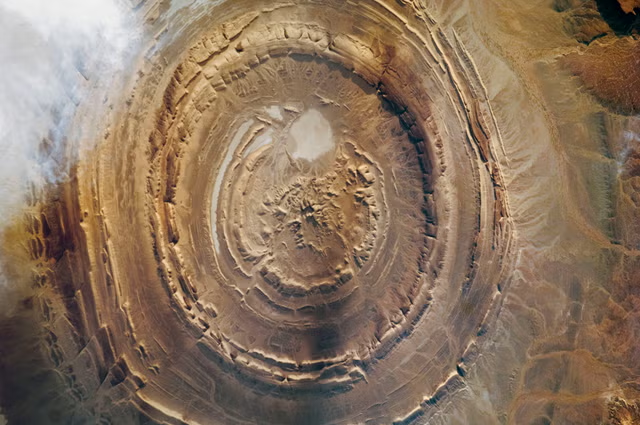
Lost city of Atlantis, supposedly. Just got washed away in a downward slope from Google Earth.
 
Humans have always been storytellers. Weaving tales, exchanging knowledge, and planning for the future are quintessentially human endeavors that have shaped the course of our species. But when did this remarkable ability to communicate through language first emerge? Recent research suggests a far earlier origin than previously thought, shedding light on the fascinating journey of human evolution.

Dr. Steven Mithen, an esteemed archaeologist from the University of Reading, has delved deep into the annals of prehistory to uncover the roots of human speech. Contrary to conventional wisdom, which pegged the advent of language to around 200,000 years ago, Mithen's groundbreaking analysis suggests a much more ancient beginning—approximately 1.6 million years ago, in the cradle of humanity, somewhere nestled in the vast expanse of eastern or southern Africa.

In his quest to unveil the origins of language, Mithen meticulously examined a plethora of evidence spanning archaeology, genetics, neurology, and linguistics. The culmination of his research paints a vivid picture of our ancestors' journey towards spoken communication.

Central to Mithen's findings is the pivotal role played by our evolving brains. As our cranial capacity expanded over millennia, so too did the intricacies of our neural architecture. One key milestone was the emergence of Broca's area—an enigmatic region nestled within the frontal lobe, believed to be the epicenter of language production and comprehension. This cognitive leap paved the way for our ancestors to transcend primitive gestures and embark on the transformative journey of verbal expression.

But the evolution of language was not a solitary endeavor. It was intricately woven into the fabric of our species' survival and adaptation. The emergence of bipedalism, coupled with cranial changes, heralded a shift in the configuration of our vocal tract—laying the foundation for articulate speech. Language, it seems, was nature's answer to the challenges posed by our relatively feeble physiques. Through coordinated hunting and communal living, early humans leveraged the power of speech to conquer the wilderness and thrive in diverse environments.

The archaeological record serves as a silent witness to this evolutionary saga. From the storied landscapes of Tanzania's Olduvai Gorge to the windswept expanses of the Sahara, traces of our ancestors' ingenuity and linguistic prowess endure. Sophisticated stone tools, passed down through generations, attest to the transmission of knowledge—a testament to the transformative power of language in shaping human destiny.

But what of the language itself? Mithen postulates that the linguistic landscape of our ancestors was a far cry from the rich tapestry of modern tongues. Rather, it comprised a rudimentary lexicon of sounds and gestures, gradually evolving to accommodate the complexities of human interaction. Yet, amidst this linguistic primordial soup, echoes of our distant past resonate. Mithen suggests that the roots of modern languages may trace back to those ancient murmurs—words that sought to encapsulate the essence of the world around us.

As we peer through the mists of time, Mithen's research invites us to ponder the profound legacy of our linguistic ancestors. Their quest for communication laid the groundwork for the rich tapestry of human culture and civilization that we inhabit today. From the campfires of our ancient ancestors to the digital realms of the 21st century, the human tongue remains an enduring symbol of our shared humanity—a testament to the indomitable spirit of curiosity and innovation that defines us as a species.

In the grand tapestry of human history, the story of language is but a single thread—one that binds us across continents and millennia. As we unravel the mysteries of our past, let us not forget the humble origins of our most cherished gift—the gift of speech.

In crafting this narrative, we embark on a journey of discovery—a journey that transcends the boundaries of time and space, uniting us in our quest for understanding. For in the whispers of our ancestors, we find echoes of our own humanity—a reminder that, despite the passage of ages, the essence of who we are remains unchanged.

View attachment 765696View attachment 765697

Thank you for posting. Read your post and the article linked, it’s interesting material.
 
I take it we don't have many archaeologists or anthropologists within our membership. Alas. I'm certainly interested! Thank you for this enlightenment, @Cold Ethyl! What a treasure you are!
The Richat structure is mentioned SPECIFICALLY in the writings of Hesiod and Ovid. Back when it was alive. It didn't survive the great Flood..... Yeah....
 

Attachments

  • Untitled.webp
    Untitled.webp
    318.6 KB · Views: 49
Great. Now we are supposed to give thanks to the nigger for inventing speech? Fuck outta here with this "science"...
The only evidence that humans came from Africa is that deserts erode the land there more, so other continents it would mean you’d have to dig down far, and there’s no X to mark the spot to dig, who says that tetrapods only left the sea around Africa and evolved into humans, maybe they came out and evolved all around the world
 
Back
Top