


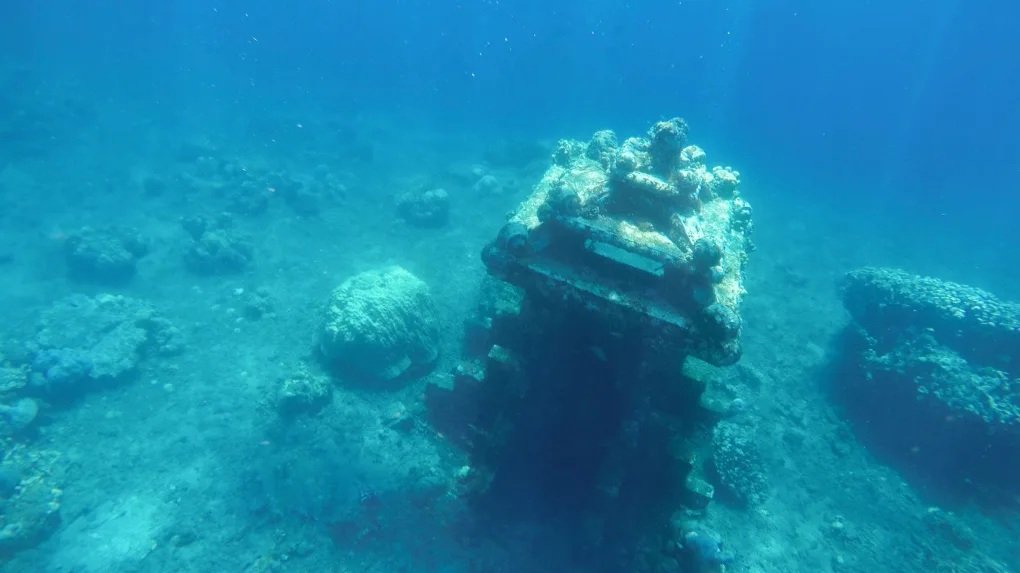
Two altars from a Nabatean temple, which were found submerged on the seabed of Pozzuoli, have been excavated by archaeologists. The now-submerged temple is thought to have formerly been the center of Puteoli, a commercial port in this part of southern Italy.
The remains of the submerged temple, according to the archaeologists, date from the first half of the first century A.D. The altars resemble a larger great altar that was discovered in the same location in 1965. DVSARI SACRVM, which means "sacred to Dusares," is said to be engraved on the altar's foundation.
The head deity of the Nabatean pantheon and a divinity who was exclusive to this faith, Dushara, is mentioned in this inscription. According to the experts, the tops of the altars discovered in the submerged temple include votive niches that once housed betyls, tiny sacred stones used as deity effigies.
Aniconic religions don't have any figures, and the Nabatean pantheon was no exception.
The underwater temple instead demonstrates how the pantheon used standing stones and other cultic stelae to represent the gods that were worshipped there. The discovery of this group of altars raises the overall number of Nabatean-related finds in this region of the buried city to five. There may also be additional remains scattered across the seafloor.
This Nabatean temple's existence has long been known. However, archaeologists weren't yet able to pinpoint its specific location. With the help of this fresh discovery, scholars may now pinpoint the exact location of the temple and perhaps learn more about how the Nabateans interacted with the townspeople and business owners.
It's always fascinating to make these kinds of discoveries, especially while archaeologists keep looking for the route to Atlantis, which is still thought to be out there. Simply put, this underwater temple serves as another reminder of the earlier era in which humans lived.

 www.thearchaeologist.org
The remains of the submerged temple, according to the archaeologists, date from the first half of the first century A.D. The altars resemble a larger great altar that was discovered in the same location in 1965. DVSARI SACRVM, which means "sacred to Dusares," is said to be engraved on the altar's foundation.
The head deity of the Nabatean pantheon and a divinity who was exclusive to this faith, Dushara, is mentioned in this inscription. According to the experts, the tops of the altars discovered in the submerged temple include votive niches that once housed betyls, tiny sacred stones used as deity effigies.
Aniconic religions don't have any figures, and the Nabatean pantheon was no exception.
The underwater temple instead demonstrates how the pantheon used standing stones and other cultic stelae to represent the gods that were worshipped there. The discovery of this group of altars raises the overall number of Nabatean-related finds in this region of the buried city to five. There may also be additional remains scattered across the seafloor.
This Nabatean temple's existence has long been known. However, archaeologists weren't yet able to pinpoint its specific location. With the help of this fresh discovery, scholars may now pinpoint the exact location of the temple and perhaps learn more about how the Nabateans interacted with the townspeople and business owners.
It's always fascinating to make these kinds of discoveries, especially while archaeologists keep looking for the route to Atlantis, which is still thought to be out there. Simply put, this underwater temple serves as another reminder of the earlier era in which humans lived.
At the bottom of the sea, archaeologists unearthed the remains of an ancient temple
Two altars from a Nabatean temple, which were found submerged on the seabed of Pozzuoli, have been excavated by archaeologists. The now-submerged temple is thought to have formerly been the center of Puteoli, a commercial port in this part of southern Italy.
www.thearchaeologist.org