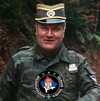
From Britannica: "Ratko Mladić (born March 12, 1942, Božinovići, Yugoslavia (now in Bosnia and Herzegovina) is a Bosnian Serb military leader who commanded the Bosnian Serb army during the Bosnian conflict (1992–95) and who was widely believed to have masterminded the Srebrenica massacre, the worst episode of mass murder within Europe since World War II. Mladić played a major role in the three-and-a-half-year siege of Sarajevo, during which Bosnian Serb forces rained artillery, mortar, machine-gun, and rifle fire on the terrorized citizenry, indiscriminately killing and wounding thousands. In March 1995 the Bosnian Serb president, Radovan Karadžić, ordered that the military “create an unbearable situation of total insecurity with no hope of further survival or life for the inhabitants of Srebrenica.” Mladić is widely believed to have overseen the subsequent Srebrenica massacre, in which at least 7,000 Bosniak (Bosnian Muslims) men and boys were killed."
"A Serb dies suddenly- and at the worst time possible time - during an important war crimes trial at The Hague. Does that sound familiar? The death of Dusan Dunjic, a forensic pathologist who was found dead in his room in the Crown Plaza Hotel just hours before he was due to testify as a key defense witness in the trial of the Bosnian Serb Ratko Mladic - unsurprisingly led some to think back to the sudden death of the former Serb President and President of Yugoslavia, Slobodan Milosevic in 2006. Although an autopsy found that Dunjic- whose body was found by a member of the hotel staff and a representative of the Hague tribunal died of natural causes, it has been reported that the deceased’s family in Serbia, and family doctors don’t believe the ’natural causes’ explanation- with friends pointing out the 65-year-old was ‘as fit as a fiddle‘. There were also conflicting reports about where Dunjic’s body was found- one had him on a chair in his room, the other lying on the floor. Certainly the timing of Dunjic’s death is disastrous for Mladic- who is charged with genocide, war crimes and crimes against humanity. Anyone concerned with justice, and making sure that all the evidence is gone through as thoroughly as possible when such serious crimes are being discussed, should regret the forensic pathologist’s absence from the court room. Now if two Serbs die sudden and untimely deaths at The Hague/Scheveningen, we could put it down to coincidence. People die - and being on trial for war crimes or even testifying in such trials - is a stressful experience. The trouble is we’re not just talking about Dunjic and Milosevic. There have been a number of strange deaths of Serbs involved with war crimes trials at The Hague, and they have tended to come at extremely convenient moments for the prosecution side. Some would say there‘s simply been too many dead bodies now to explain them all away as ‘coincidences‘. But these are Serbs dying under mysterious circumstances in Western Europe, in a NATO member state, so of course there can be no question of foul play! Or at least, that is what we are encouraged to think. I’d argue that at the very least we ought to be keeping an open mind, and not ruling out the possibility that some dark forces have been at work here, at least for some of the cases. After all, the stakes are very high, and NATO needs Serbs, the official ’Bad Guys’ for defying Western hegemonic ambitions in the Balkans in the 1990s, to be found guilty. But what happens when the evidence just isn‘t there?"
Mr. Mladić and Mr. Karadžić were found guilty and will spend the rest of their lives behind bars. Mr. Milošević was never convicted. Milošević died of a heart attack in his cell in The Hague in 2006 before the trial could conclude. The Tribunal denied responsibility for his death stating he had refused to take prescribed medicines for his cardiac ailments and medicated himself instead.
"A Serb dies suddenly- and at the worst time possible time - during an important war crimes trial at The Hague. Does that sound familiar? The death of Dusan Dunjic, a forensic pathologist who was found dead in his room in the Crown Plaza Hotel just hours before he was due to testify as a key defense witness in the trial of the Bosnian Serb Ratko Mladic - unsurprisingly led some to think back to the sudden death of the former Serb President and President of Yugoslavia, Slobodan Milosevic in 2006. Although an autopsy found that Dunjic- whose body was found by a member of the hotel staff and a representative of the Hague tribunal died of natural causes, it has been reported that the deceased’s family in Serbia, and family doctors don’t believe the ’natural causes’ explanation- with friends pointing out the 65-year-old was ‘as fit as a fiddle‘. There were also conflicting reports about where Dunjic’s body was found- one had him on a chair in his room, the other lying on the floor. Certainly the timing of Dunjic’s death is disastrous for Mladic- who is charged with genocide, war crimes and crimes against humanity. Anyone concerned with justice, and making sure that all the evidence is gone through as thoroughly as possible when such serious crimes are being discussed, should regret the forensic pathologist’s absence from the court room. Now if two Serbs die sudden and untimely deaths at The Hague/Scheveningen, we could put it down to coincidence. People die - and being on trial for war crimes or even testifying in such trials - is a stressful experience. The trouble is we’re not just talking about Dunjic and Milosevic. There have been a number of strange deaths of Serbs involved with war crimes trials at The Hague, and they have tended to come at extremely convenient moments for the prosecution side. Some would say there‘s simply been too many dead bodies now to explain them all away as ‘coincidences‘. But these are Serbs dying under mysterious circumstances in Western Europe, in a NATO member state, so of course there can be no question of foul play! Or at least, that is what we are encouraged to think. I’d argue that at the very least we ought to be keeping an open mind, and not ruling out the possibility that some dark forces have been at work here, at least for some of the cases. After all, the stakes are very high, and NATO needs Serbs, the official ’Bad Guys’ for defying Western hegemonic ambitions in the Balkans in the 1990s, to be found guilty. But what happens when the evidence just isn‘t there?"
Mr. Mladić and Mr. Karadžić were found guilty and will spend the rest of their lives behind bars. Mr. Milošević was never convicted. Milošević died of a heart attack in his cell in The Hague in 2006 before the trial could conclude. The Tribunal denied responsibility for his death stating he had refused to take prescribed medicines for his cardiac ailments and medicated himself instead.