


A unique sea creature with panda-like markings and a skeleton-like body has been officially identified as a new species, Clavelina ossipandae.
About the viral creature: Measuring less than an inch (2 centimeters), the animal first gained popularity in 2017 after photos of its distinctive appearance surfaced online. Some Japanese netizens affectionately called it the "Skeleton Panda Sea Squirt" due to its black-and-white markings and that's what it's been known as online ever since.
Discovered inhabiting the waters around Kumejima Island in Okinawa Prefecture, this enigmatic creature captured the attention of scientists after the initial online buzz, according to the researchers' press release
New species confirmed: New research, led by third-year doctoral student Naohiro Hasegawa from Hokkaido University, involved the collection of specimens and further analysis of the creature's morphology and DNA. The study, published on Feb. 1 in the journal Species Diversity, confirms that the Skeleton Panda Sea Squirt is indeed a new species.
The white parts that look like bones are the blood vessels that run horizontally through the sea squirts' gills," the researchers noted. "The black parts on the head that look like a panda's eyes and nose are just a pattern, and we don't really know why the pattern is there."
About the name: The scientific name Clavelina ossipandae was proposed to encapsulate the creature's skeletal features and panda-like resemblance. Clavelina, the genus it belongs to, is known for its bottle-shaped bodies. Ossi, Latin for "bone," refers to the white blood vessels resembling a skeleton. Pandae refers to the black spots on its head, reminiscent of a panda's eyes and nose.
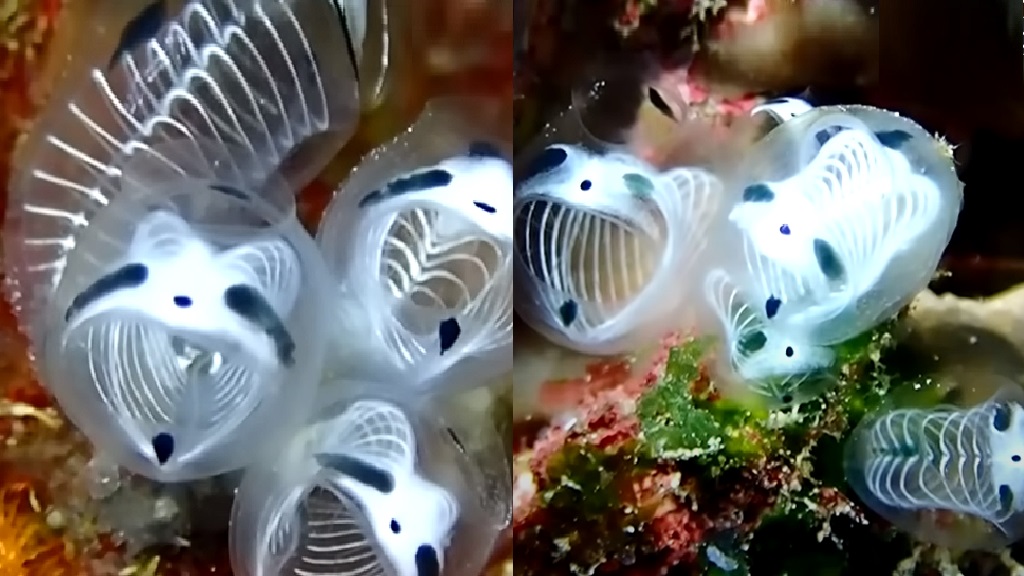
Japanese scientists identify new animal species with panda markings, skeleton-like body
Discovered inhabiting the waters in Kumejima Island, the creature captured the attention of scientists after the initial online buzz
nextshark.com