
• Adults Only Website 18+

    If you are under 18 you are not permitted to submit personal information to us or use this website. If discovered you will be banned.

    We will ban and report anyone posting illegal content.

    We will ban any forum user who breaks our terms.

    Freedom of speech should be wide open as long as it doesn't incite violence.

    We have a 15 year old thriving community here with 400,000+ members and hundreds of people online at any given moment, we encourage you to join!, there are 1000's of topics to discuss. Please be aware before registering and read our terms of service and privacy policy.

    By dismissing this notice and proceeding, you agree to the above.

FYI The Aus gas industry, a power crisis and magical thinking...

I find the following article interesting. In it an oil and gas company is not allowed to compete a pipe line under the sea because some aboriginals are claiming that it may impact 'cultural heratige sites' as yet unknown from a time over 10 000 years ago when people may have lived in what was above sea level but which is now hundreds of meters under water.

It is interesting to me that without access to western concepts such as ice ages, water level rises and other western archaeological knowledge such an idea would have been totally alien to these people.

So how can you use such knowledge to argue about magical dream time snake things to affect real time energy needs? This is magical thinking and is, to me, incredible as in without credibility...

You could use this precedent to get UK 'aboriginals' such as Scotts and Welsh, to mount challenges to any oil fields in the north sea... So a bunch of 'Stop Oil' idiots could mount such a challenge. Madness...


‘Wake up call’ for offshore gas companies in Indigenous heritage row​

Elouise Fowler

Elouise FowlerReporter
Nov 24, 2023 – 3.07pm
Save
Share


Santos’ plan to extract gas from the Timor Sea faces a formidable opponent: the traditional owners of the tiny Tiwi Islands, 2½ hours by ferry or 80 kilometres north of Darwin.
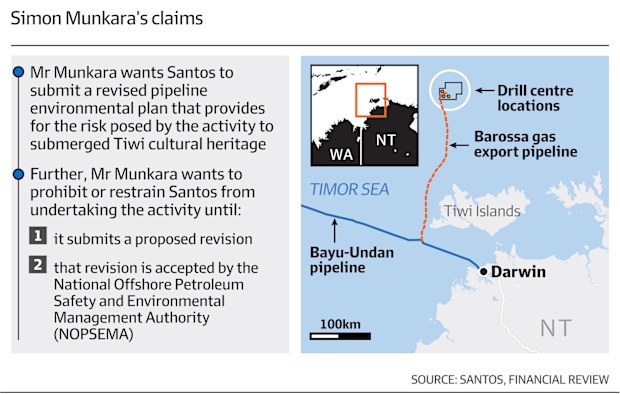
The energy giant’s Barossa project will rely on a 262-kilometre pipeline connecting the offshore gas field to the existing Bayu-Undan to Darwin pipeline. At its closest point, Bathurst Island is just 6km-7km from the gas export pipeline corridor.
e98d9a88a47c1f01517b8030c177fd5f77c97dd3

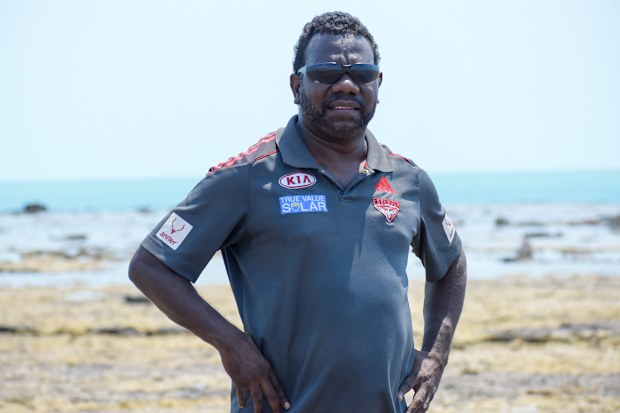
Jikilaruwu traditional owner Simon Munkara; he stands between Santos and its $5.8 billion Barossa project. Tymunna Clements
When Federal Court Judge Natalie Charlesworth handed down an 11th-hour urgent injunction against laying the pipe on November 2, she remarked the ship hired to do the job was in the court’s line of sight docked in the Darwin harbour.
The pipeline to the $5.8 billion Barossa project is on hold until the court can hear the claims brought by Simon Munkara, a Bathurst Islander and traditional owner, next month. They argue the pipeline skirting Cape Fourcroy on Bathurst Island, one of the two inhabited Tiwi Islands, will “desecrate” ancient burial sites, marine life, and ancient songlines.
775ad5dc46e8ef18a45829d58eefdea4d1ff4591


A songline is a route through a landscape which features landmarks relating to events that happened during the dreamtime. Mr Munkara’s lawyers, from the Environmental Defenders Office, told the court Santos should not be permitted to build the pipeline until it revises its environment plan to address risks to underwater cultural heritage.
It’s not just Santos’ pipeline caught up in the middle of a heritage fight. Woodside Energy’s Scarborough gas project is up in the air too until the court can determine whether traditional owners were sufficiently consulted. This suggests that the National Offshore Petroleum Safety and Environmental Management Authority, which issued conditional approval to all three projects, no longer has the final say in their future.
This novel litigation by Indigenous groups, assisted by environmental lawyers, has tapped a previously unused appeals process over the past 18 months to achieve several Federal Court victories to suspend work on new offshore gas developments, and now twice in Santos’ case.
This is part of a global trend sparked in North America where environmentalists and farmers have teamed up to halt fossil fuel projects and pipelines.

‘Wake-up call’​

“There’s not a lot of law around offshore cultural heritage or the spiritual connection to offshore areas,” said Gavin Scott, a resources partner at Norton Rose Fulbright. “But it’s growing.”
In a landmark ruling of the full Federal Court in November 2022, Tiwi Islander Dennis Tipakalippa cruelled Santos’ attempt to begin drilling work on the Barossa gas project in the Timor Sea. Mr Tipakalippa successfully challenged NOPSEMA’s regulatory approval for the Barossa project because the oil and gas giant failed to “adequately” consult the traditional owners over their connections to sea, the court found.
A year later, Santos hasn’t been able to start drilling.
306b470b3c2cd36b3b8349ab245ff9de5ee8c473

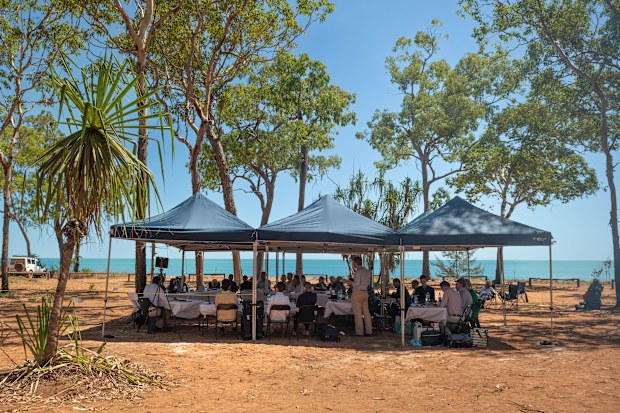
The Federal Court hearing in the Tiwi Islands. Rebecca Parker/ECNT
These cases underline that proper consultation and engagement needs to occur to prevent legal action, Mr Scott told the AFR Weekend. “Companies need to spend time investing in building strong and sustainable relationships with Aboriginal groups, and that takes dedicated effort, and sometimes years of work to form that relationship.
“It goes beyond just pushing an approval through a government regulator. It goes to social licence to operate – because the key part to coexisting with a First Nations group is to really listen and form a good relationship ... I think the Tipakalippa case was a wake-up call to all people dealing with offshore regimes.”
The gas industry is winded by the legal challenges.
Australian Energy Producers, the lobby group for gas producers, says the economic and energy security of Australia is at risk.
“Regulations that provide clarity and certainty for industry while maintaining comprehensive and meaningful consultation with stakeholders are urgently needed,” said Australian Energy Producers chief executive Samantha McCulloch. “The ongoing lack of clarity is continuing to put at risk major projects.”

‘Connection to country’

During court hearings in November, Mr Munkara’s lawyers told Justice Charlesworth new evidence on the effect of the pipeline on underwater heritage areas had arisen, sparking a last-minute injunction ahead of the pipe-laying ship departing.

The court extended a partial injunction on November 15, which means Santos can start laying the pipeline to its Barossa gas project in the Timor Sea but only in the northernmost area, away from the Tiwi Islands.
Justice Charlesworth will preside over the hearing in mid-December to decide whether Santos must resubmit the environmental plan.
Mr Munkara’s lawyers told the court the contested sea country to which Jikilaruwu have profound spiritual and cultural ties constitute integral aspects of their identity and beliefs.
They argued the new evidence before the court showed the pipeline would affect connections to the water, which relate to their ancestors and the submerged land they lived on, which includes sacred burial sites. The area also hosts dreaming and ancestral spirits, such as Ampiji and Yimunga, which are central to Tiwi culture.
5faac69ebd51380f4af899011fc04f87c6ded17d

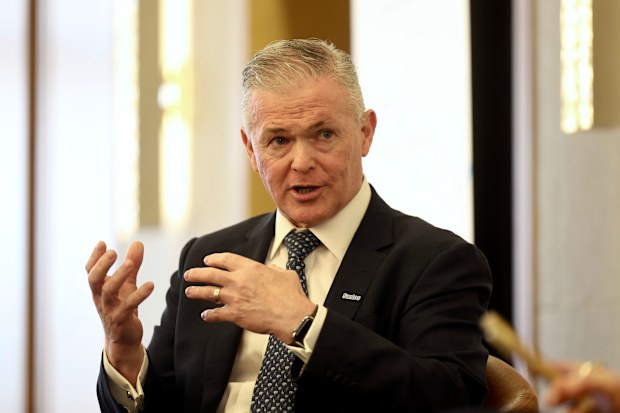
Santos boss Kevin Gallagher railed against the uncertain regulatory environment in Australia, Matt Jelonek
Stories and songlines, notably the Jikilaruwu songline Wiarprali which is about the Crocodile-Man, run through the pipeline area, Mr Munkara’s lawyers submitted to the court. The final element of Mr Munkara’s claim is that the pipeline is close to areas enriched with marine life and animals, vital for sustenance and totemic importance. A totem is a natural object, plant or animal that is inherited by members of a clan or family as their spiritual emblem.

Beyond Juukan gorge​

“If you think about Native Title and impact on cultural heritage, you usually think about onshore issues – think of Juukan gorge, sacred sites, rivers and ridges,” said Mr Scott, referring to Rio Tinto blowing up ancient rock shelters in the Juukan gorge in 2020.
But offshore spiritual connections to history and culture can be understood in the same way that creeks and ridgelines form storylines onshore, he said. “So there isn’t really much of a difference between onshore and offshore. Even though the pipeline is deep underwater they need to consult on that basis of connection to country.”
Santos still plans to extract gas from the Barossa field and transport it to an LNG facility in the Northern Territory.
The oil and gas giant had hoped to begin laying the pipeline in November to keep the Barossa project on track for its first gas target of 2025, while waiting for the regulator, NOPSEMA, to approve an updated environmental plan related to drilling.
In light of Mr Munkara’s claim, Santos is vigorously denying its environmental plan should be resubmitted, arguing there is no new evidence to support the claims.
Santos told the court there was no specific new evidence of cultural sites near the pipeline and that the installation of the pipeline is expected to have minimal impact on the seabed for several reasons: no activities will actively remove sediment or material from the seabed during installation, the pipeline is not fixed to the seabed, and it won’t sink into the sediment.
Moreover, Santos claims the pipeline’s presence is unlikely to significantly increase the current disturbance levels in the area, given the historically high traffic of commercial shipping lanes and regular seabed disturbance from trawling and commercial fisheries around the Tiwi Islands.

9036909105ae99f0ed00bbfca8910c106eb8b701

Woodside CEO Meg O’Neill: “I think what we see from the EDO is they are going to challenge everything associated with Barossa and Scarborough, unfortunately.” Louie Douvis
Santos boss Kevin Gallagher railed against the uncertain regulatory environment in Australia, which he said on Wednesday needed to be fixed by the federal government, otherwise investment in offshore oil and gas projects would simply dry up.
“Nothing will drive investment away from Australia faster than this environment,” he said at the group’s investor day.
Meg O’Neill, Woodside’s boss and the Australian Energy Producers’ chairwoman, appears to agree; she said on November 5 that changes were needed to provide more clarity on who represents a relevant person that needs to be consulted on offshore projects.
“I think what we see from the EDO is they are going to challenge everything associated with Barossa and Scarborough, unfortunately,” Ms O’Neill said.
Everyone else, from gas producers to activists, is holding their breath for the Federal Court’s decision.
“We have a number of offshore clients that aren’t Santos,” Norton Rose Fulbright partner Mr Scott said. “They are looking and thinking, ‘I wonder how that’s all going to end?’.”

Dennis Tipakalippa prevailed against Santos in a dispute over sea country rights.
 

Attachments

  • 1700858064627.webp
    1700858064627.webp
    52 bytes · Views: 33
  • 1700858064638.webp
    1700858064638.webp
    2.5 KB · Views: 34
yea well bidens first day in office,he shut the pipe line down that was going thru "indian tribal land" . the indians and "white man" had a squabble with the govt about the border fence. again,indian tribal lands. as well as the animal people with pathways animals used,being fenced off.
its crazy. people better watch out. they will eventually reap what they sew!
 
I find the following article interesting. In it an oil and gas company is not allowed to compete a pipe line under the sea because some aboriginals are claiming that it may impact 'cultural heratige sites' as yet unknown from a time over 10 000 years ago when people may have lived in what was above sea level but which is now hundreds of meters under water.

It is interesting to me that without access to western concepts such as ice ages, water level rises and other western archaeological knowledge such an idea would have been totally alien to these people.

So how can you use such knowledge to argue about magical dream time snake things to affect real time energy needs? This is magical thinking and is, to me, incredible as in without credibility...

You could use this precedent to get UK 'aboriginals' such as Scotts and Welsh, to mount challenges to any oil fields in the north sea... So a bunch of 'Stop Oil' idiots could mount such a challenge. Madness...


‘Wake up call’ for offshore gas companies in Indigenous heritage row​

Elouise Fowler

Elouise FowlerReporter
Nov 24, 2023 – 3.07pm
Save
Share


Santos’ plan to extract gas from the Timor Sea faces a formidable opponent: the traditional owners of the tiny Tiwi Islands, 2½ hours by ferry or 80 kilometres north of Darwin.
The energy giant’s Barossa project will rely on a 262-kilometre pipeline connecting the offshore gas field to the existing Bayu-Undan to Darwin pipeline. At its closest point, Bathurst Island is just 6km-7km from the gas export pipeline corridor.
e98d9a88a47c1f01517b8030c177fd5f77c97dd3

Jikilaruwu traditional owner Simon Munkara; he stands between Santos and its $5.8 billion Barossa project. Tymunna Clements
When Federal Court Judge Natalie Charlesworth handed down an 11th-hour urgent injunction against laying the pipe on November 2, she remarked the ship hired to do the job was in the court’s line of sight docked in the Darwin harbour.
The pipeline to the $5.8 billion Barossa project is on hold until the court can hear the claims brought by Simon Munkara, a Bathurst Islander and traditional owner, next month. They argue the pipeline skirting Cape Fourcroy on Bathurst Island, one of the two inhabited Tiwi Islands, will “desecrate” ancient burial sites, marine life, and ancient songlines.
775ad5dc46e8ef18a45829d58eefdea4d1ff4591


A songline is a route through a landscape which features landmarks relating to events that happened during the dreamtime. Mr Munkara’s lawyers, from the Environmental Defenders Office, told the court Santos should not be permitted to build the pipeline until it revises its environment plan to address risks to underwater cultural heritage.
It’s not just Santos’ pipeline caught up in the middle of a heritage fight. Woodside Energy’s Scarborough gas project is up in the air too until the court can determine whether traditional owners were sufficiently consulted. This suggests that the National Offshore Petroleum Safety and Environmental Management Authority, which issued conditional approval to all three projects, no longer has the final say in their future.
This novel litigation by Indigenous groups, assisted by environmental lawyers, has tapped a previously unused appeals process over the past 18 months to achieve several Federal Court victories to suspend work on new offshore gas developments, and now twice in Santos’ case.
This is part of a global trend sparked in North America where environmentalists and farmers have teamed up to halt fossil fuel projects and pipelines.

‘Wake-up call’​

“There’s not a lot of law around offshore cultural heritage or the spiritual connection to offshore areas,” said Gavin Scott, a resources partner at Norton Rose Fulbright. “But it’s growing.”
In a landmark ruling of the full Federal Court in November 2022, Tiwi Islander Dennis Tipakalippa cruelled Santos’ attempt to begin drilling work on the Barossa gas project in the Timor Sea. Mr Tipakalippa successfully challenged NOPSEMA’s regulatory approval for the Barossa project because the oil and gas giant failed to “adequately” consult the traditional owners over their connections to sea, the court found.
A year later, Santos hasn’t been able to start drilling.
306b470b3c2cd36b3b8349ab245ff9de5ee8c473

The Federal Court hearing in the Tiwi Islands. Rebecca Parker/ECNT
These cases underline that proper consultation and engagement needs to occur to prevent legal action, Mr Scott told the AFR Weekend. “Companies need to spend time investing in building strong and sustainable relationships with Aboriginal groups, and that takes dedicated effort, and sometimes years of work to form that relationship.
“It goes beyond just pushing an approval through a government regulator. It goes to social licence to operate – because the key part to coexisting with a First Nations group is to really listen and form a good relationship ... I think the Tipakalippa case was a wake-up call to all people dealing with offshore regimes.”
The gas industry is winded by the legal challenges.
Australian Energy Producers, the lobby group for gas producers, says the economic and energy security of Australia is at risk.
“Regulations that provide clarity and certainty for industry while maintaining comprehensive and meaningful consultation with stakeholders are urgently needed,” said Australian Energy Producers chief executive Samantha McCulloch. “The ongoing lack of clarity is continuing to put at risk major projects.”

‘Connection to country’

During court hearings in November, Mr Munkara’s lawyers told Justice Charlesworth new evidence on the effect of the pipeline on underwater heritage areas had arisen, sparking a last-minute injunction ahead of the pipe-laying ship departing.

The court extended a partial injunction on November 15, which means Santos can start laying the pipeline to its Barossa gas project in the Timor Sea but only in the northernmost area, away from the Tiwi Islands.
Justice Charlesworth will preside over the hearing in mid-December to decide whether Santos must resubmit the environmental plan.
Mr Munkara’s lawyers told the court the contested sea country to which Jikilaruwu have profound spiritual and cultural ties constitute integral aspects of their identity and beliefs.
They argued the new evidence before the court showed the pipeline would affect connections to the water, which relate to their ancestors and the submerged land they lived on, which includes sacred burial sites. The area also hosts dreaming and ancestral spirits, such as Ampiji and Yimunga, which are central to Tiwi culture.
5faac69ebd51380f4af899011fc04f87c6ded17d

Santos boss Kevin Gallagher railed against the uncertain regulatory environment in Australia, Matt Jelonek
Stories and songlines, notably the Jikilaruwu songline Wiarprali which is about the Crocodile-Man, run through the pipeline area, Mr Munkara’s lawyers submitted to the court. The final element of Mr Munkara’s claim is that the pipeline is close to areas enriched with marine life and animals, vital for sustenance and totemic importance. A totem is a natural object, plant or animal that is inherited by members of a clan or family as their spiritual emblem.

Beyond Juukan gorge​

“If you think about Native Title and impact on cultural heritage, you usually think about onshore issues – think of Juukan gorge, sacred sites, rivers and ridges,” said Mr Scott, referring to Rio Tinto blowing up ancient rock shelters in the Juukan gorge in 2020.
But offshore spiritual connections to history and culture can be understood in the same way that creeks and ridgelines form storylines onshore, he said. “So there isn’t really much of a difference between onshore and offshore. Even though the pipeline is deep underwater they need to consult on that basis of connection to country.”
Santos still plans to extract gas from the Barossa field and transport it to an LNG facility in the Northern Territory.
The oil and gas giant had hoped to begin laying the pipeline in November to keep the Barossa project on track for its first gas target of 2025, while waiting for the regulator, NOPSEMA, to approve an updated environmental plan related to drilling.
In light of Mr Munkara’s claim, Santos is vigorously denying its environmental plan should be resubmitted, arguing there is no new evidence to support the claims.
Santos told the court there was no specific new evidence of cultural sites near the pipeline and that the installation of the pipeline is expected to have minimal impact on the seabed for several reasons: no activities will actively remove sediment or material from the seabed during installation, the pipeline is not fixed to the seabed, and it won’t sink into the sediment.
Moreover, Santos claims the pipeline’s presence is unlikely to significantly increase the current disturbance levels in the area, given the historically high traffic of commercial shipping lanes and regular seabed disturbance from trawling and commercial fisheries around the Tiwi Islands.
9036909105ae99f0ed00bbfca8910c106eb8b701

Woodside CEO Meg O’Neill: “I think what we see from the EDO is they are going to challenge everything associated with Barossa and Scarborough, unfortunately.” Louie Douvis
Santos boss Kevin Gallagher railed against the uncertain regulatory environment in Australia, which he said on Wednesday needed to be fixed by the federal government, otherwise investment in offshore oil and gas projects would simply dry up.
“Nothing will drive investment away from Australia faster than this environment,” he said at the group’s investor day.
Meg O’Neill, Woodside’s boss and the Australian Energy Producers’ chairwoman, appears to agree; she said on November 5 that changes were needed to provide more clarity on who represents a relevant person that needs to be consulted on offshore projects.
“I think what we see from the EDO is they are going to challenge everything associated with Barossa and Scarborough, unfortunately,” Ms O’Neill said.
Everyone else, from gas producers to activists, is holding their breath for the Federal Court’s decision.
“We have a number of offshore clients that aren’t Santos,” Norton Rose Fulbright partner Mr Scott said. “They are looking and thinking, ‘I wonder how that’s all going to end?’.”

Dennis Tipakalippa prevailed against Santos in a dispute over sea country rights.
I live this happy horseshit every day and it infuriating. Not one of these aboriginals/indigenous/indians or their supporters who're objecting to this sort of responsible development are honest or have an understanding of the technical elements of the project or the positive impact it brings to the community and their myopic lives.

When the Allies won WW2 and mostly the Americans started working with the Germans & the Japanese, two highly civilized cultures, the rebuilding created something great. Germany & Japan were decimated physically, economically and socially but they both realized that working with the Americans would be what was best for their citizens and how to move forward. On the other hand many indigenous around the world have decided that instead of working with the White man to develop their natural resources they'd rather perpetually play the victim. Fuck off! We came, we fought, we bartered and we won. Deal with it you pierced nosed savages!


yea well bidens first day in office,he shut the pipe line down that was going thru "indian tribal land" . the indians and "white man" had a squabble with the govt about the border fence. again,indian tribal lands. as well as the animal people with pathways animals used,being fenced off.
its crazy. people better watch out. they will eventually reap what they sew!
Literally the first thing that pant shitting muppet did was to kill Keystone XL. And in just over a year he went hat in hand to beg the Saudis to produce more. I don't care where you fall on the political spectrum but to not realize that buying your oil from Canada is a better option than any OPEC or other cunty nation is better off you need to unfuck yourself.
 
I find the following article interesting. In it an oil and gas company is not allowed to compete a pipe line under the sea because some aboriginals are claiming that it may impact 'cultural heratige sites' as yet unknown from a time over 10 000 years ago when people may have lived in what was above sea level but which is now hundreds of meters under water.

It is interesting to me that without access to western concepts such as ice ages, water level rises and other western archaeological knowledge such an idea would have been totally alien to these people.

So how can you use such knowledge to argue about magical dream time snake things to affect real time energy needs? This is magical thinking and is, to me, incredible as in without credibility...

You could use this precedent to get UK 'aboriginals' such as Scotts and Welsh, to mount challenges to any oil fields in the north sea... So a bunch of 'Stop Oil' idiots could mount such a challenge. Madness...


‘Wake up call’ for offshore gas companies in Indigenous heritage row​

Elouise Fowler

Elouise FowlerReporter
Nov 24, 2023 – 3.07pm
Save
Share


Santos’ plan to extract gas from the Timor Sea faces a formidable opponent: the traditional owners of the tiny Tiwi Islands, 2½ hours by ferry or 80 kilometres north of Darwin.
The energy giant’s Barossa project will rely on a 262-kilometre pipeline connecting the offshore gas field to the existing Bayu-Undan to Darwin pipeline. At its closest point, Bathurst Island is just 6km-7km from the gas export pipeline corridor.
e98d9a88a47c1f01517b8030c177fd5f77c97dd3

Jikilaruwu traditional owner Simon Munkara; he stands between Santos and its $5.8 billion Barossa project. Tymunna Clements
When Federal Court Judge Natalie Charlesworth handed down an 11th-hour urgent injunction against laying the pipe on November 2, she remarked the ship hired to do the job was in the court’s line of sight docked in the Darwin harbour.
The pipeline to the $5.8 billion Barossa project is on hold until the court can hear the claims brought by Simon Munkara, a Bathurst Islander and traditional owner, next month. They argue the pipeline skirting Cape Fourcroy on Bathurst Island, one of the two inhabited Tiwi Islands, will “desecrate” ancient burial sites, marine life, and ancient songlines.
775ad5dc46e8ef18a45829d58eefdea4d1ff4591


A songline is a route through a landscape which features landmarks relating to events that happened during the dreamtime. Mr Munkara’s lawyers, from the Environmental Defenders Office, told the court Santos should not be permitted to build the pipeline until it revises its environment plan to address risks to underwater cultural heritage.
It’s not just Santos’ pipeline caught up in the middle of a heritage fight. Woodside Energy’s Scarborough gas project is up in the air too until the court can determine whether traditional owners were sufficiently consulted. This suggests that the National Offshore Petroleum Safety and Environmental Management Authority, which issued conditional approval to all three projects, no longer has the final say in their future.
This novel litigation by Indigenous groups, assisted by environmental lawyers, has tapped a previously unused appeals process over the past 18 months to achieve several Federal Court victories to suspend work on new offshore gas developments, and now twice in Santos’ case.
This is part of a global trend sparked in North America where environmentalists and farmers have teamed up to halt fossil fuel projects and pipelines.

‘Wake-up call’​

“There’s not a lot of law around offshore cultural heritage or the spiritual connection to offshore areas,” said Gavin Scott, a resources partner at Norton Rose Fulbright. “But it’s growing.”
In a landmark ruling of the full Federal Court in November 2022, Tiwi Islander Dennis Tipakalippa cruelled Santos’ attempt to begin drilling work on the Barossa gas project in the Timor Sea. Mr Tipakalippa successfully challenged NOPSEMA’s regulatory approval for the Barossa project because the oil and gas giant failed to “adequately” consult the traditional owners over their connections to sea, the court found.
A year later, Santos hasn’t been able to start drilling.
306b470b3c2cd36b3b8349ab245ff9de5ee8c473

The Federal Court hearing in the Tiwi Islands. Rebecca Parker/ECNT
These cases underline that proper consultation and engagement needs to occur to prevent legal action, Mr Scott told the AFR Weekend. “Companies need to spend time investing in building strong and sustainable relationships with Aboriginal groups, and that takes dedicated effort, and sometimes years of work to form that relationship.
“It goes beyond just pushing an approval through a government regulator. It goes to social licence to operate – because the key part to coexisting with a First Nations group is to really listen and form a good relationship ... I think the Tipakalippa case was a wake-up call to all people dealing with offshore regimes.”
The gas industry is winded by the legal challenges.
Australian Energy Producers, the lobby group for gas producers, says the economic and energy security of Australia is at risk.
“Regulations that provide clarity and certainty for industry while maintaining comprehensive and meaningful consultation with stakeholders are urgently needed,” said Australian Energy Producers chief executive Samantha McCulloch. “The ongoing lack of clarity is continuing to put at risk major projects.”

‘Connection to country’

During court hearings in November, Mr Munkara’s lawyers told Justice Charlesworth new evidence on the effect of the pipeline on underwater heritage areas had arisen, sparking a last-minute injunction ahead of the pipe-laying ship departing.

The court extended a partial injunction on November 15, which means Santos can start laying the pipeline to its Barossa gas project in the Timor Sea but only in the northernmost area, away from the Tiwi Islands.
Justice Charlesworth will preside over the hearing in mid-December to decide whether Santos must resubmit the environmental plan.
Mr Munkara’s lawyers told the court the contested sea country to which Jikilaruwu have profound spiritual and cultural ties constitute integral aspects of their identity and beliefs.
They argued the new evidence before the court showed the pipeline would affect connections to the water, which relate to their ancestors and the submerged land they lived on, which includes sacred burial sites. The area also hosts dreaming and ancestral spirits, such as Ampiji and Yimunga, which are central to Tiwi culture.
5faac69ebd51380f4af899011fc04f87c6ded17d

Santos boss Kevin Gallagher railed against the uncertain regulatory environment in Australia, Matt Jelonek
Stories and songlines, notably the Jikilaruwu songline Wiarprali which is about the Crocodile-Man, run through the pipeline area, Mr Munkara’s lawyers submitted to the court. The final element of Mr Munkara’s claim is that the pipeline is close to areas enriched with marine life and animals, vital for sustenance and totemic importance. A totem is a natural object, plant or animal that is inherited by members of a clan or family as their spiritual emblem.

Beyond Juukan gorge​

“If you think about Native Title and impact on cultural heritage, you usually think about onshore issues – think of Juukan gorge, sacred sites, rivers and ridges,” said Mr Scott, referring to Rio Tinto blowing up ancient rock shelters in the Juukan gorge in 2020.
But offshore spiritual connections to history and culture can be understood in the same way that creeks and ridgelines form storylines onshore, he said. “So there isn’t really much of a difference between onshore and offshore. Even though the pipeline is deep underwater they need to consult on that basis of connection to country.”
Santos still plans to extract gas from the Barossa field and transport it to an LNG facility in the Northern Territory.
The oil and gas giant had hoped to begin laying the pipeline in November to keep the Barossa project on track for its first gas target of 2025, while waiting for the regulator, NOPSEMA, to approve an updated environmental plan related to drilling.
In light of Mr Munkara’s claim, Santos is vigorously denying its environmental plan should be resubmitted, arguing there is no new evidence to support the claims.
Santos told the court there was no specific new evidence of cultural sites near the pipeline and that the installation of the pipeline is expected to have minimal impact on the seabed for several reasons: no activities will actively remove sediment or material from the seabed during installation, the pipeline is not fixed to the seabed, and it won’t sink into the sediment.
Moreover, Santos claims the pipeline’s presence is unlikely to significantly increase the current disturbance levels in the area, given the historically high traffic of commercial shipping lanes and regular seabed disturbance from trawling and commercial fisheries around the Tiwi Islands.
9036909105ae99f0ed00bbfca8910c106eb8b701

Woodside CEO Meg O’Neill: “I think what we see from the EDO is they are going to challenge everything associated with Barossa and Scarborough, unfortunately.” Louie Douvis
Santos boss Kevin Gallagher railed against the uncertain regulatory environment in Australia, which he said on Wednesday needed to be fixed by the federal government, otherwise investment in offshore oil and gas projects would simply dry up.
“Nothing will drive investment away from Australia faster than this environment,” he said at the group’s investor day.
Meg O’Neill, Woodside’s boss and the Australian Energy Producers’ chairwoman, appears to agree; she said on November 5 that changes were needed to provide more clarity on who represents a relevant person that needs to be consulted on offshore projects.
“I think what we see from the EDO is they are going to challenge everything associated with Barossa and Scarborough, unfortunately,” Ms O’Neill said.
Everyone else, from gas producers to activists, is holding their breath for the Federal Court’s decision.
“We have a number of offshore clients that aren’t Santos,” Norton Rose Fulbright partner Mr Scott said. “They are looking and thinking, ‘I wonder how that’s all going to end?’.”

Dennis Tipakalippa prevailed against Santos in a dispute over sea country rights.
It's being appealed before a full bench of the federal court that doesn't include the judge who made the initial ruling based on feelings. Shareprice is back to 2021 levels and rated a strong buy.
 
Literally the first thing that pant shitting muppet did was to kill Keystone XL. And in just over a year he went hat in hand to beg the Saudis to produce more. I don't care where you fall on the political spectrum but to not realize that buying your oil from Canada is a better option than any OPEC or other cunty nation is better off you need to unfuck yourself.
funny how now an election yr is looming,the petro prices are starting to come down. went down sixty cents since september. but,its the first time in a yr its drop this much.
 
I find the following article interesting. In it an oil and gas company is not allowed to compete a pipe line under the sea because some aboriginals are claiming that it may impact 'cultural heratige sites' as yet unknown from a time over 10 000 years ago when people may have lived in what was above sea level but which is now hundreds of meters under water.

It is interesting to me that without access to western concepts such as ice ages, water level rises and other western archaeological knowledge such an idea would have been totally alien to these people.

So how can you use such knowledge to argue about magical dream time snake things to affect real time energy needs? This is magical thinking and is, to me, incredible as in without credibility...

You could use this precedent to get UK 'aboriginals' such as Scotts and Welsh, to mount challenges to any oil fields in the north sea... So a bunch of 'Stop Oil' idiots could mount such a challenge. Madness...


‘Wake up call’ for offshore gas companies in Indigenous heritage row​

Elouise Fowler

Elouise FowlerReporter
Nov 24, 2023 – 3.07pm
Save
Share


Santos’ plan to extract gas from the Timor Sea faces a formidable opponent: the traditional owners of the tiny Tiwi Islands, 2½ hours by ferry or 80 kilometres north of Darwin.
The energy giant’s Barossa project will rely on a 262-kilometre pipeline connecting the offshore gas field to the existing Bayu-Undan to Darwin pipeline. At its closest point, Bathurst Island is just 6km-7km from the gas export pipeline corridor.
e98d9a88a47c1f01517b8030c177fd5f77c97dd3

Jikilaruwu traditional owner Simon Munkara; he stands between Santos and its $5.8 billion Barossa project. Tymunna Clements
When Federal Court Judge Natalie Charlesworth handed down an 11th-hour urgent injunction against laying the pipe on November 2, she remarked the ship hired to do the job was in the court’s line of sight docked in the Darwin harbour.
The pipeline to the $5.8 billion Barossa project is on hold until the court can hear the claims brought by Simon Munkara, a Bathurst Islander and traditional owner, next month. They argue the pipeline skirting Cape Fourcroy on Bathurst Island, one of the two inhabited Tiwi Islands, will “desecrate” ancient burial sites, marine life, and ancient songlines.
775ad5dc46e8ef18a45829d58eefdea4d1ff4591


A songline is a route through a landscape which features landmarks relating to events that happened during the dreamtime. Mr Munkara’s lawyers, from the Environmental Defenders Office, told the court Santos should not be permitted to build the pipeline until it revises its environment plan to address risks to underwater cultural heritage.
It’s not just Santos’ pipeline caught up in the middle of a heritage fight. Woodside Energy’s Scarborough gas project is up in the air too until the court can determine whether traditional owners were sufficiently consulted. This suggests that the National Offshore Petroleum Safety and Environmental Management Authority, which issued conditional approval to all three projects, no longer has the final say in their future.
This novel litigation by Indigenous groups, assisted by environmental lawyers, has tapped a previously unused appeals process over the past 18 months to achieve several Federal Court victories to suspend work on new offshore gas developments, and now twice in Santos’ case.
This is part of a global trend sparked in North America where environmentalists and farmers have teamed up to halt fossil fuel projects and pipelines.

‘Wake-up call’​

“There’s not a lot of law around offshore cultural heritage or the spiritual connection to offshore areas,” said Gavin Scott, a resources partner at Norton Rose Fulbright. “But it’s growing.”
In a landmark ruling of the full Federal Court in November 2022, Tiwi Islander Dennis Tipakalippa cruelled Santos’ attempt to begin drilling work on the Barossa gas project in the Timor Sea. Mr Tipakalippa successfully challenged NOPSEMA’s regulatory approval for the Barossa project because the oil and gas giant failed to “adequately” consult the traditional owners over their connections to sea, the court found.
A year later, Santos hasn’t been able to start drilling.
306b470b3c2cd36b3b8349ab245ff9de5ee8c473

The Federal Court hearing in the Tiwi Islands. Rebecca Parker/ECNT
These cases underline that proper consultation and engagement needs to occur to prevent legal action, Mr Scott told the AFR Weekend. “Companies need to spend time investing in building strong and sustainable relationships with Aboriginal groups, and that takes dedicated effort, and sometimes years of work to form that relationship.
“It goes beyond just pushing an approval through a government regulator. It goes to social licence to operate – because the key part to coexisting with a First Nations group is to really listen and form a good relationship ... I think the Tipakalippa case was a wake-up call to all people dealing with offshore regimes.”
The gas industry is winded by the legal challenges.
Australian Energy Producers, the lobby group for gas producers, says the economic and energy security of Australia is at risk.
“Regulations that provide clarity and certainty for industry while maintaining comprehensive and meaningful consultation with stakeholders are urgently needed,” said Australian Energy Producers chief executive Samantha McCulloch. “The ongoing lack of clarity is continuing to put at risk major projects.”

‘Connection to country’

During court hearings in November, Mr Munkara’s lawyers told Justice Charlesworth new evidence on the effect of the pipeline on underwater heritage areas had arisen, sparking a last-minute injunction ahead of the pipe-laying ship departing.

The court extended a partial injunction on November 15, which means Santos can start laying the pipeline to its Barossa gas project in the Timor Sea but only in the northernmost area, away from the Tiwi Islands.
Justice Charlesworth will preside over the hearing in mid-December to decide whether Santos must resubmit the environmental plan.
Mr Munkara’s lawyers told the court the contested sea country to which Jikilaruwu have profound spiritual and cultural ties constitute integral aspects of their identity and beliefs.
They argued the new evidence before the court showed the pipeline would affect connections to the water, which relate to their ancestors and the submerged land they lived on, which includes sacred burial sites. The area also hosts dreaming and ancestral spirits, such as Ampiji and Yimunga, which are central to Tiwi culture.
5faac69ebd51380f4af899011fc04f87c6ded17d

Santos boss Kevin Gallagher railed against the uncertain regulatory environment in Australia, Matt Jelonek
Stories and songlines, notably the Jikilaruwu songline Wiarprali which is about the Crocodile-Man, run through the pipeline area, Mr Munkara’s lawyers submitted to the court. The final element of Mr Munkara’s claim is that the pipeline is close to areas enriched with marine life and animals, vital for sustenance and totemic importance. A totem is a natural object, plant or animal that is inherited by members of a clan or family as their spiritual emblem.

Beyond Juukan gorge​

“If you think about Native Title and impact on cultural heritage, you usually think about onshore issues – think of Juukan gorge, sacred sites, rivers and ridges,” said Mr Scott, referring to Rio Tinto blowing up ancient rock shelters in the Juukan gorge in 2020.
But offshore spiritual connections to history and culture can be understood in the same way that creeks and ridgelines form storylines onshore, he said. “So there isn’t really much of a difference between onshore and offshore. Even though the pipeline is deep underwater they need to consult on that basis of connection to country.”
Santos still plans to extract gas from the Barossa field and transport it to an LNG facility in the Northern Territory.
The oil and gas giant had hoped to begin laying the pipeline in November to keep the Barossa project on track for its first gas target of 2025, while waiting for the regulator, NOPSEMA, to approve an updated environmental plan related to drilling.
In light of Mr Munkara’s claim, Santos is vigorously denying its environmental plan should be resubmitted, arguing there is no new evidence to support the claims.
Santos told the court there was no specific new evidence of cultural sites near the pipeline and that the installation of the pipeline is expected to have minimal impact on the seabed for several reasons: no activities will actively remove sediment or material from the seabed during installation, the pipeline is not fixed to the seabed, and it won’t sink into the sediment.
Moreover, Santos claims the pipeline’s presence is unlikely to significantly increase the current disturbance levels in the area, given the historically high traffic of commercial shipping lanes and regular seabed disturbance from trawling and commercial fisheries around the Tiwi Islands.
9036909105ae99f0ed00bbfca8910c106eb8b701

Woodside CEO Meg O’Neill: “I think what we see from the EDO is they are going to challenge everything associated with Barossa and Scarborough, unfortunately.” Louie Douvis
Santos boss Kevin Gallagher railed against the uncertain regulatory environment in Australia, which he said on Wednesday needed to be fixed by the federal government, otherwise investment in offshore oil and gas projects would simply dry up.
“Nothing will drive investment away from Australia faster than this environment,” he said at the group’s investor day.
Meg O’Neill, Woodside’s boss and the Australian Energy Producers’ chairwoman, appears to agree; she said on November 5 that changes were needed to provide more clarity on who represents a relevant person that needs to be consulted on offshore projects.
“I think what we see from the EDO is they are going to challenge everything associated with Barossa and Scarborough, unfortunately,” Ms O’Neill said.
Everyone else, from gas producers to activists, is holding their breath for the Federal Court’s decision.
“We have a number of offshore clients that aren’t Santos,” Norton Rose Fulbright partner Mr Scott said. “They are looking and thinking, ‘I wonder how that’s all going to end?’.”

Dennis Tipakalippa prevailed against Santos in a dispute over sea country rights.
well try it with the Fucking maoris here mate. Same ole bullshit here in NZ. I wouldnt be surprised to hear some radical scribble faces are also coaching these aborigines. They also tried radio waves etc here in NZ. Brace yourselves Aussie! The madness is starting for you guys now.
 
well try it with the Fucking maoris here mate. Same ole bullshit here in NZ. I wouldnt be surprised to hear some radical scribble faces are also coaching these aborigines. They also tried radio waves etc here in NZ. Brace yourselves Aussie! The madness is starting for you guys now.
I remember the radio waves one. Did that get up?

What about 3 waters?
 
I remember the radio waves one. Did that get up?

What about 3 waters?
No common sense came in and 3waters has been replaced with a less aggresive format. heres a point though with the Maoris in charge the chinks will have no chance to take over any economy etc. They actively buy essential services businesses over here using gook gvt funds. So a double edged sword!
 
Back
Top