• Adults Only Website 18+

    If you are under 18 you are not permitted to submit personal information to us or use this website. If discovered you will be banned.

    We will ban and report anyone posting illegal content.

    We will ban any forum user who breaks our terms.

    Freedom of speech should be wide open as long as it doesn't incite violence.

    We have a 15 year old thriving community here with 400,000+ members and hundreds of people online at any given moment, we encourage you to join!, there are 1000's of topics to discuss. Please be aware before registering and read our terms of service and privacy policy.

    By dismissing this notice and proceeding, you agree to the above.

Two Wheels

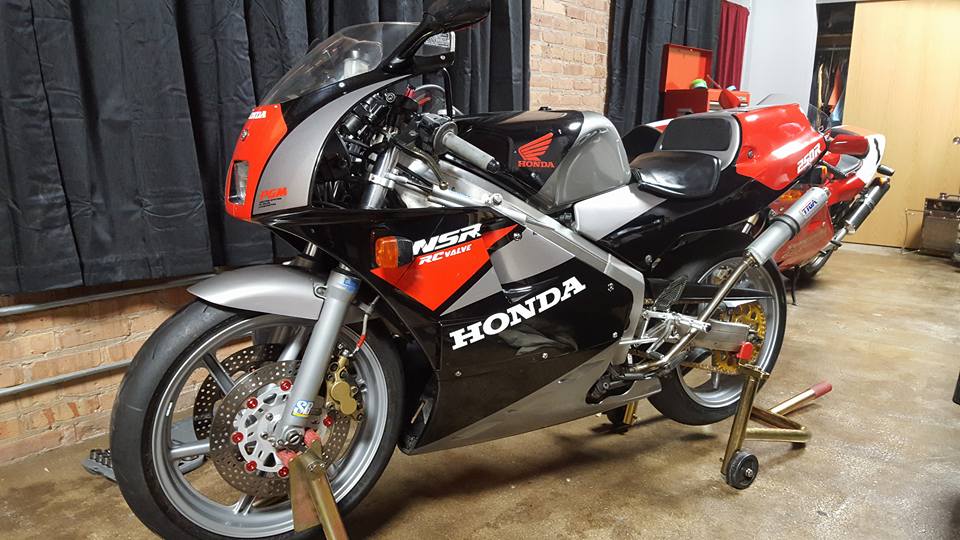
Did Honda drop their old Interceptor line of bikes?

hard to say, over there the interceptor was a v4 (750/1000) yes ? Over here they were called VFR's and ( we had both models as well the 750and 1000 ) as far as I know they bored out the 750 to a 800. Not sure if they still making them. I hope honda go ahead and make a new V4 cause I rode with mates who had models from the first 750 and 1000 V4's and the wog had a 800. All great sounding bikes and they 750/800's handled well but they ran out of puff up top. only my opinion.

Why you ask DH ? did you cut your teeth on one ?
 
Then let's take what's written on the bike itself: Honda RS 250M Super Moto ;)


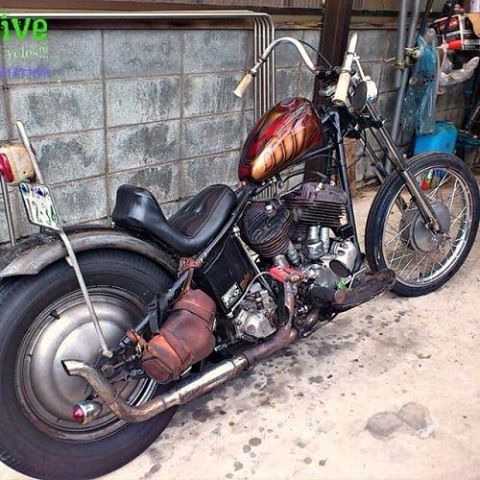
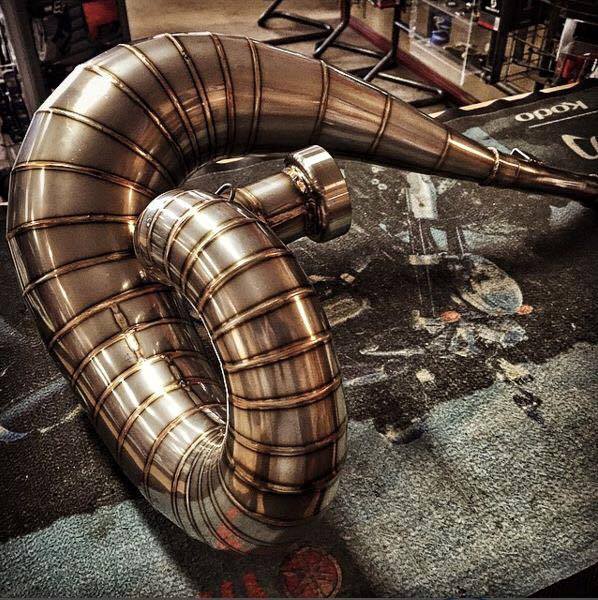
AHHHHHHHHH google is your friend brother. I posted this bike cause I just cant belive someone did this to such a bike. RS 250M . .. . . . . . . .what was it ?

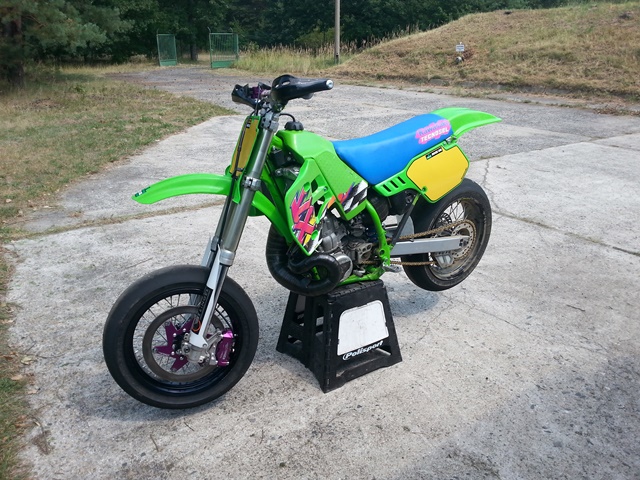
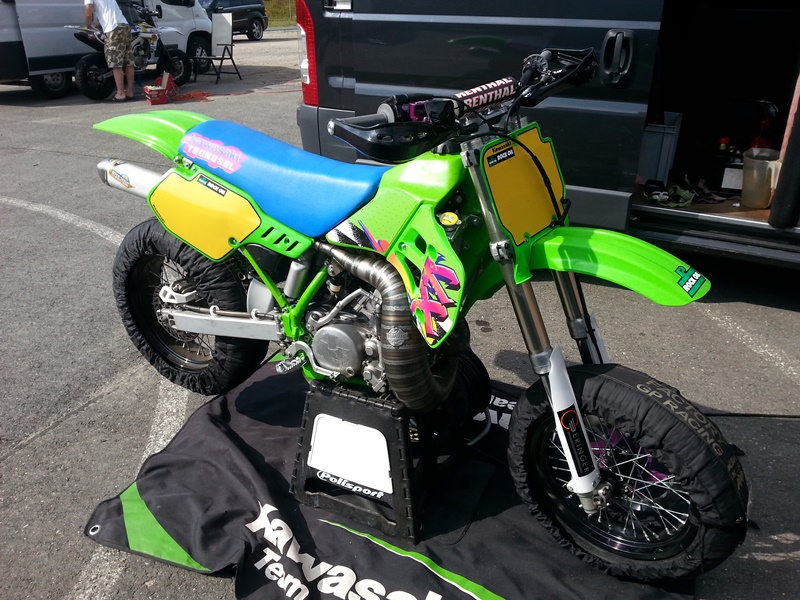
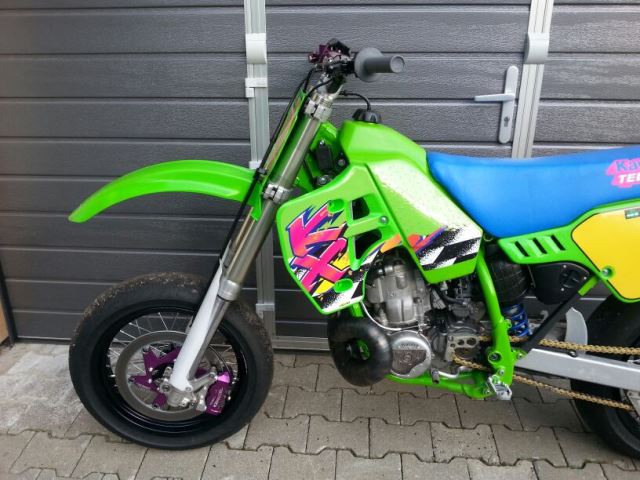
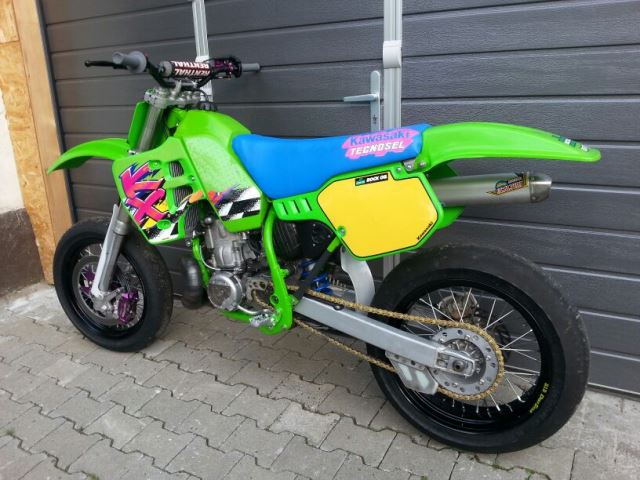
KX 500


hier demnächst Umbauten und Technik Supermoto KX500 -- KX250 und andere Modelle


KX%20500%202015%20Training.jpg


Neuaufbau 2015 KX 500


KX%20500%202015%201.jpg


KX%20500%201%202015.jpg


KX500%202%202015.jpg


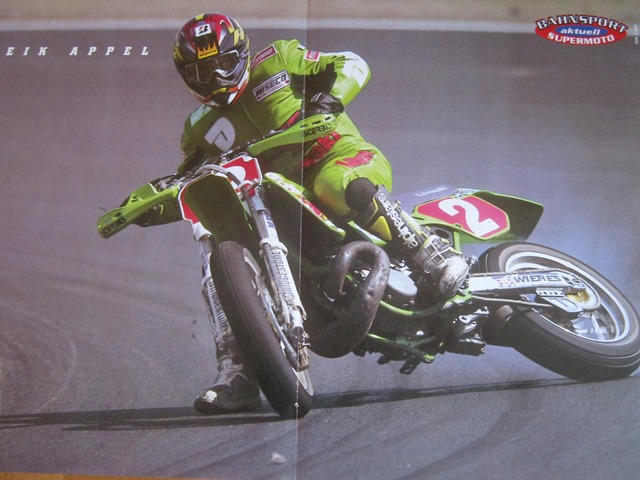
Maik%20Appel.JPG


Maik Appel 1997,zum Glück konnte ich dieses Schauspiel noch Life erleben :-))


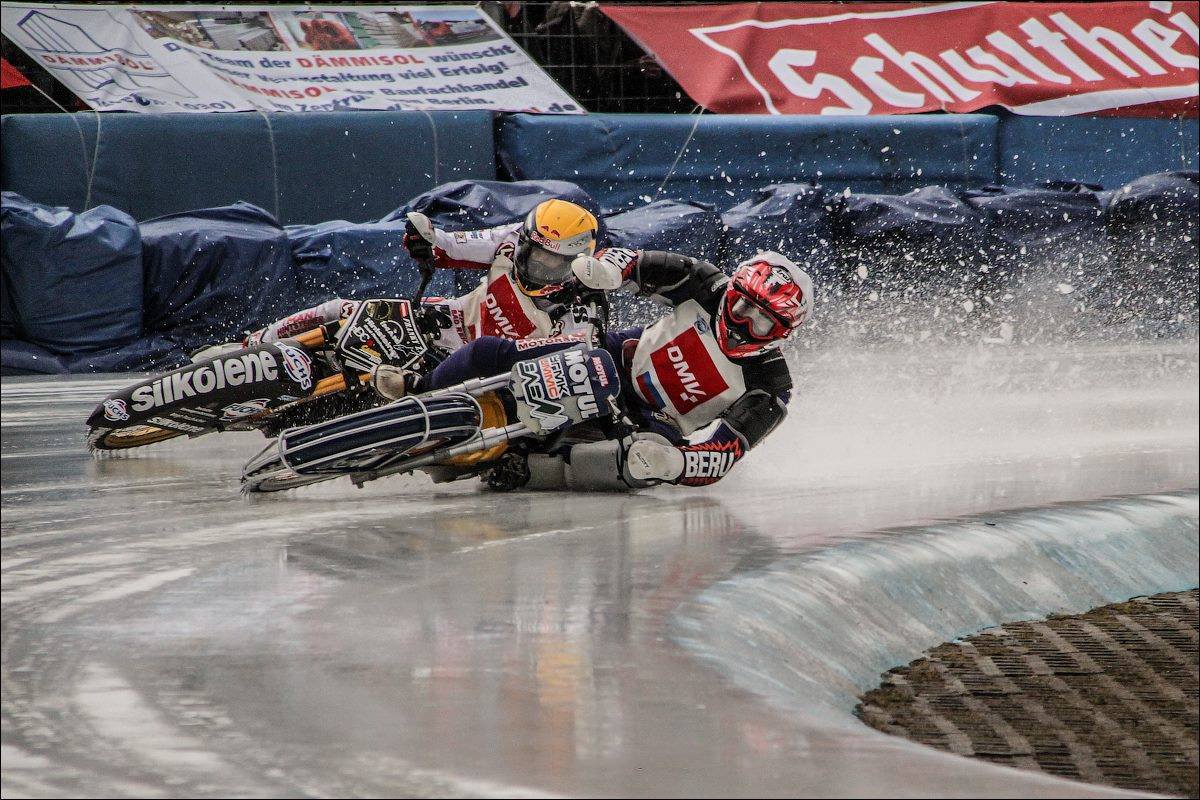
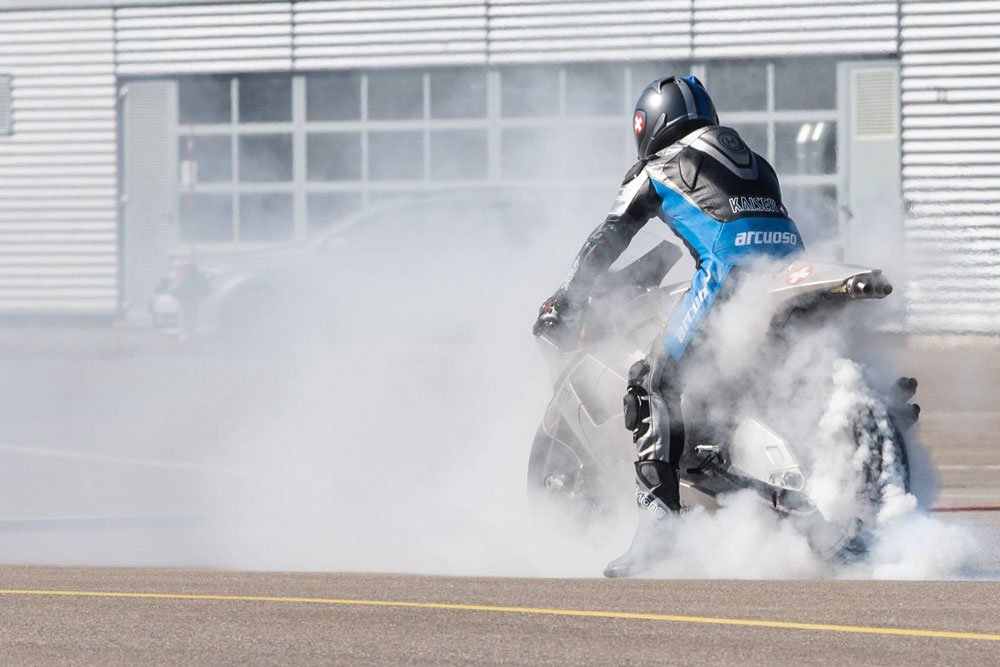
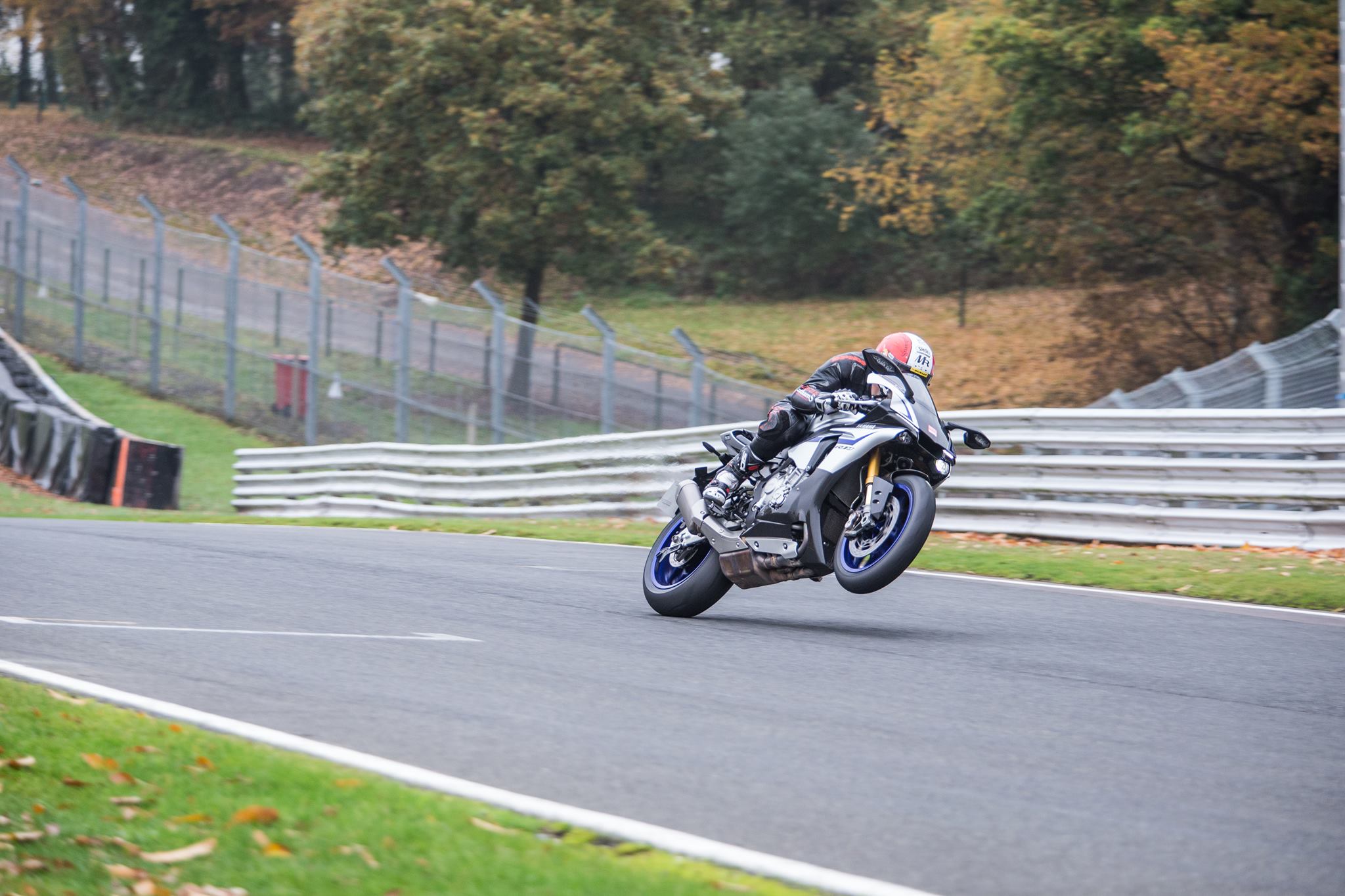
and thanks for the page bud. the last pic is killer ( so's the bike ) anyone who can do that on a track ( more than once going by the lines under the bike in the pic ) is a fuckin good motorcycle rider.
 
First ride: 2015 Aprilia RSV4 RR
  1. ge5095722281402939087.jpg
  2. ge4739402374387049881.jpg
  3. ge4938769750319712351.jpg
  4. ge5651099331781504794.jpg
  5. ge4671008346132006980.jpg


Aprilia's booming V4 has always been a weapon, but with engine and chassis changes in 2015, as well as some weight loss, the halo effect has jumped to another level
54 is written on the tank of the 2015 RSV4 RR, reflecting the number of world championships that Aprilia has won in grand prix and world superbike competition. It's not just an ornament, either: it's there to help grab the attention of the consumer who is in the market for a new sports bike.

Most of those titles are from the glory days of GP racing when the Japanese were only interested in winning 500cc class races and Aprilia was left to pretty much have it all its own way in the 125 and 250cc categories. Nevertheless, a championship is a championship and just about all of the young Spanish or Italian superstars came through the Noale-based factory, including Valentino Rossi.

But I digress. I still remember early in 2007 having dinner with the 'Hoff'. No, not David Hasselhoff but Aprilia long-term test rider, German Alex Hoffman. At the time, I was involved with BMW on the S 1000 RR project. The RSV was being secretly tested by Alex and I was doing the same with the more conventional BMW. We were grilling each other for information and I liked what I was hearing about the Aprilia: a 1000cc V4 slotted into a completely adjustable MotoGP-inspired frame.

I instantly thought that was the bike Honda needed to make, as a V4 is complex and I wasn’t sure if the Italians could pull it off. There was no need to worry, as it was clear that Aprilia was building a street-legal racer to win the Superbike World Championship. When it was finally released Max Biaggi came along and won a couple of championships, and Sylvain Guintoli did the same in 2014 to make it three in total.

Aprilia achieved its four-stroke glory with the factory built racers — but the company sort of forgot about the customer, giving us a road version that had the looks but not the go. Unless, of course, you opted for one of the special race-replica versions…

I’m happy to say Aprilia has finally put that right with all three 2015 models (the RSV4 RR, RSV4 RR Race Pack and RSV4 RF Limited Edition) adorned with the new engine, which delivers a claimed 201hp — and it's been 'hp' that has really let this bike down in years gone by. But it's even more than that in 2015, as the bikes have gone on a diet and had the engine repositioned in the frame to improve handling.

My test bike on a beautiful day at Sydney Motorsport was the base $25K rideaway RR version, and even that is a weapon. As I exited pit lane, the engine kept building and building and building. I have always loved the sound and power delivery of the 65-degree V4, but there’s a bucket load more power without sacrificing rideability.

That sweet engine pulses through the seat and really lets you feel the grip level available, even on the standard OEM rubber. I rode the new Yamaha YZF-R1 at Sydney Motorsport Park earlier this year, and that engine felt a bit stronger off the bottom — but it was also fitted with stickier tyres to help flatter its performance in front of the world’s press.

In the end there wouldn’t be much if anything in it, and in the real world the beauty about motorcycles is that all aspects of the engine, chassis and brakes have to be on their game to go fast. The lower positioning of the engine really helps the RSV to turn, and the bike finishes off bends better than the standard R1 and more like the up-spec $30K Yamaha R1M model.

The Aprilia felt light and nimble, especially on corners with a high-speed change of direction. I just felt instantly comfortable on the RSV — and comfort normally equates to confidence. Even though the RSV4 R is fitted with base Sachs suspension, it’s still very high quality and comes standard with better spring rates compared to the base model R1.

It’s a very flat handling bike, which means you can move all over it without really disturbing your line or upsetting the stability of the machine.

The bike's ride-by-wire allows the twist grip to alter the front and rear bank of cylinders independently, which gives the rider just the right amount of torque at the twist grip to maximize feel as the power is wound on.

The traction control works really well and, unlike a lot of bikes, it’s very easy to adjust through the opposed buttons on the left switch block. The real beauty is that even at full throttle you can change the traction settings with your thumb or forefinger with ease. It means you don’t have to take your eyes off the track or road, which improves safety.

As far as the actuation of the traction itself, this Magneti Marelli built system is among the best. It’s nearly ready to use on the race track, compared to most other bikes where you need to turn the traction off to go fast. There’s also launch control and three-way adjustable wheelie control.

There's a quickshifter, but just on upshift compared to the S 1000 RR which works both ways through the gearbox. It might only be a one-way affair but it works perfectly.

The brakes are very strong, as is the norm on all modern superbikes. There is anti-lock braking fitted and it is of a very high standard as you would expect from a bike fitted with Magneti Marelli.

The RSV4 RR evokes emotion. It’s not clinically smooth, but that suits me just fine. Now if only I could get my hands on the race version for a long-term test...

SPECS: 2015 APRILIA RSV4 RR
ENGINE

Type: Liquid-cooled, 16-valve 65-degree V4
Capacity: 999cc
Bore x stroke: 78.0mm x 52.3mm
Compression ratio: 13.6:1
Fuel system: Magneti Marelli electronic fuel injection

PERFORMANCE
Claimed maximum power: 198hp (148kW) at 13,000rpm
Claimed maximum torque: 115Nm at 10,500rpm

TRANSMISSION

Type: Six speed
Clutch: Wet slipper clutch
Final drive: Chain

CHASSIS AND RUNNING GEAR
Frame: Aluminum twin spar
Front suspension: 43mm upside-down forks, fully adjustable
Rear suspension: Sachs shock with double-braced alloy swingarm, fully adjustable
Front brakes: Dual 320mm discs with four-piston Brembo monobloc calipers
Rear brake: 220mm disc
Tyres: 120/70-17 front, 200/55-17 rear

DIMENSIONS AND CAPACITIES
Claimed dry weight: 180kg
Seat height: 847mm
Trail: 104mm
Fuel capacity: 18.5 litres

OTHER STUFF
Price: $25,000 rideaway
Colours: Silver or black
Bike supplied by: John Sample Automotive, aprilia.com.au
Warranty: 24 months unlimited kilometers
 
Pro-Am: “We didn’t really care if we died”


Published: Yesterday 15:00

  • 664638cra.jpg
  • 6663Amat.jpg
  • Email0001.jpg

  • YamahaRD350LCPro-.jpg
1 of 5
Flicking kill switches. Kicking rivals. Hanging on to grab rails. Pushing riders off the track. It’s 1981, so it must be the Yamaha 350LC Pro-Am race series


andysmith.jpg
A.jpg
ndy Smith


Then: marketing man for TW Promotions

Now: Vice President Marketing and Sales, Yamaha Europe

“In the late 1970s I worked for TW Promotions doing film shows to promote motorcycling. We’d go into cinemas, civic halls, town halls all round the country, turn up in the evening, set up a screen and get two, three, four hundred people per night. Yamaha came on board as a sponsor, and the idea for a race series of production RD350LCs came out of conversations in 1979 between TW Promotions and a chap working for UK Yamaha importers Mitsui called Lin Jarvis [now Yamaha’s MotoGP race team manager and Valentino’s boss]. The ACU got involved in sanctioning the series, and knew a TV company who’d get it on the screen.

“So you got all these guys saying, ‘Yes, let’s do this’. It hadn’t been done before – the first full production, no modifications, one-brand race series where the bikes belonged to and were maintained by the organisers.

“We should’ve known what was coming when we had a running-in session at Donington, with the bikes ridden by us, the promoters, and anyone we could rope in. On the first session, first lap, three people went off at the first corner.

“I remember loading the truck for the first round at Donington in 1981. We’d miscalculated the space so we had to hire another truck. We took 36 bikes to each meeting, including four spare bikes. In the end we bought our own transporters.

“We simply arrived at the circuit with the bikes, unloaded them, gave them numbers, the keys were pulled out of a hat, and at the end of the racing we put them all back in the truck and took them back to Yamaha in Chessington, where we repaired them for the next race.”


donmorley.jpg
Don Morley


Then: official Pro-Am photographer

Now: retired

“It was absolutely head-banging. We’d never seen anything like it before or since. Because the bikes were identical, and because you’ve suddenly got a class of rider who were very young, they had no fear, they had no financial involvement, so crashes were numerous – and who cared?

“I’d look through the lens and think, ‘I’ve never seen anything like this’. At the start you’d have six bikes all going into the first corner alongside each other and by the time they came round the last bend on the last lap they’d all get tangled up together and someone completely different would win. It was just so, so close. And crashes were many, but I don’t remember anyone getting hurt. Not seriously.”


niallmackenzie.jpg
Niall Mackenzie


Then: aspiring club racer

Now: retired Grand Prix rider

“It was a brilliant series. It made my career, certainly; made my life, really.

“The series started in 1981 and I did a one-off wild card, and I was in it full time in 1982 and 1983. It carried on for a year after that but like all one-make series it got watered down. But the first three years were massive – it was all on TV, there were some big stars in it and the money was good.

“I’d just started racing on a 350LC. It was a dream to get in the Pro-Am, but there was no opportunity; you were invited by the organisers. The ACU picked ten established names and Yamaha picked ten rookies who were hot prospects at club level.

“There was a round at Knockhill that year, and the dealer who sponsored me persuaded the organisers to let me have a go. I started from the back of the grid and finished fifth. It was everything I dreamed it would be: free bike, free racing, bit of prize money. But that was it.

“At the start of 1982 I heard about a pre-season launch at Oulton Park. I jumped in a van and went down, uninvited. But I pleaded, and they gave in. I went out and was as quick as anyone. A week later I got a letter saying I was in. It was just fantastic.

“In ’82 I won some races, crashed a bit and was fifth overall. The next year was my best; I fought for the championship and finished second. I won quite a few races, including a one-off at Donington called the Pro-Am World Cup: ten of our best guys and ten foreigners.

“When you’re a teenager anything goes. We didn’t really care if we died racing. We just loved racing, so anything went. If there was a gap you let the brakes off; it was more like stock car racing, just ramming into each other. It was stuff you wouldn’t dream of doing now – hitting kill switches, pulling out ignition keys – you’d be slipstreaming another rider along a straight and with your left hand you’d grab onto their grab rail and slingshot yourself past.
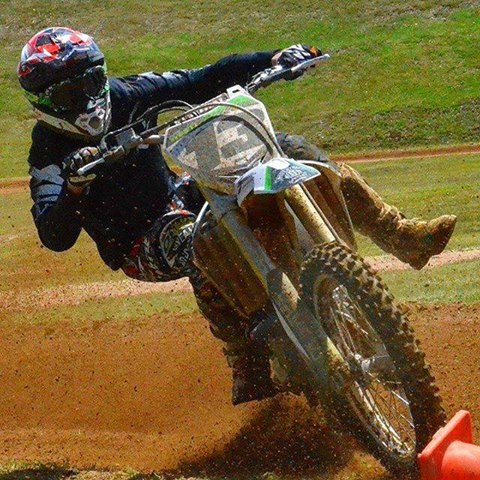
“Thing was, we were all hairy-arsed council kids and it was free bikes, nobody cared if you crashed, there was no budget, no briefing where you were told not to do anything daft. It was a free-for-all.

“Fortunately the bikes crashed quite well, but they did get spannered. It was carnage. So you had to be a little bit clever. There were a few nutters who crashed every time. I was brave but I also tried to be smart when I could as well. I still wanted to get a result and make a name for myself.

“The atmosphere was great, because we all couldn’t believe what we were getting. It was like high-fiving each other before we went out, saying let’s go out and put on a show, let’s entertain everyone. There were no hard feelings, no bad atmospheres, it was just a laugh – serious on track, but a good time off it.

“It was a great springboard for me. Midway through 1983 a company called Armstrong who built racebikes signed me as a development rider off the back of my Pro-Am rides. They offered me a contract in 1984. One of the clauses was I couldn’t do the Pro-Am because they didn’t want to risk me. So I rode for Armstrong for four years, getting into 250 GPs in 1985 and 1986, which took me into a different world.”


paulgott.jpg
Paul Gott


Then: spectator and amateur photographer

Now: banker

“I was into photography and bike racing. I’d follow the MCN Superbike series to Snetterton, Cadwell, Brands – all round the country. In 1980 I bought an RD250LC, the smaller version of the bikes they used for the Pro-Am series – so I was interested because they were racing a bigger version of my bike.

“I remember watching at Brands Hatch as the bikes all piled into Druids, four or five abreast. Crashes were all par for the course and it was all very close racing. Watching at Cadwell was a great place to take pictures – the Pro-Am bikes turned it into a wheelie competition. These were all young guys keen to make their mark. It certainly looked like it was a case of leave your brain in the paddock and go and race.”


mikecaponmugshot.jpg
Mike Capon


Then: club racer

Now: builds road and race shocks at the Shock Factory

“Pro-Am involved me falling on my head rather a lot. At Mallory in 1982, I had a famous crash you can still see on Youtube (look up Mallory Pro-Am). In practice my bike was slow – there were slow ones and quick ones. So I took to Yamaha and said, ‘Please, it’s got no midrange and it’s really, really rich. Can you drop the needles?’ They shouldn’t have done it but they did.

“So I got a flier and led the first lap with 23 other mental cases behind me. And because my bike was so slow in practice, coming out of the Bus Stop I’d been at full throttle and Devil’s Elbow was flat. But not with the bike working properly, it wasn’t. I lost the back, then the front, then both at once.

“The bike didn’t hurt me much – it was actually the other lad in the accident, Paul Tinker, riding over my head. It wasn’t the nicest thing to do but I don’t think he had much choice – I put my head in front of his bike.

“I broke a lot of bikes in 1982. I fell off at Mallory, ended up in the cabbages at Snetterton, crashed at Barn at Cadwell with Steve Chambers… I remember sitting on the fence with him, with two bent bikes. He was playing about with a bit of collarbone sticking out of his shoulder. And I can remember Alan Carter looping it on the grid at Knockhill. He was such a hooligan as a kid. Obviously he got smart because he won the French GP on a TZ250 a year later, but to start with he was a complete lunatic. It was max throttle, ping clutch, end of race.

“There weren’t many big injuries. And it was good-natured. But it got serious when the flag dropped because the stakes were high. We wanted to win the prize money so we could run our proper race bikes. It was quite mercenary. You got £500 for a win; I was working nights in a car factory on £80 a week, so that was a lot.

“At the start of 1983 the riders were invited to Oulton to ride the new bikes. Brand new, never been run. They said right, we need to run the bikes in. Just ride round slowly. Four laps in, Niall Mackenzie completely destroyed one of them. It was a big, big accident. Bet he doesn’t tell you that! But what did they expect?”
 
alancarter.jpg
Alan Carter

Then: racing prodigy
Now: retired
“You put your hand in and pulled your key out. That’s how it was supposed to be but I cheated a little bit – sometimes I’d get the key to my preferred bike and have the key already in my hand when I put my hand in the hat. I wouldn’t call it cheating, I’d call it bending the rules. I was a devious little bastard, but in a charming manner.
“The LC in 1981 was better than the YPVS. The LC was on rails. People complained but I thought they were fantastic and the tyres were great. Then in ’83 they brought out the Powervalve and that thing just weaved everywhere. It was really unstable and just didn’t steer.
“I don’t think I ever fell off – maybe once, on cold tyres in practice at Donington. But you always had the ones who were really fucking mental, they were going to crash out anyway. My philosophy was to do the good times in practice and then you knew you’d be there or thereabouts. The only thing you could change on the bike was the gear lever – they had a short one and a long one. Apart from that they were supposed to be the same but they weren’t. You had fast ones and slow ones.
“For me, the Pro-Am didn’t give me a big break because my dad was a millionaire and I had everything. But it was good publicity and also it gave me hard racing against tough kids who wanted it bad. I learned from it. And you’d get Barry Sheene commentating on the telly saying I was a future world champ. But I never settled. I was in one series, and then something better came along so I did that.
“I won lots of races but I never actually won a championship because I just kept stepping up. I was the youngest ever national winner, then I won an international race and became the youngest ever international race winner. Then I won a GP and became the youngest ever GP winner. It just happened. You didn’t think about next week or next year. It was brilliant fun and the paddocks were fantastic. You could take the piss, have a beer, chase the girls, whatever.
“I love motorbikes. My life and my passion. But politics get involved and things happen and you think, ‘I’ve had enough of this’, and you quit. That’s what happened to me. By 28 I just didn’t want it any more. So I stopped.”

ronnieweir.jpg
Ronnie Weir
Then: spectator and amateur photographer
Now: safety engineer
“I used to shoot racing pictures and had a weekly column in the Edinburgh Evening News. I knew Niall Mackenzie, who’d just started racing up in Scotland. I was covering another race in Ireland and I sat down to watch this Pro-Am race from Donington on TV and suddenly, bloody hell! There was Niall and he was in second place or something. And it was seven laps of murder! And an amazing array of talent – quality stuff. And any one of them could win. But there were loads of crashes – the road tyres would lose it after a couple of laps, the suspension would go off. It was amazing.
“If you got an invite to the Pro-Am you went. It was a big thing. Today, you can’t imagine a Pro rider putting it on the line against Am riders – guys like Steve Parrish, Rob MacElnea and Roger Burnett were on a hiding to nothing because who wants to be beaten by so-called amateurs? And it was special because everything was paid for, so they felt like works riders. There’s a big thing about nostalgia for that era, but I never expected it to be so popular 30 years down the line.”

rogerateyo.jpg
Roger Atyeo

Then: Which Bike? magazine assistant editor
Now: Australian journalist
“I arranged a deal for Which Bike? to pay £3000 per season in 1983 and ’84 to get stickers on the bikes. That was a fair chunk of money back then, but the TV coverage was great. The series was called the Wrangler Which Bike? Pro-Am. The first year we were involved Carter went on to win the French GP, so that was all good. It was hugely successful, the best one-make series there’s been. The racing was bonkers, and the format was unique. No-one knew which bike they would get and it was so unpredictable. The only constant was whoever led the series had the bike painted in Wrangler/Which Bike? colours. I’ve been to loads of races over the years and it’s the only one where I’d watch the start through my fingers, like a horror movie. Going into Redgate they were ten abreast. And they all loved it. And it didn’t bother them because they didn’t have to foot the bill for repairs. I said to Rob Mac, ‘How come you aren’t doing it any more?’ and he said, ‘No, too rough for me’. Roger Burnett, he declined after one race. It scared the crap out of a lot of top riders.”

stevechambers89.jpg
Steve Chambers

Then: aspiring racer
Now: lecturer for Siemens plc
“I joined the series in 1982, and we had brand new LCs. In 1983 we got the new YPVS – a bit quicker but the suspension wasn’t so good – and we kept them for the last year in 1984. There was a noticeable difference between some of the bikes by then – you could get a pig of a bike 5mph slower.
“It was scary at times. There was a period when there was a lot of weaving and swerving going on. I’m not saying it was deliberate, but I remember Niall pulling across me at Donington and taking out my front wheel – I ended up rolling down the track. I wasn’t too happy at the time I suppose, but there was rivalry on the track and smiles afterwards.
“My memories are of how much fun it was. It was very competitive and the guys in it were all quick. The one guy I felt could beat me on his day was Alan. All the others I felt I could beat, but Alan was the outstanding rider. Niall of course went on to success, but Alan was the one who could’ve gone on further.
“In one of the televised races at Donington, Ray Swann crashed at the chicane. He lay very still as if unconscious. He was completely fine and knew he was safe, but also realised the cameras would be on him. So he got a few seconds of TV time with concerned commentators!
“The European events always got me fired up. In 1982 they got the best riders from Europe together at Brands – the Euro Pro-Am. I won it, Alan Carter was second. Next year they did the same thing at Hockenheim; Graham Cannell won it, I was second. In ’84 there was a round at Circuit Carole in Paris. My bike was a pogo stick on wheels and there was no spare – basically the budget was finished.”

Words Simon Hargreaves Photos Bauer Archive, Don Morley, Paul Gott and Ronnie Weir
 
MotoGP »
Baker resists MotoGP's Marquez for 2015 Superprestigio win
12 December 2015

In a nerve-wracking final lap, Brad Baker defends a Marc Marquez attack to win the Superprestigio for the second time, Jared Mees third.


  • StumbleUpon
AU1393047.jpg

Baker resists MotoGP's Marquez for 2015 Superprestigio win

In the end there was nothing in it. After a full evening of racing just 0.1s kept Brad Baker and Marc Marquez apart at the close of a nerve-wracking Superfinal with the American claiming his second Superprestigio win.

Both Baker and Marquez qualified for the final 16-lap shootout courtesy of winning their own classes and, after reigning AMA Grand National champion Jared Mees got a poor getaway, the race was contested between those two.

Baker led from the exit of the first corner and quickly established a half second advantage over Marquez as Mees scrambled to make his way through to third.

As we entered the second half of the race, Marquez began to chip away at the lead and while he was close enough to show Baker his front wheel on several occasions, the opportunity to make a clean move never presented itself.

Never one to accept second without a fight, Marquez tried valiantly through the final left-hand swoop, opting for a wide entry in the hope to power past Baker on the inside. Despite coming together, Baker consummately held his nerve to cross the line 0.1s in front.

An absentee from the 2014 race thanks to a frightening qualifying spill, Baker gained sweet revenge on fellow countryman Mees after he lost out in the Superprestigio of the Americas just two weeks before.

Mees was unable to hone in on the front two after making his way through to third and eventually settled for his second consecutive podium finish at the event.

An impressive Alex Rins was a fine fourth after gaining in speed throughout the evening. The 2015 Moto2 runner up didn't trouble the front three in the first three heats of the Superprestigio class finals but successfully held off fellow Spaniard Dani Ribalta, 4 seconds off the winner.

Xavi Vierge was sixth while Masatoshi Ohmori and Federik Lindgren were the last men to come home.

 
MotoGP »
Nicky Hayden’s MotoGP team-mates - who impressed most?
10 December 2015

“I could write a book on my team-mates” - Nicky Hayden.


  • StumbleUpon
68339.jpg

Nicky Hayden’s MotoGP team-mates - who impressed most?

Nicky Hayden rode alongside eight different team-mates during his 13 seasons in MotoGP, which came to an end at last month's Valencia season finale.

So which of them impressed the 2006 world champion the most?

“I could write a book on my team-mates because there have been a lot of different personalities over the years and I've learned a lot from each one,” Hayden said.

“For sure, Casey for outright speed was incredible. His ability to find the limit on a wet or dirty track is something I'd never seen before. And you know Dani, the way that he gets the bike off the corners is incredible.

“But I think the person who impressed me the most has to be Valentino. Because I was his team-mate twice and the Ducati days when it was really low - for him to come back from that is extremely impressive.

“And at 36, to have as much success and money - he has everything. But to still have that same passion and fire is something that I found motivating. I think that's been more impressive than anything on track.”

Hayden is moving to WSBK in 2016, riding for the Ten Kate Honda team.

Nicky Hayden's MotoGP team-mates:
2015 - Eugene Laverty (Aspar Honda)
2014 - Hiroshi Aoyama (Aspar Honda)
2013 - Andrea Dovizioso (Ducati Team)
2012 - Valentino Rossi (Ducati Team)
2011 - Valentino Rossi (Ducati Team)
2010 - Casey Stoner (Ducati Team)
2009 - Casey Stoner (Ducati Team)
2008 - Dani Pedrosa (Repsol Honda)
2007 - Dani Pedrosa (Repsol Honda)
2006 - Dani Pedrosa (Repsol Honda)
2005 - Max Biaggi (Repsol Honda)
2004 - Alex Barros (Repsol Honda)
2003 - Valentino Rossi (Repsol Honda)
 
Back
Top