• Adults Only Website 18+

    If you are under 18 you are not permitted to submit personal information to us or use this website. If discovered you will be banned.

    We will ban and report anyone posting illegal content.

    We will ban any forum user who breaks our terms.

    Freedom of speech should be wide open as long as it doesn't incite violence.

    We have a 15 year old thriving community here with 400,000+ members and hundreds of people online at any given moment, we encourage you to join!, there are 1000's of topics to discuss. Please be aware before registering and read our terms of service and privacy policy.

    By dismissing this notice and proceeding, you agree to the above.

Two Wheels

WSS »
Jacobsen switches to MV Agusta for 2017
1 December 2016

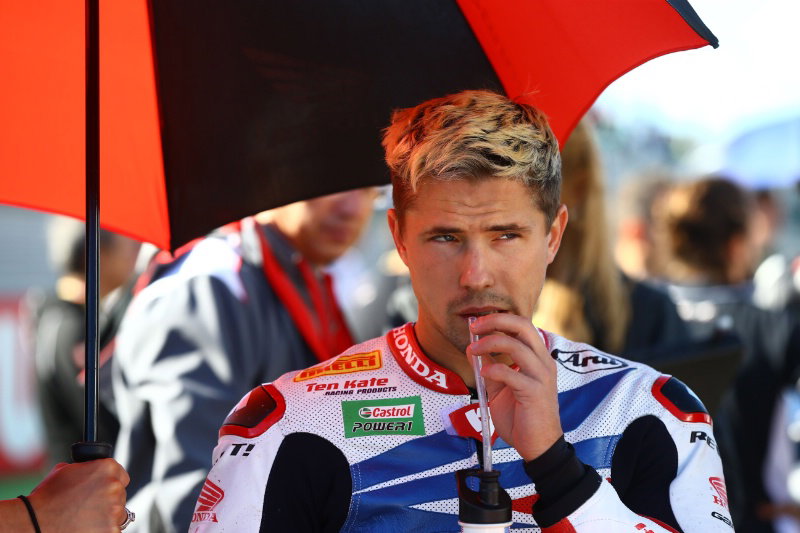
PJ Jacobsen will make his third manufacturer switch in three years in World Supersport as he prepares to join MV Agusta Reparto Corse
image: http://media.crash.net/original/PA2040924.0008.jpg

PA2040924.0008.jpg

Jacobsen switches to MV Agusta for 2017

PJ Jacobsen will make his third manufacturer switch in three years in World Supersport as he prepares to join MV Agusta Reparto Corse for the 2017 season.

The American rider has made a strong impression in World Supersport since joining the series on a full-time basis in 2014 having finished runner-up a year later despite changing from Kawasaki to Honda midway through the campaign.

Jacobsen had another solid year in the championship and despite the top step of the rostrum evading him with the Ten Kate Honda squad, four rostrum results saw him finish fourth overall in the riders' championship.

The 23-year-old is preparing for his third switch of machines in three years with a move to the factory-backed MV Agusta outfit as he hunts a maiden World Supersport title.


“I'm really looking forward to this new adventure with MV Agusta,” Jacobsen said. “To be joining with the Italian manufacturer is a privilege. Already having a test on the bike in Jerez, I felt really comfortable on the bike after a few sessions.

“I'm really looking forward this year with MV and seeing what we can accomplish. I'm excited to get to some more tests on the bike and then ready to go to round one. Thanks, MV Agusta for this opportunity.”
Read more at Jacobsen switches to MV Agusta for 2017 | WSS News
 
WSBK »
Jerez WorldSBK Test: Sykes: New rules a kick in the b***ocks
22 November 2016

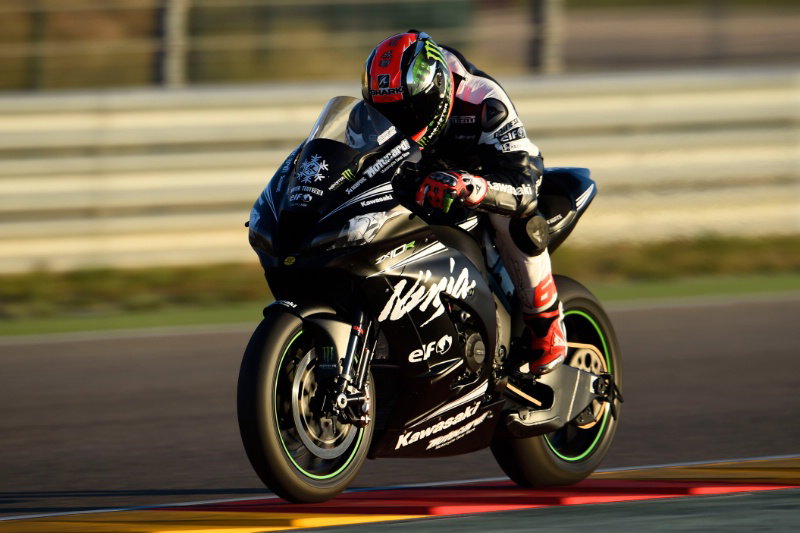
Tom Sykes describes new regulations that require engines to carry a balancing shaft, and generator rather than battery as “a kick in the b***ocks.”
PA1837407.0008.jpg

Jerez WorldSBK Test: Sykes: New rules a kick in the b***ocks

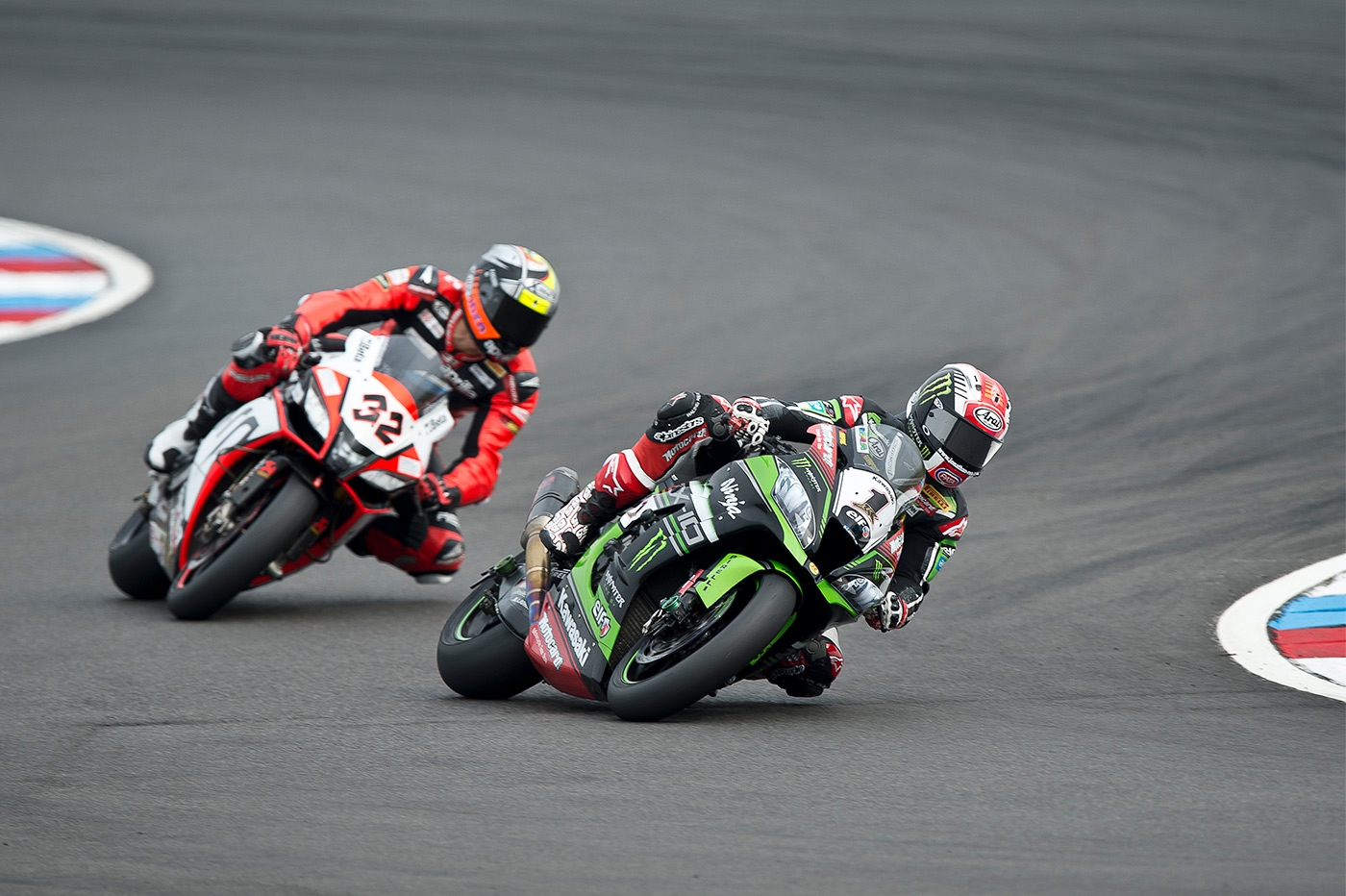
Tom Sykes has described new Superbike regulations that require engines to possess a generator, rather than a battery, as a “kick in the b***ocks”, as it will call for a different riding style for 2017.

The new rules, which also state that engines in the World Superbike class must carry a balancing shaft if the road going equivalent does so, mean Kawasaki's new ZX-10R engine possesses different characteristics.

For Sykes' point-and-squirt style, he feels these changes could put him at an early disadvantage for the months ahead.

“For me it's just pure riding style,” said Sykes on Tuesday at Jerez. “I'd say my style is more of a racing style. I always like to get into the corner hard and out of the corner even harder. With all the changes to the rules, I'm having to adapt a lot and that's something I tried to do in Aragon.


“I feel we made some small steps there. So we'll keep working on that but one thing is for sure. The rules are changing every minute of the frigging day. I think when people say it'd be nice to keep the championship cheap and then the rules are changed every year, it doesn't keep it cheap as you have to look for alternatives.

“I'm disappointed in the way the rules have gone, in having to take out batteries and replace them with generators. It does affect what I want to do on the bike. I'll just try as hard as I can to be competitive. We already started that in Aragon.

“Basically it is another kick in the bollocks, another kick in the teeth. It's a little bit disappointing and upsetting because it takes away performance from me.

“People can say what they want but for the way that I ride the bike I'm a long way away from that now. What can I say? I can go on about it all day but it is what it is and we'll try and do our best with it.”

On how the mainly wet test has gone so far, he added, “[It's been] Relatively OK to be honest. Today was fairly steady. From pure performance point of view it was no good but we had some little function tests that we wanted to do so we took this opportunity in poor track conditions to get some mileage on those little changes.

“If the sun is shining any other day this week we don't need to waste any time on that. So from our point of view, good. Also getting a feeling for the bike and some of the changes we've made, overall no real meaning today. But we still managed to get some things done.

“Basically we're very close to [using the 2017 bike]. We're working and testing as much as we can with the 2017 rules. We are running added extra bits that we don't want to run but we are doing it, yeah. Basically we're working on 2017 rules. Chassis is very much similar but engine parts are coming in heavier.”
 
time to set up a go fund me page

KTM Chairman says that a 1000cc V4 that makes 240bhp is coming for 2018! – look out Honda RC213V-S…
by MoreBikes · 07/12/2016

KTM Chairman says that a 1000cc V4 that makes 240bhp is coming for 2018! – look out Honda RC213V-S…


KTM has said that it WILL make a 1000cc V4 MotoGP-bike-that-you-can-buy for 2018.

And it’s going to make 240bhp!


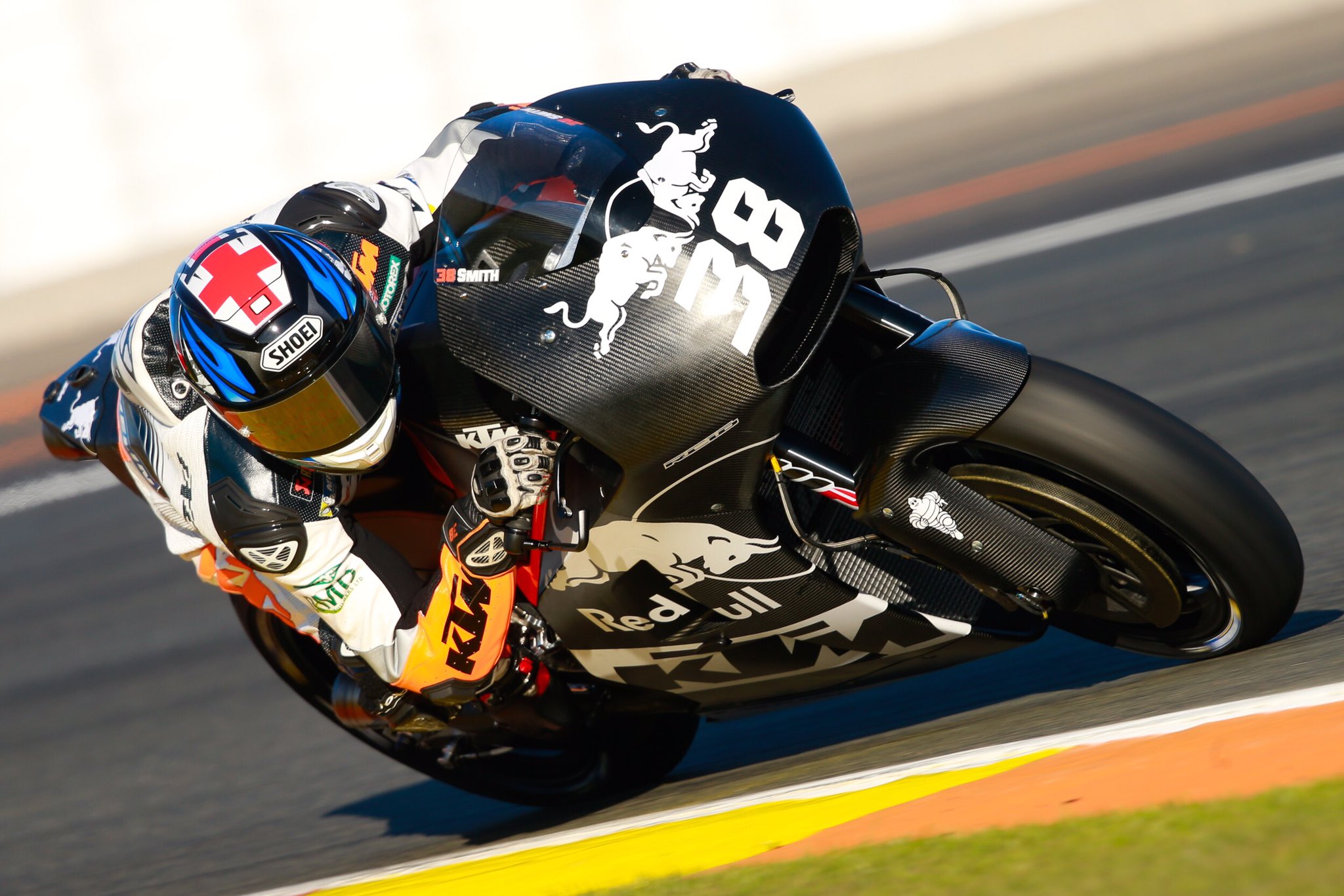
Speaking to the German publication SPEEDWEEK, KTM Chairman Stefan Pierer (above) said: “Next year we well be racing with the RC16 (pictured above and below) but a year later we will tackle it.


“We want to build at least 100 bikes and also offer this product at a very affordable price.

“This motorcycle will not receive any road approval, it is only intended for use on track. We want it to be as close to the MotoGP bikes as possible.

“270bhp will, of ourse, not be available for a customer bike, but 240bhp should be available reliably.”

In terms of cost, Pierer says that the KTM customer racer will cost significantly less than Honda’s £137,000 (Euro 188,000) RC213V-S bike (pictured below).


Pierer said: “I want to achieve a much lower price for this production racer than Honda has for its bike. I would like to see that we are heading towards 100,000 or 120,000 Euros.”

Although KTM has confirmed that the design for the new motorcycle does not yet exist, it has said that the Project Manager, Wolfgang Felber, is already assigned.
 
A WSB bike faster than a MotoGP bike?
by Mat Oxley on 28th November 2016

Jonathan Rea gave himself and Kawasaki a huge boost when he outpaced half the MotoGP grid at Jerez last week, but how was it possible?

hi_test_2016_worldsbkjerez_rea_gb34804.jpg


Racers love to prove a point. It goes back to the all-important F**K YOU! department in their brains I mentioned a couple of weeks back.

Which is why November’s combined MotoGP/World Superbike tests at Jerez have become a big deal for top WSB riders.

Many World Superbike riders believe their talents are overlooked and underestimated because they race far away from MotoGP’s all-consuming limelight. And they’re not wrong. WSB’s TV audience is roughly 10 per cent of MotoGP’s. This explains why WSB’s top men spent some of their time at Jerez riding the outer limits to make the 14 MotoGP riders present look a bit silly.

Twice World Superbike champ Jonathan Rea was the star of the show and flew home with a big grin on his face after outpacing half the MotoGP grid (albeit mostly the back half).

His astonishing 1m 38.721sec lap on his factory ZX-10R would’ve put him on pole at last May’s Spanish Grand Prix, 0.015 seconds ahead of Valentino Rossi, 0.137 seconds in front of Jorge Lorenzo and 0.170 seconds ahead of Marc Marquez.

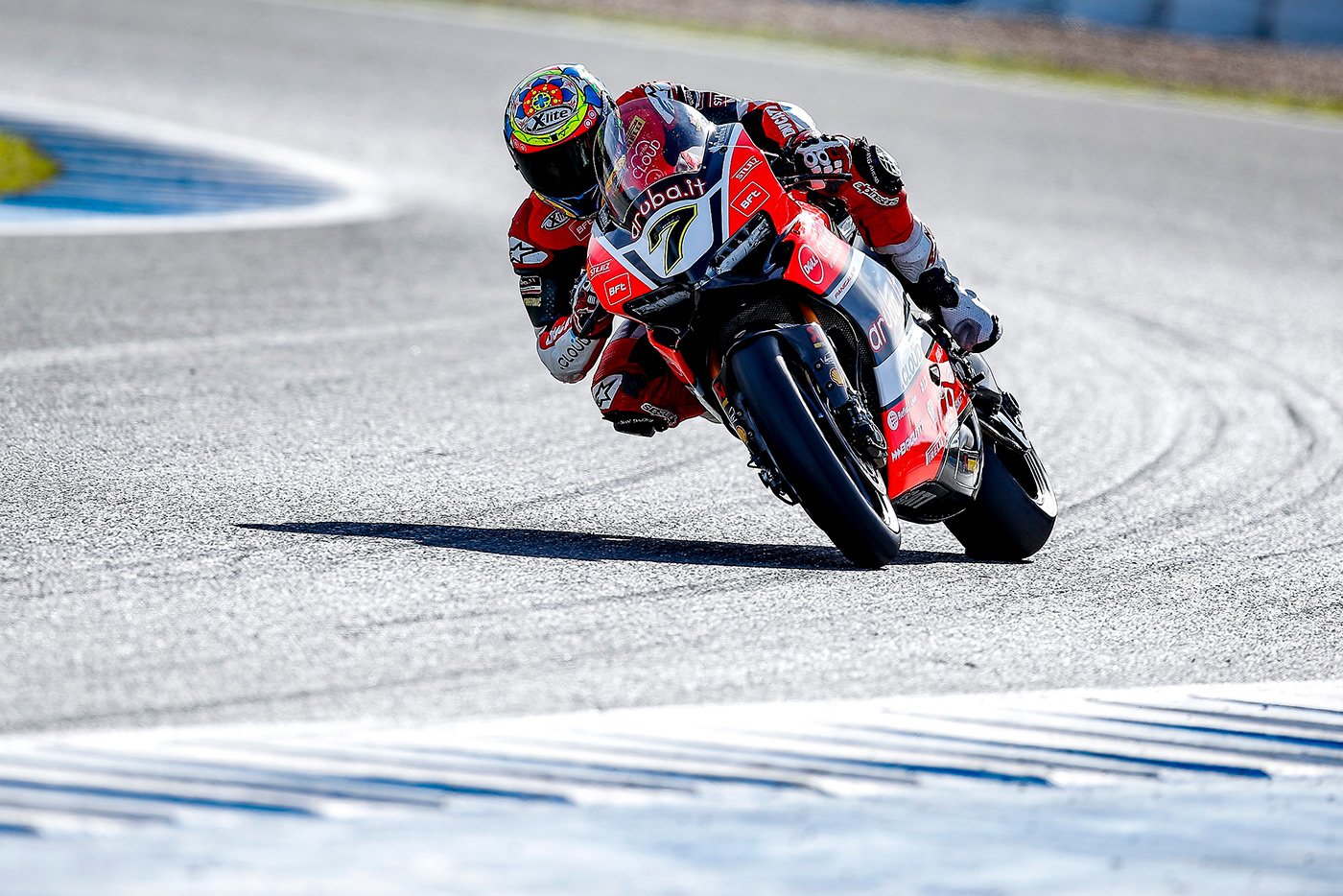
Alvaro Bautista was second fastest at the tests on a Ducati Desmosedici GP16, just edging out former 250 GP rival Chaz Davies on a factory Ducati 1198 Panigale. Third was another Desmosedici, Loris Baz bettering former WSB team-mate Tom Sykes by a fraction.

0440_t01_davies_action.jpg


How is this possible? How can anyone on a trick road bike go faster around a racetrack than the three men presumed to be the world’s best on hand-crafted MotoGP prototypes?

Firstly, this is nothing new. In 2002 the late, great Steve Hislop bettered Valentino Rossi’s pole time at the British GP, making a BSB Ducati 996 faster than a factory Repsol Honda RC211V.

Here’s why such things can happen...

Racing is all about grip. And the more horsepower you have, the less power matters and more grip matters, because it’s all about getting that power to the ground. This becomes apparent if we compare lap times at actual MotoGP and WSB events at Jerez.

The WSB lap record (fastest race lap) stands at 1m 41.135sec, established by Rea in 2015. The MotoGP record stands at 1m 38.735sec, recorded by Lorenzo in the same year; which makes WSB 2.4 seconds slower than MotoGP.

In Jerez’s fastest MotoGP race (2015) and fastest WSB race (2016), the winning MotoGP pace was low 39sec to low 40sec, against WSB high 41sec to high 42sec; another two-second gap. Last season MotoGP’s advantage halved, winner Rossi’s race pace varying between low 40sec and low 41sec.

The gap shrank dramatically due to a change of tyres and subsequent reduced grip. At the 2016 Jerez GP Michelin supplied extra-hard rears, after Scott Redding had delaminated a tyre in Argentina. The Jerez tyre caused wheelspin, even in a straight-line in fifth gear. Hence the race was 31 seconds slower than the 2015 Jerez GP.

Track temperature also plays a part because Jerez offers much less grip in the heat, which is why winter testing times at the track are always impressive. At the 2016 Jerez GP track temperature was 40 degrees, compared to 35 degrees at WSB 2016 and 30 degrees at MotoGP 2015.

hi_r12_jerez_worldsbk_2016_race_1_sykes_gb35202.jpg


Obviously, MotoGP bikes are better than World Superbike machines. A MotoGP engine accelerates with 260 horsepower and stops with carbon brakes. Rea’s ZX-10R makes maybe 230 horsepower and uses steel brakes.

But superbikes do have good things going for them. The second most important factor in bike racing is feel, and a softer superbike gives more feel than an ultra-stiff MotoGP bike.

“A superbike is so forgiving,” says Aprilia MotoGP rider Sam Lowes, whose brother Alex rode both WSB and MotoGP during 2016. “When you’ve got that feeling, feedback and forgiveness you get so much confidence that you feel like you can nearly crash and it’s okay, but when you’re on a stiff MotoGP bike you feel good, good, good, then crash… and you’ve no idea why.”

That begs the question: why bother creating expensive prototype race bikes? A hard one to answer, except to say that MotoGP bikes can do astonishing things given the grip they deserve and, also, wouldn’t it be a tragedy if all bike racing was limited to street bikes?

Machine performance in both championships has been hit by cost-cutting regulations, but MotoGP has been hit hardest. The old 500cc two-strokes weighed 40 kilos less than a superbike; now the difference is 11 kilos due to MotoGP’s sky-high minimum weight limit. And WSB bikes now have more sophisticated electronics, following MotoGP’s introduction of unified software.

And then there are the riders. Rea is very talented and highly motivated. In 2012 he subbed for Casey Stoner at Repsol Honda, scoring a seventh place at Aragon and an eighth at Misano. He worked at the job in his usual professional manner, but didn’t ignite enough interest from top teams.

jerez_wsbk.jpg


There’s little doubt that Rea, Davies and Sykes could fight for MotoGP podiums on the right bike. But getting the right bike is another matter. Most factory contracts go to Spaniards and Italians, because these countries are MotoGP’s heartlands. That’s just the way it is, but it wasn’t always thus. During the 1950s, 1960s and into the 1970s, many factory rides went to Britons, who were employed by British brands, then Italians and Japanese. In the 1980s and 1990s the factories wanted American and Australian riders. Times keep changing.

Rea, Davies and Sykes could have a MotoGP ride if they wanted. But switching championships is risky. They would have to start on non-factory bikes, as did Baz, Cal Crutchlow, Neil Hodgson, James Toseland, Danilo Petrucci and others.

Crutchlow won three WSB races in his rookie season; it took him six years to win his first MotoGP race, during which time his ride was in jeopardy on various occasions. And he still hasn’t got a factory bike.

Petrucci switched from WSB’s Superstock series to MotoGP in 2012, riding the slowest bike on the grid. For three years he finished mostly at the back and became so miserable he nearly quit racing. Next season, his seventh in the category, he will ride a top-spec bike for the first time.

Meanwhile Rea, Davies, Sykes and others know they can race top-notch bikes at the front of WSB and earn nice factory salaries, year after year. They have the choice to take a full-time shot at the premier class but they haven’t, and who can blame them?
 
MV Agusta “Ballistic Trident” by Rough Crafts

12/05/2016 @ 7:08 am, by Jensen Beelerhttp://www.asphaltandrubber.com/bikes/mv-agusta-rough-crafts-ballistic-trident/#disqus_thread


Recently, we have seen some really interesting motorcycles come out from the custom sport bike scene that surprisingly use MV Agusta’s three-cylinder platform.

Catching our fancy have been bikes like Walt Siegl’s “Bol D’Or” line, which blends old and new together masterfully; or bikes like Deus Ex Machina’s “AgoTT”, which takes on a completely different form of mixing retro and modern.

Today, we add another name to the list, as we bring you Rough Crafts’ “Ballistic Trident”, which is based off the MV Agusta Brutale 800 RR, and gives a nod to the race bike of yore that wore the Varese brand’s logo.

Working out of Taiwan, Rough Crafts plays to our weakness for dustbin fairings, giving a sort of half-shell dustbin fairing to the Ballistic Trident. We’re smitten.

The carbon fiber fairing doesn’t even fully cover the front wheel, and there are vents for the intake and brake discs, but the effect is the same, and it gives weight visually to the front-end of the motorcycle.

Drawing your focus forward, the fairing pieces extending down from the fuel tank complete the look, and help hide the lines of the radiator.

Öhlins FGR forks and TTX shock are mated to a Beringer brake setup, but the real crown jewel in the go-fast parts department is the HP Corse exhaust, which keeps MV Agusta’s basic idea of a three exhaust pipe outlet that follows the shape of the rear wheel, which is exposed by the single-sided swingarm.
With a black on black paint scheme, the Ballistic Trident is surprisingly understated, despite its more radical design – perhaps the way an MV Agusta should be. It is certainly a striking machine, don’t you think?


Source: Rough Crafts via Bike EXIF; Photos: JL Photography

Top 5 Related Posts:

  1. More Photos of the MV Agusta F4Z by Zagato
  2. 2017 MV Agusta Brutale 800 RR – The Bike We Asked For
  3. Are You The MV Agusta F4 RC?
  4. MV Agusta F3 675 RC – Italy’s WSS Replica
  5. New MV Agusta Brutale 675 Coming in Q2 2016
 
Expletive Deleted: Lorenzo Land
by dean adams
Tuesday, January 03, 2017
Two riders widely accepted as geniuses: Jorge Lorenzo and Casey Stoner. They are among the best of the best. But they are also very, very different, as riders and as humans.

In 2017 there will be two geniuses under one tent. World champion Jorge Lorenzo will race for the Ducati factory. This is where one Casey Stoner is in his second year as test rider and brand ambassador. It's the most widely accepted foregone conclusion in racing today that the collaboration of Casey Stoner as test rider and Jorge Lorenzo as racer will result in the world championship that Ducati has been chasing for nearly a decade now--since Stoner's title in 2007.

Certainly both men are racing geniuses. But, I am afraid that any similarities they share pretty much end right there.

Consider their riding styles:

Casey Stoner is probably the most aggressive MotoGP rider in the pre-Marquez era. His style, for nearly his entire MotoGP career, was to force the bike into doing his bidding with the rear end of the motorcycle. Watch the video of Stoner from Phillip Island the final year he raced--his style is more rodeo rider than GP rider. He rode the back so hard that not only did it look like he didn't care if he died, he rode like he didn't care if he died, was resurrected and died a second time too.

Lorenzo, on the other hand, from even his 250 days, has been a rider who makes lap time with the front end of the bike. Several times in 2016, when Lorenzo lacked confidence in the front end of the Yamaha, it got so bad his mechanics had to wonder why they were even putting fuel in the M1. Lorenzo has been hurt bad a few times when the M1 lacked adhesion from the front and it tossed him.

Stoner's ball-out style worked when he was a test rider for HRC because the racer was Marc Marquez, who is probably the only rider to out-Stoner Casey Stoner.

The trick for Ducati will be to get enough feel somehow in the front of the GP17 so that Lorenzo has a great deal of confidence in it.

You'll notice that it's been Jorge Lorenzo, Ducati and the media talking about how the collaboration with Stoner will bear fruit for Lorenzo's time at Ducati. Mr. Stoner, meanwhile, has occasionally said the right things on the subject, but you don't have to do much more than look at his face to know how he probably really feels.

And the look on his face says, to me, that all Stoner can or will do is basically to tell Lorenzo what works or worked for him on the red bike. Stoner has won a world championship on the Ducati so the results speak for themselves.

Does Stoner want to spend a season or two trying to help Lorenzo find his special place with the front end of the Ducati? That's an exercise that might be fraught with losing the front at high speed. If you're Casey Stoner, retired with all respect and dignity to a life with a hot wife and every day being Saturday, do you really want to risk losing your fingers trying to help Lorenzo find a setting on the historically vague front of the Ducati MotoGP bike?

Literally, what if it starts to rain and Stoner is trapped in the garage with Lorenzo and his multitude of suspicions and ghosts of crashes past? Lorenzo will not need to cut his own ear off, trust me.

If George Lorenzo is your rider, ideally, Casey Stoner is not your test rider. They are just too different.

If Lorenzo is your rider then you need to pick from a cast of riders who share his all-out approach regarding the front end of the bike. Also, again ideally, you'd need a rider who isn't some kind of really fast short person--you want someone who looks a little like Lorenzo, lanky and tall-ish for a MotoGP rider. You'd want a rider who rides like Lorenzo and who sort of looks like Lorenzo.

That rider might very well be Ben Spies.

Spies is the same size as Lorenzo, and shares that beautiful riding style where he's going to use 70 degree of lean and make the corner bend to his will.

I don't think Spies, due to his injury, can race a motorcycle again. But can he be a test rider?

That's probably a very good question.
 
I wouldn't use the word genius to describe Lorenzo. He's a talented rider no doubt - unless it's raining.
This year is going to be interesting. Can't wait.
 
I wouldn't use the word genius to describe Lorenzo. He's a talented rider no doubt - unless it's raining.
This year is going to be interesting. Can't wait.

yeah I agree that Lorenzo is good very good one of the best in the current riders. But he has vital flaw and everyone knows it, and it is not the rain. He relies very heavily on front end grip if he is not happy or comfortable with it his race is a s good as over and we can usually see how his race is going to be as the practice sessions build up to Q2. Which makes me think what kind of promises Ducati have made to him seeing how hard it has proven to be to get the kind of grip the need out of the front end to give them the kind of mid corner grip that Lorenzo needs to be competitive.

Sorry it took so long to get back to you Twisted Gut I have been typing this on and off for a few days. I have a new batch of pics I will try to upload today.

And yeah it's going to be a ripper year and I'm really looking forward to it.
 
we are in the midst of MotoGP’s winter testing ban but work never stops in race departments across the globe. This is what the big six have planned for 2017

The 2016 MotoGP championship was a season of technical transformation. There will be no big rules shake-up in 2017 but the factories are still hard at work getting to grips with last season’s changes.

Most factories describe their 2017 priorities thus: better turning and better corner-exit performance. In other words they are still getting their heads around the Michelins. In the Bridgestone era, the way to make a race-winning lap time was on corner entry; now the place to make a lap time is from mid-corner to the exit.

One reason the factories struggled to adapt to the Michelins during 2016 was because the tyres kept changing. Michelin had to learn on the hoof, frequently bringing new tyre specs to races, which required different bike settings. That should be less of an issue in 2017 because Michelin engineers have a full season of knowhow, so they know where to go with constructions and compounds.

At last month’s Valencia GP I sat down with one rider and one engineer from each factory – Aprilia, Ducati, Honda, KTM, Suzuki and Yamaha – to find out what they’re doing to their bikes in their efforts to win the 2017 MotoGP crown.

aprilia-jpg.161848


Aprilia
Aprilia’s tiny race department (seven engineers!) made consistent forward steps during 2016, most significantly with a revised frame, introduced in September, which took some load off the front and gave better rear traction. That’s why Alvaro Bautista finished in the top 10 at six of the last seven races.

Aprilia’s race director Romano Albesiano has several priorities to make the RS-GP more competitive: better braking and turning, improved chassis balance (to save the tyres) and more rpm and horsepower.

Centre of gravity will be raised by lifting the RS-GP engine to increase weight transfer for better braking and improved cornering. Albesiano also wants more rpm, more over-rev (so riders can hold a gear between corners and save a shift) and more horsepower, although the V4 is far from slow. At Sepang the RS-GP was only 2.5 mph/3.8kmh slower than the fastest bike, a Ducati at 201.6mph.


albums-press-03_competition-motogp-19_2017_test_valencia-2017_00a_test_valencia_00269-jpg.161849


Ducati
Ducati won two races during 2016 and now the Bologna brand takes the next step towards winning back the title they won in 2007. Jorge Lorenzo’s arrival might just do that but what parts of the Desmosedici need improving?

Ducati’s doldrum years were largely attributable to a front-end turning problem. And guess what? They’ve got one again, although it’s less severe and subtly different. The Desmosedici doesn’t turn as well as the Honda and Yamaha in the crucial mid-corner phase, when the rider releases the brake and tries to get the bike turned. Ducati Corse chief Gigi Dall’Igna thinks frame flex is the issue.

In theory, the winglets ban should affect Ducati more than anyone else, which is why the company had its star test rider Casey Stoner testing without wings back in August. But although a wingless Ducati should lose some acceleration, the loss of downforce increases top speed and makes the bike quicker in direction changing, another issue during 2016.

albums-press-03_competition-motogp-valencia_test-jack_miller_honda02-jpg.161850


Honda
Once upon a time in GP racing Honda always had the best top speeds. That’s not been the case since Ducati joined MotoGP, but Honda has always been there or thereabouts. Not so last season. During October’s Sepang GP the RC213V was fourth fastest, behind the Ducati, Suzuki and Yamaha.

The problem wasn’t so much lack of horsepower as lack of software that could tame the RCV’s ‘screamer’ engine. Previously Honda had the best rider aids, using Formula 1 technology, but Dorna’s lower-tech traction control had the RCV overshooting the slip-ratio target and coming back too strongly, while the lower-tech wheelie control was too basic to keep the bike stable.


That’s why Honda is switching to a friendlier ‘big-bang’ engine, with revised firing intervals, to reduce wheelspin and wheelies. Honda introduced the ‘big bang’ concept to GP racing in the early 1990s; 20 years after HRC guru Youichi Oguma first had the idea, when he built an off-road CB175 twin with both cylinders firing at same time, to gain more traction.

Marc Marquez thinks the new engine is a step in the right direction, because all he wants for 2017 is better corner-exit performance. Incredibly, the reigning champion will probably continue with a revised 2014-spec chassis because it still gives him excellent confidence. If it ain’t broke, don’t fix it.

ktm-jpg.161851


KTM
KTM seems to be doing everything right, so far. The Austrian manufacturer timed its MotoGP development phase perfectly, coinciding with the introduction of Dorna’s unified software and Michelin tyres. It was also a good idea to race at Valencia, to acquire actual race data before the offseason.

Valencia taught KTM engineers one big lesson: they have a serious lack of mechanical grip on corner exits. This was the main issue that kept test rider Mika Kallio two seconds off the pace. Frame and swingarm stiffness are the suspects. KTM are working on this, in cooperation with chassis partner Kalex.

The RC16 is now the only MotoGP bike with a ‘screamer’ engine configuration, but so far KTM engineers are delighted with the engine, which they say has “a fantastic character”.

albums-press-03_competition-motogp-19_2017_test_valencia-2017_00a_test_valencia_00263-jpg.161852


Suzuki


Suzuki made the breakthrough last season, scoring its first-ever MotoGP victory in the dry. The GSX-RR is now pretty much fully competitive, with arguably MotoGP’s best-steering chassis and excellent engine performance. At Sepang the GSX-RR was second fastest at 201.1mph/323.7km/h, just behind the Ducati and ahead of the Yamaha at 200.2mph, the Honda at 199.6mph/321.4km/h and the Aprilia at 199.2mph/320.7km/h.

The bike’s chassis is more front-end oriented than its rivals, which is why Suzuki adapted to Michelins more easily than most. It’s significant that Maverick Vinales was the only top rider to crash fewer times last season with Michelins than he did with Bridgestones in 2015.

Suzuki engineers need to keep working in the same direction, fine-tuning the chassis and eking a little more performance from the inline-four engine. Their biggest job is to improve electronics settings, especially traction control in the wet.

albums-press-03_competition-motogp-19_2017_test_valencia-2017_00a_test_valencia_00267-jpg.161853


Yamaha
Last season was one of Yamaha’s poorest in MotoGP. The YZR-M1 is still a neutral, rider-friendly bike but it often worked worse with the Michelins than any other bike. That’s what Yamaha must fix and it’s a big ask.

Top of the to-do list is sorting out how the M1 transfers load, into corners, through corners and out of corners. Last season Yamaha riders couldn’t get the bike balanced for optimum front load on entry and optimum rear load on exit. Usually they ended up with too little front load, which is why Jorge Lorenzo and Valentino Rossi lost the front so often, or too little rear load, which gave lots of wheelspin, which Dorna’s unified software couldn’t exorcise. Yamaha engineers also need to adjust engine character to reduce wheelspin and fine-tune the traction control to save the rear tyre for the latter half of races

Finally, they will focus on improving mid-corner turning. It should be noted that although Michelin came in for a lot of criticism last season, corner speeds were higher than they’d ever been.
 
No worries Wino
Jorge does indeed rely on his front, hence he bottles it in the rain! He'll certainly have his 'Gas' this year, the Ducati is way fast, but he will be struggling to find his 'Butter' I think? Maybe I'll be proved wrong, maybe the whiny little sod will smash it!

Suzuki were so exciting to watch last year hope they continue to test the big boys, I wonder if they'll regret not sticking with Espargaro and Vinales? Iannone certainly rides balls out but he's as scary as hell...

I'm really hoping Aprilia make as big a step as Suzuki did last year. But then I'm biased because I ride one.

Not long now...
 
Back
Top