


Human sacrifices dating back around 2,300 years have been found near an ancient temple in Peru.

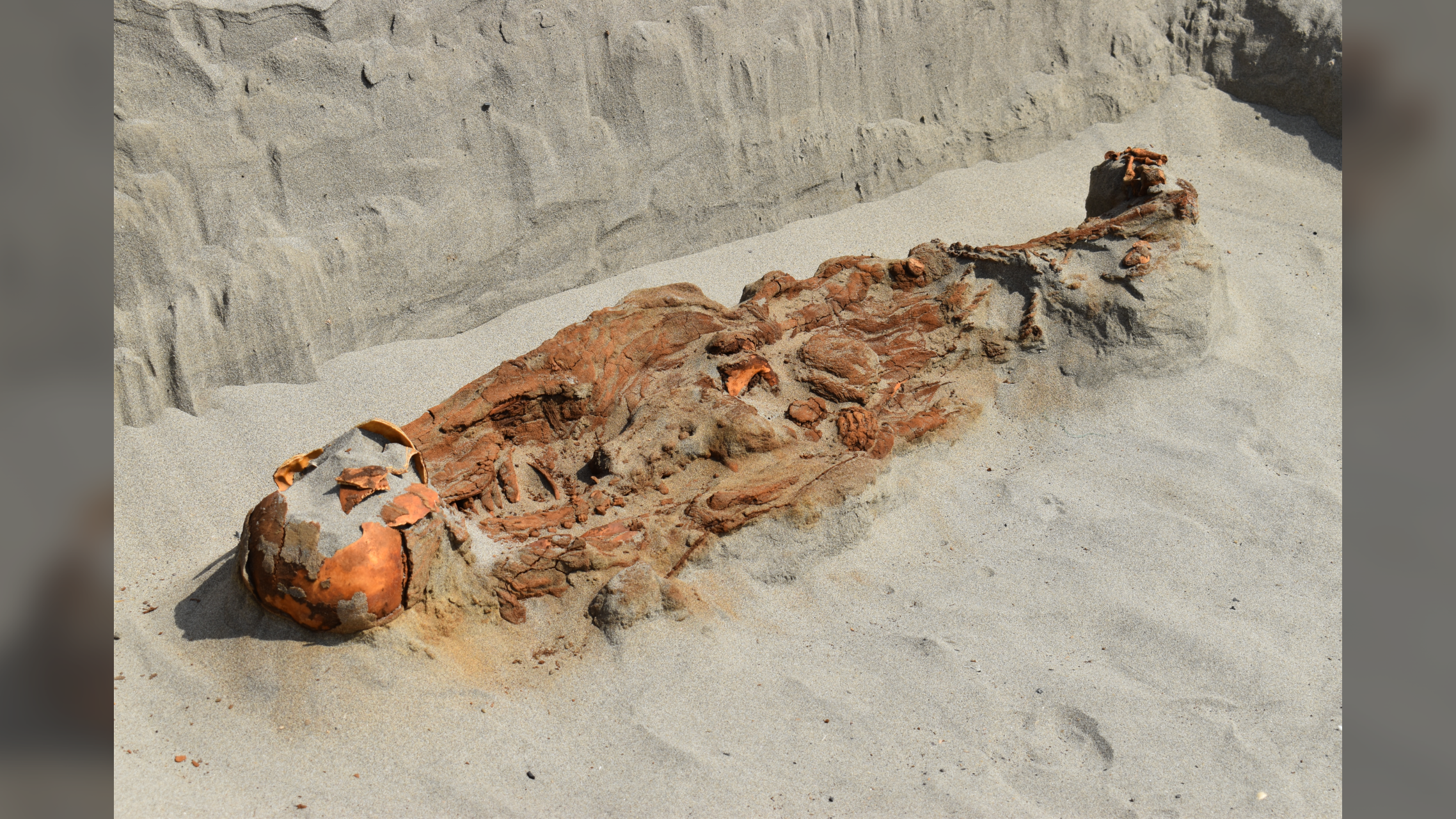
While excavating a temple in Peru, archaeologists found the 2,300-year-old remains of more than a dozen people, some of which show evidence of human sacrifice.
The burials bear some rare features, the archaeologists said.
"The way in which they were placed in the tomb is strange," Henry Tantaleán, an archaeology professor at the National University of San Marcos who is leading the team, told Live Science in an email. They were positioned "with their faces to the ground, an unusual burial pattern throughout Andean prehistory."
Several of the people had skull fractures, Tantaleán said, and some had ropes around their necks and their hands tied behind their backs. These finds suggest that the individuals were sacrificed, he said, noting that "they were not accompanied by any offering or grave goods, which is also unusual.
The team discovered the burials near the Puemape Temple Complex on the northwestern coast of Peru in 2024 and excavation work continued in 2025, according to Tantaleán. Whereas the temple is about 3,000 years old, the burials date to a later time, roughly 400 to 200 B.C. The temple may have been abandoned before the human sacrifices were made.
"They would have been a sacrifice offered to this ancient place of worship," Tantaleán said.
 www.livescience.com
While excavating a temple in Peru, archaeologists found the 2,300-year-old remains of more than a dozen people, some of which show evidence of human sacrifice.
The burials bear some rare features, the archaeologists said.
"The way in which they were placed in the tomb is strange," Henry Tantaleán, an archaeology professor at the National University of San Marcos who is leading the team, told Live Science in an email. They were positioned "with their faces to the ground, an unusual burial pattern throughout Andean prehistory."
Several of the people had skull fractures, Tantaleán said, and some had ropes around their necks and their hands tied behind their backs. These finds suggest that the individuals were sacrificed, he said, noting that "they were not accompanied by any offering or grave goods, which is also unusual.
The team discovered the burials near the Puemape Temple Complex on the northwestern coast of Peru in 2024 and excavation work continued in 2025, according to Tantaleán. Whereas the temple is about 3,000 years old, the burials date to a later time, roughly 400 to 200 B.C. The temple may have been abandoned before the human sacrifices were made.
"They would have been a sacrifice offered to this ancient place of worship," Tantaleán said.
'Strange' tomb in Peru holds skeletons of people with ropes around their necks, hands tied behind their backs, archaeologists say
Human sacrifices dating back around 2,300 years have been found near an ancient temple in Peru.
www.livescience.com