


When most people think of fossils, they imagine delicate bones carefully uncovered with brushes and small tools. However, a recent discovery in Patagonia, Argentina, challenged that perception. In the Río Negro province, paleontologists unearthed the remains of a colossal dinosaur, a newly identified titanosaur so massive that its fossilised bones actually cracked the road during transport. Named Chucarosaurus diripienda, this extraordinary dinosaur measured roughly 30 metres long and weighed tens of tonnes, making it one of the largest land animals ever discovered. Beyond its sheer size, the find is reshaping scientists’ understanding of how these long-necked giants evolved, moved, and survived in prehistoric ecosystems, offering fresh insights into their anatomy, growth patterns, and ancient environmental adaptations, while also revealing previously unknown skeletal features, muscle structures, and biomechanical traits that deepen our understanding of dinosaur physiology and evolutionary history.
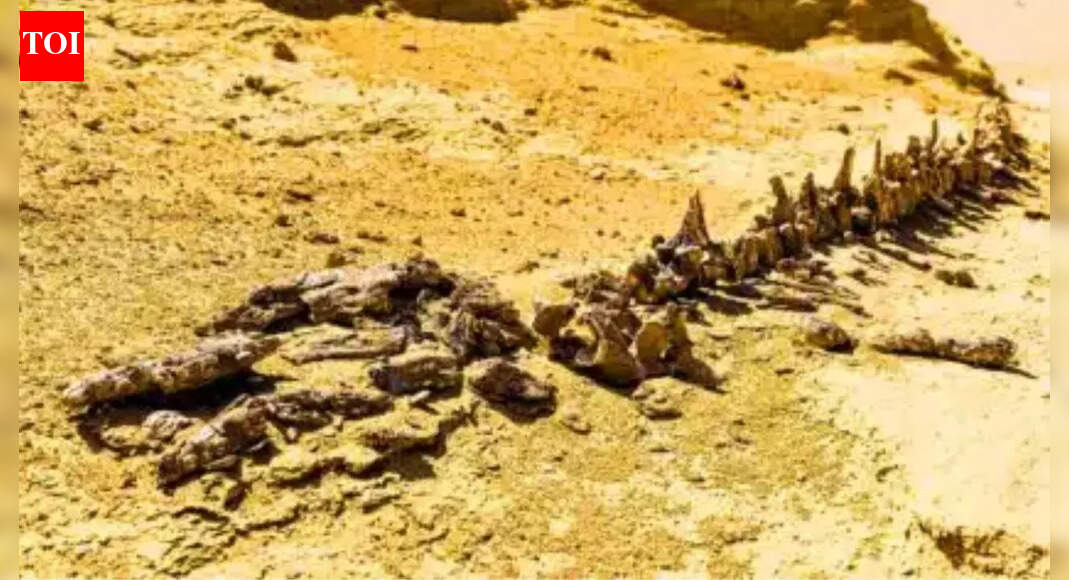
The story began in 2018, when a research team exploring the rugged Patagonian terrain uncovered a series of immense fossilised bones belonging to an enormous herbivore from the Late Cretaceous period. Measuring roughly 30 metres (100 feet) in length and weighing an estimated 30 to 40 tonnes, Chucarosaurus diripienda would have been one of the largest land animals to ever walk the Earth. According to a study published in the journal Cretaceous Research, this new giant titanosaur from Argentina marks a significant addition to our understanding of these colossal creatures.
As the bones were painstakingly excavated and transported to Buenos Aires for further study, their sheer mass caused an unexpected twist: the truck carrying them destabilised, and the immense weight fractured the asphalt beneath it. While the fossils remained intact and no one was injured, the incident left scientists, onlookers, and locals alike in awe of just how massive this creature must have been in life, inspiring renewed fascination and curiosity about the prehistoric giant’s size, anatomy, and the environment it once roamed
Every dinosaur’s name tells a story, and Chucarosaurus diripienda’s is no exception. The genus name “Chucaro” comes from the Quechua word for “wild” or “indomitable,” while “diripienda” is Latin for “scrambled” or “scattered,” a nod to the bones that were thrown about during the transport accident, subsequent excavation process, and careful preparation for study by paleontologists. Together, the name symbolises both the immense power, ferocity, and size of the animal and the turbulent journey its fossils endured millions of years later, offering a poetic glimpse into the intricate challenges of palaeontological discovery and the remarkable resilience of Earth’s prehistoric giants.
Though Chucarosaurus doesn’t dethrone record-holders like Argentinosaurus or Patagotitan, it still ranks among the most imposing titanosaurs ever found. One of its femurs measures 1.9 metres (6.2 feet) long, an astonishing size that offers clues about the dinosaur’s physical capabilities and overall biomechanics. Interestingly, its bones show a unique combination of strength and slenderness not typical of other colossal sauropods, suggesting it may have been more agile and faster than many of its gigantic relatives.
This balance of size, mobility, and skeletal efficiency paints a picture of a dinosaur built not only for support but for efficient movement. With its elongated neck, Chucarosaurus could browse the highest treetops, while its massive tail may have served as both a counterbalance, defensive weapon, and even a communication tool against predators.
The discovery adds a valuable chapter to the evolutionary story of titanosaurs, the group of long-necked, plant-eating dinosaurs that dominated South America in the Cretaceous era. By comparing Chucarosaurus’s bone structure with that of other species, researchers can trace how these giants adapted to different environments, from dry plains to lush forests, developing unique limb proportions, joint structures, and movement patterns. Moreover, the fossils provide clues about their growth rates, muscle attachments, and possible social behaviors, offering a more complete picture of their biology and ecological roles
The fossils also reveal how titanosaurs distributed their immense body weight and how their skeletons evolved to support such size without collapsing under pressure. These insights could help explain how sauropods became some of the most successful animals in Earth’s history, thriving across continents for over 100 million years.
Chucarosaurus diripienda highlights the scale and resilience of titanosaurs
Chucarosaurus diripienda stands as more than just another fossil find; it’s a reminder of the sheer scale of prehistoric life and the challenges scientists face in unearthing it. From the dramatic discovery site in Patagonia to the cracked roads of Buenos Aires, this dinosaur’s journey mirrors its ancient story: powerful, resilient, and unforgettable. Its massive size and unique skeletal features provide crucial insights into sauropod evolution and how these colossal creatures adapted to changing environments.
As research continues, this “indomitable giant” may yet reveal even more secrets about the age of giants, when the Earth rumbled beneath the weight of creatures that truly defied imagination and reshaped ecosystems millions of years ago.

 timesofindia.indiatimes.com
The story began in 2018, when a research team exploring the rugged Patagonian terrain uncovered a series of immense fossilised bones belonging to an enormous herbivore from the Late Cretaceous period. Measuring roughly 30 metres (100 feet) in length and weighing an estimated 30 to 40 tonnes, Chucarosaurus diripienda would have been one of the largest land animals to ever walk the Earth. According to a study published in the journal Cretaceous Research, this new giant titanosaur from Argentina marks a significant addition to our understanding of these colossal creatures.
As the bones were painstakingly excavated and transported to Buenos Aires for further study, their sheer mass caused an unexpected twist: the truck carrying them destabilised, and the immense weight fractured the asphalt beneath it. While the fossils remained intact and no one was injured, the incident left scientists, onlookers, and locals alike in awe of just how massive this creature must have been in life, inspiring renewed fascination and curiosity about the prehistoric giant’s size, anatomy, and the environment it once roamed
Every dinosaur’s name tells a story, and Chucarosaurus diripienda’s is no exception. The genus name “Chucaro” comes from the Quechua word for “wild” or “indomitable,” while “diripienda” is Latin for “scrambled” or “scattered,” a nod to the bones that were thrown about during the transport accident, subsequent excavation process, and careful preparation for study by paleontologists. Together, the name symbolises both the immense power, ferocity, and size of the animal and the turbulent journey its fossils endured millions of years later, offering a poetic glimpse into the intricate challenges of palaeontological discovery and the remarkable resilience of Earth’s prehistoric giants.
Though Chucarosaurus doesn’t dethrone record-holders like Argentinosaurus or Patagotitan, it still ranks among the most imposing titanosaurs ever found. One of its femurs measures 1.9 metres (6.2 feet) long, an astonishing size that offers clues about the dinosaur’s physical capabilities and overall biomechanics. Interestingly, its bones show a unique combination of strength and slenderness not typical of other colossal sauropods, suggesting it may have been more agile and faster than many of its gigantic relatives.
This balance of size, mobility, and skeletal efficiency paints a picture of a dinosaur built not only for support but for efficient movement. With its elongated neck, Chucarosaurus could browse the highest treetops, while its massive tail may have served as both a counterbalance, defensive weapon, and even a communication tool against predators.
The discovery adds a valuable chapter to the evolutionary story of titanosaurs, the group of long-necked, plant-eating dinosaurs that dominated South America in the Cretaceous era. By comparing Chucarosaurus’s bone structure with that of other species, researchers can trace how these giants adapted to different environments, from dry plains to lush forests, developing unique limb proportions, joint structures, and movement patterns. Moreover, the fossils provide clues about their growth rates, muscle attachments, and possible social behaviors, offering a more complete picture of their biology and ecological roles
The fossils also reveal how titanosaurs distributed their immense body weight and how their skeletons evolved to support such size without collapsing under pressure. These insights could help explain how sauropods became some of the most successful animals in Earth’s history, thriving across continents for over 100 million years.
Chucarosaurus diripienda highlights the scale and resilience of titanosaurs
Chucarosaurus diripienda stands as more than just another fossil find; it’s a reminder of the sheer scale of prehistoric life and the challenges scientists face in unearthing it. From the dramatic discovery site in Patagonia to the cracked roads of Buenos Aires, this dinosaur’s journey mirrors its ancient story: powerful, resilient, and unforgettable. Its massive size and unique skeletal features provide crucial insights into sauropod evolution and how these colossal creatures adapted to changing environments.
As research continues, this “indomitable giant” may yet reveal even more secrets about the age of giants, when the Earth rumbled beneath the weight of creatures that truly defied imagination and reshaped ecosystems millions of years ago.
Chucarosaurus diripienda: The dinosaur so massive it shattered roads and transformed how scientists study titanosaurs | - The Times of India
Science News: A colossal titanosaur, Chucarosaurus diripienda, unearthed in Patagonia, measured 30 meters and weighed tens of tonnes. Its immense size even cracked
timesofindia.indiatimes.com