• Adults Only Website 18+

    If you are under 18 you are not permitted to submit personal information to us or use this website. If discovered you will be banned.

    We will ban and report anyone posting illegal content.

    We will ban any forum user who breaks our terms.

    Freedom of speech should be wide open as long as it doesn't incite violence.

    We have a 15 year old thriving community here with 400,000+ members and hundreds of people online at any given moment, we encourage you to join!, there are 1000's of topics to discuss. Please be aware before registering and read our terms of service and privacy policy.

    By dismissing this notice and proceeding, you agree to the above.

Vaccines can't protect you from being poisoned!

5. Autism Link
Claim: Vaccines, especially MMR, cause autism.

Refutation:
This myth, born from fraud, has been thoroughly debunked by science.


  • The Wakefield Fraud:Andrew Wakefield’s 1998 study claimed an MMR-autism link based on 12 children. Investigations revealed:
    • Data was falsified; children were pre-selected with autism (BMJ, 2011).
    • Wakefield was paid by lawyers suing vaccine makers, a conflict of interest.
    • The study was retracted, and he lost his medical license.
  • Massive Studies:Over a dozen large studies refute this claim:
    • A 2019 Danish study tracked 657,461 children over a decade—no MMR-autism link (Annals of Internal Medicine, 2019).
    • A 2002 U.S. study of 537,303 children found identical autism rates in vaccinated and unvaccinated groups (NEJM, 2002).
    • A 2020 meta-analysis of 1.2 million children confirmed no association (JAMA, 2020).
  • Autism’s Origins:Autism is a neurodevelopmental condition with genetic roots:
    • Twin studies show 70-90% heritability (Nature Genetics, 2019).
    • Brain differences are detectable in utero, before vaccinations (Science, 2020).
    • Diagnosis often coincides with vaccine schedules (18-24 months), a post hoc fallacy—not causation.
  • Thimerosal Myth: Some claim this preservative (removed from most childhood vaccines by 2001) causes autism. Studies of children vaccinated pre- and post-removal show no difference in autism rates (Pediatrics, 2004).
  • Emotional Sensitivity: Parents of autistic children may seek answers in vaccines due to grief or guilt. Empathy is key, but facts must guide conclusions.

Analogy: Blaming vaccines for autism is like blaming rain for a leaky roof. The roof’s flaws (genetics) predate the storm (vaccination)—correlation isn’t causation.

---

6. Religious or Philosophical Objections

Claim: Vaccines conflict with religious beliefs or personal freedom.

Refutation:
Vaccination aligns with ethical principles and most religious teachings, balancing individual rights with collective good.


  • Social Contract Theory: Philosophers like Thomas Hobbes and Jean-Jacques Rousseau argue society functions when individuals cede some freedoms for mutual benefit. Vaccination prevents outbreaks, protecting everyone’s right to health.
  • Harm Principle: John Stuart Mill posits that liberty is limited when it harms others. Refusing vaccines endangers public safety—e.g., a 2018 New York measles outbreak from unvaccinated religious communities infected 649 people (CDC, 2019).
  • Religious Support:Major faiths endorse vaccines:
    • Catholicism: The Vatican calls vaccination an “act of love” and morally permissible, even with fetal cell lines used in some vaccine development (Congregation for the Doctrine of the Faith, 2020).
    • Islam: The Islamic Fiqh Academy and scholars like those at Al-Azhar University support vaccines as preserving life, a core tenet (Fatwa, 2021).
    • Judaism: Pikuach nefesh (saving a life) overrides other laws; rabbis globally promote vaccination (Orthodox Union, 2020).
    • Exceptions (e.g., some Christian Scientists) are rare and not representative.
  • Ethical Duty: Kant’s categorical imperative—act as if your choice were universal law—implies vaccinating to prevent harm is a moral necessity.
  • Freedom’s Limits: Philosophical “freedom” doesn’t extend to reckless endangerment. You can’t drive drunk or smoke in crowded theaters—why refuse a proven public health measure?

Analogy: Vaccination is like paying taxes. You might dislike it, but it funds roads and schools (or health and safety). Opting out burdens everyone else.

---

Psychological Roots of Vaccine Hesitancy

Understanding why people resist vaccines:

  • Cognitive Biases:
    • Confirmation Bias: Anti-vaxxers seek sources like social media posts reinforcing their views.
    • Availability Heuristic: Vivid stories (e.g., a child’s adverse reaction) outweigh statistics. 3 million lives are saved yearly by vaccines (WHO, 2020).
  • Fear of Ingredients: Vaccines contain adjuvants like aluminum (to boost immunity) in tiny amounts—0.5 mg per dose vs. 4 mg in a serving of fish (CDC, 2021).
  • Appeal to Nature Fallacy: “Natural” isn’t always better—cyanide is natural, vaccines are not. They’re a refined tool, like eyeglasses or antibiotics.
  • Misinformation Ecosystem: Social media algorithms amplify anti-vax voices. A 2021 study found 65% of vaccine misinformation online traced to 12 influencers (Center for Countering Digital Hate, 2021).
 
FYI, I am also a Chicken Pox, Measles and Rubella survivor, and I will literally end my time on this planet before I take any jab in the future, I haven't had a vax since I was in school. I know how to destroy any infection without the assistance of a doctor, faster than any of the shit they have to offer.
and the pharma community is immune from law suits due to side effects. pathetic...
 
5. Autism Link
Claim: Vaccines, especially MMR, cause autism.

Refutation:
This myth, born from fraud, has been thoroughly debunked by science.


  • The Wakefield Fraud:Andrew Wakefield’s 1998 study claimed an MMR-autism link based on 12 children. Investigations revealed:
    • Data was falsified; children were pre-selected with autism (BMJ, 2011).
    • Wakefield was paid by lawyers suing vaccine makers, a conflict of interest.
    • The study was retracted, and he lost his medical license.
  • Massive Studies:Over a dozen large studies refute this claim:
    • A 2019 Danish study tracked 657,461 children over a decade—no MMR-autism link (Annals of Internal Medicine, 2019).
    • A 2002 U.S. study of 537,303 children found identical autism rates in vaccinated and unvaccinated groups (NEJM, 2002).
    • A 2020 meta-analysis of 1.2 million children confirmed no association (JAMA, 2020).
  • Autism’s Origins:Autism is a neurodevelopmental condition with genetic roots:
    • Twin studies show 70-90% heritability (Nature Genetics, 2019).
    • Brain differences are detectable in utero, before vaccinations (Science, 2020).
    • Diagnosis often coincides with vaccine schedules (18-24 months), a post hoc fallacy—not causation.
  • Thimerosal Myth: Some claim this preservative (removed from most childhood vaccines by 2001) causes autism. Studies of children vaccinated pre- and post-removal show no difference in autism rates (Pediatrics, 2004).
  • Emotional Sensitivity: Parents of autistic children may seek answers in vaccines due to grief or guilt. Empathy is key, but facts must guide conclusions.

Analogy: Blaming vaccines for autism is like blaming rain for a leaky roof. The roof’s flaws (genetics) predate the storm (vaccination)—correlation isn’t causation.

---

6. Religious or Philosophical Objections

Claim: Vaccines conflict with religious beliefs or personal freedom.

Refutation:
Vaccination aligns with ethical principles and most religious teachings, balancing individual rights with collective good.


  • Social Contract Theory: Philosophers like Thomas Hobbes and Jean-Jacques Rousseau argue society functions when individuals cede some freedoms for mutual benefit. Vaccination prevents outbreaks, protecting everyone’s right to health.
  • Harm Principle: John Stuart Mill posits that liberty is limited when it harms others. Refusing vaccines endangers public safety—e.g., a 2018 New York measles outbreak from unvaccinated religious communities infected 649 people (CDC, 2019).
  • Religious Support:Major faiths endorse vaccines:
    • Catholicism: The Vatican calls vaccination an “act of love” and morally permissible, even with fetal cell lines used in some vaccine development (Congregation for the Doctrine of the Faith, 2020).
    • Islam: The Islamic Fiqh Academy and scholars like those at Al-Azhar University support vaccines as preserving life, a core tenet (Fatwa, 2021).
    • Judaism: Pikuach nefesh (saving a life) overrides other laws; rabbis globally promote vaccination (Orthodox Union, 2020).
    • Exceptions (e.g., some Christian Scientists) are rare and not representative.
  • Ethical Duty: Kant’s categorical imperative—act as if your choice were universal law—implies vaccinating to prevent harm is a moral necessity.
  • Freedom’s Limits: Philosophical “freedom” doesn’t extend to reckless endangerment. You can’t drive drunk or smoke in crowded theaters—why refuse a proven public health measure?

Analogy: Vaccination is like paying taxes. You might dislike it, but it funds roads and schools (or health and safety). Opting out burdens everyone else.

---

Psychological Roots of Vaccine Hesitancy

Understanding why people resist vaccines:

  • Cognitive Biases:
    • Confirmation Bias: Anti-vaxxers seek sources like social media posts reinforcing their views.
    • Availability Heuristic: Vivid stories (e.g., a child’s adverse reaction) outweigh statistics. 3 million lives are saved yearly by vaccines (WHO, 2020).
  • Fear of Ingredients: Vaccines contain adjuvants like aluminum (to boost immunity) in tiny amounts—0.5 mg per dose vs. 4 mg in a serving of fish (CDC, 2021).
  • Appeal to Nature Fallacy: “Natural” isn’t always better—cyanide is natural, vaccines are not. They’re a refined tool, like eyeglasses or antibiotics.
  • Misinformation Ecosystem: Social media algorithms amplify anti-vax voices. A 2021 study found 65% of vaccine misinformation online traced to 12 influencers (Center for Countering Digital Hate, 2021).

These are all valid arguments, but I think you'll find the majority of antivaxxers are suffering from a very common phenomenon known as a vasovagal syringe phobia from which they extrapolate all sorts of bullshit excuses to justify the fear.

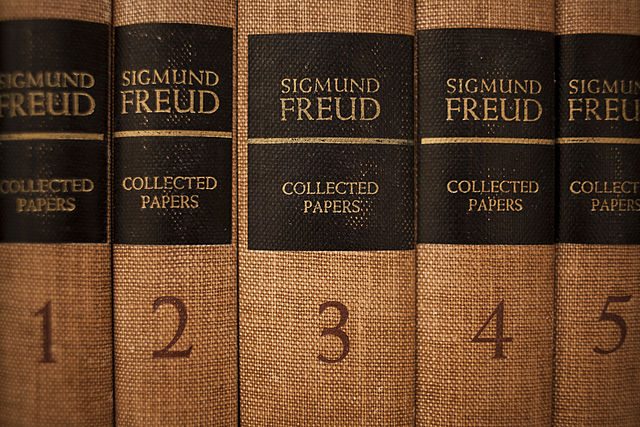
Freud would have loved a good sit-down with one
 
These are all valid arguments, but I think you'll find the majority of antivaxxers are suffering from a very common phenomenon known as a vasovagal syringe phobia from which they extrapolate all sorts of bullshit excuses to justify the fear.

Freud would have loved a good sit-down with one
Freud was a quack, he admitted this himself!
 
5. Autism Link
Claim: Vaccines, especially MMR, cause autism.

Refutation:
This myth, born from fraud, has been thoroughly debunked by science.


  • The Wakefield Fraud:Andrew Wakefield’s 1998 study claimed an MMR-autism link based on 12 children. Investigations revealed:
    • Data was falsified; children were pre-selected with autism (BMJ, 2011).
    • Wakefield was paid by lawyers suing vaccine makers, a conflict of interest.
    • The study was retracted, and he lost his medical license.
    • A 2019 Danish study tracked 657,461 children over a decade—no MMR-autism link (Annals of Internal Medicine, 2019).
    • A 2002 U.S. study of 537,303 children found identical autism rates in vaccinated and unvaccinated groups (NEJM, 2002).
    • A 2020 meta-analysis of 1.2 million children confirmed no association (JAMA, 2020).
  • Thimerosal Myth: Some claim this preservative (removed from most childhood vaccines by 2001) causes autism. Studies of children vaccinated pre- and post-removal show no difference in autism rates (Pediatrics, 2004).
  • Emotional Sensitivity: Parents of autistic children may seek answers in vaccines due to grief or guilt. Empathy is key, but facts must guide conclusions.

Analogy: Blaming vaccines for autism is like blaming rain for a leaky roof. The roof’s flaws (genetics) predate the storm (vaccination)—correlation isn’t causation.

---

6. Religious or Philosophical Objections

Claim: Vaccines conflict with religious beliefs or personal freedom.

Refutation:
Vaccination aligns with ethical principles and most religious teachings, balancing individual rights with collective good.


  • Social Contract Theory: Philosophers like Thomas Hobbes and Jean-Jacques Rousseau argue society functions when individuals cede some freedoms for mutual benefit. Vaccination prevents outbreaks, protecting everyone’s right to health.
  • Harm Principle: John Stuart Mill posits that liberty is limited when it harms others. Refusing vaccines endangers public safety—e.g., a 2018 New York measles outbreak from unvaccinated religious communities infected 649 people (CDC, 2019).
    • Catholicism: The Vatican calls vaccination an “act of love” and morally permissible, even with fetal cell lines used in some vaccine development (Congregation for the Doctrine of the Faith, 2020).
    • Islam: The Islamic Fiqh Academy and scholars like those at Al-Azhar University support vaccines as preserving life, a core tenet (Fatwa, 2021).
    • Judaism: Pikuach nefesh (saving a life) overrides other laws; rabbis globally promote vaccination (Orthodox Union, 2020).
    • Exceptions (e.g., some Christian Scientists) are rare and not representative.
  • Ethical Duty: Kant’s categorical imperative—act as if your choice were universal law—implies vaccinating to prevent harm is a moral necessity.
  • Freedom’s Limits: Philosophical “freedom” doesn’t extend to reckless endangerment. You can’t drive drunk or smoke in crowded theaters—why refuse a proven public health measure?

Analogy: Vaccination is like paying taxes. You might dislike it, but it funds roads and schools (or health and safety). Opting out burdens everyone else.

---

Psychological Roots of Vaccine Hesitancy

Understanding why people resist vaccines:

  • Cognitive Biases:
    • Confirmation Bias: Anti-vaxxers seek sources like social media posts reinforcing their views.
    • Availability Heuristic: Vivid stories (e.g., a child’s adverse reaction) outweigh statistics. 3 million lives are saved yearly by vaccines (WHO, 2020).
  • Fear of Ingredients: Vaccines contain adjuvants like aluminum (to boost immunity) in tiny amounts—0.5 mg per dose vs. 4 mg in a serving of fish (CDC, 2021).
  • Appeal to Nature Fallacy: “Natural” isn’t always better—cyanide is natural, vaccines are not. They’re a refined tool, like eyeglasses or antibiotics.
  • Misinformation Ecosystem: Social media algorithms amplify anti-vax voices. A 2021 study found 65% of vaccine misinformation online traced to 12 influencers (Center for Countering Digital Hate, 2021).
I thought you weren't going to argue? I'm not going to waste my time on gathering evidence to respond because it's quite obvious you don't bother with checking any of it out. All I will say is if your vaccine is so effective, it doesn't require my participation, to protect you. Enjoy your early demise. I can't reach everyone.
 
"He told a friend, “we do analysis for two reasons: to understand the unconscious and to make a living…we certainly cannot help [the patients].”
Even if this were a true quote, which sounds dubious in the context of primordial psychiatry it would be somewhat appropriate
 
I thought you weren't going to argue? I'm not going to waste my time on gathering evidence to respond because it's quite obvious you don't bother with checking any of it out. All I will say is if your vaccine is so effective, it doesn't require my participation, to protect you. Enjoy your early demise. I can't reach everyone.
It's not arguing but education. I wonder how you'd respond to any of that.
 
"He told a friend, “we do analysis for two reasons: to understand the unconscious and to make a living…we certainly cannot help [the patients].”
This doesn't make his contributions to psychology worthless. (Assuming he even said that, probably out of context here)
 
This doesn't make his contributions to psychology worthless. (Assuming he even said that, probably out of context here)
 
Even if this were a true quote, which sounds dubious in the context of primordial psychiatry it would be somewhat appropriate
 
Even if this were a true quote, which sounds dubious in the context of primordial psychiatry it would be somewhat appropriate
"In his more honest moments, he admitted his work did little to advance the cause of his supposed métier. “I am actually not at all a man of science, not an observer, not an experimenter, not a thinker,” he wrote Fliess. “I am by temperament nothing but a conquistador — an adventurer, if you want it translated — with all the curiosity, daring and tenacity characteristic of a man of this sort.”


A new biography demolishes whatever was left of the Viennese con man’s reputation.
Writing to his close friend and collaborator Wilhelm Fliess in 1890, Sigmund Freud explained that he couldn’t pay a visit because, in a struggling psychiatric practice that suckered rich society women in Vienna, “My most important client is just now going through a kind of nervous crisis and might get well in my absence.
No, Freud wasn’t being ironic: He depended on grandes dames to stay in business. On another occasion, referring to a cartoon in which a yawning lion grumbles, “Twelve o’clock and no negroes,” he wrote, “The worries begin again whether some negroes will turn up at the right time to still the lion’s appetite.” That appetite, as Frederick Crews makes clear in his exhaustive, reputation-pulverizing book Freud: The Making of an Illusion, was from an early age for fame and riches, which Freud relentlessly pursued by championing one faddish quack remedy after another, backing away when justified criticism made his position untenable, covering his tracks with misleading or even completely false claims about what he’d been up to, then bustling on to the next gold mine.

In 1884, for instance, in the giddy throes of a fondness for cocaine that Freud would indulge on and off for some 15 years, he had the marvelous idea of treating a brilliant young scientist, Ernst Fleischl von Marxow, for a mild morphine addiction (resulting from surgery) by putting the patient on cocaine. Instead, Fleischl became hugely addicted to both morphine and cocaine — sleepless nights, strung-out dozy days — and wasted away into a scarecrow while Freud, writing about the patient under a pseudonym, bragged in a paper about the tremendous success of his experiment. Meanwhile, a colleague of Freud was discovering an actual useful application of cocaine, as a topical anesthetic that opened the door to new kinds of surgery (such as on the eye). This was a truly revolutionary breakthrough and Freud had nothing to do with it. Later he would suggest that he had been on the brink of making the discovery but had been distracted by his fiancée, Martha.

The case for Freud’s misogyny is ludicrously easy to make. After his cocaine frenzy, Freud headed to Paris to study with Jean-Martin Charcot, who oversaw an insane asylum full of women upon whom he freely experimented and operated under the assumption that they were suffering from “hysteria,” an almost exclusively feminine phenomenon in which sex organs supposedly caused otherwise unexplained behavior and bodily disorders. Freud would carry the concept of hysteria to breathtaking extremes in his private practice: Leg pain? Morphine addiction? Asthma? Freud treated patients with these disorders under the working theory that they were suffering from hysteria, which among his mostly female clientele morphed into an assumption that the origin story of all neurosis was a childhood sexual trauma, which he called the “seduction theory” and which Crews relabels “molestation theory,” since a small child who has suffered a sexual assault is not actually a seducer.

If the patient couldn’t remember any childhood sexual trauma, Freud would “reconstruct” it by coaching her to devise one. Despite claiming in a typically grandiose but evidence-free 1896 lecture that his psychoanalysis had helped unveil and repair childhood sexual trauma in 18 patients — the speech was so devoid of clinical standards that a senior scientist, Richard von Krafft-Ebing, said, “It sounds like a scientific fairy tale” — Freud later revealed in a letter to Fliess that he hadn’t cured even one person.

In one of the many horror stories Crews documents at length, Fliess, with Freud’s eager encouragement, nearly killed a patient whose symptoms suggest she was a hemophiliac who had an ovarian cyst by operating on her nose and removing a chunk of bone, on the crackpot theory he called “nasal reflex neurosis” that the genital-based hysteria natural to women was traceable to cartilage in the nose. As the suffering woman, Emma Eckstein, nearly bled to death while Freud bungled her recovery, he blanched and nearly vomited, regaining his poise only with the aid of a glass of brandy. “So, this is the strong sex?” asked Eckstein. Freud continued to insist that “she bled out of longing” (emphasis his) and when a (female) surgeon noticed Eckstein had an abscess treatable by a single incision, she recalled that Freud “asked me with biting scorn whether I believed that hysterical pain could be cured by the knife.” Later Freud observed that Eckstein for some reason reacted badly to being called unattractive after half her face had been caved in by the surgery.

If Sigmund Freud had a genius for anything, it was for chutzpah. That, and public relations.
Freud’s Studies in Hysteria, in which he played a heroic mind-detective who dug up the patient’s hidden actual troubles, simply adapted the fad for Sherlock Holmes stories (of which he was a fan) into a medical realm, adding a dollop of erotic titillation dressed up in clinical detachment. “The principal point is that I should guess the secret and tell it to the patient straight out,” he wrote. Diagnosis first, then make the facts fit. When they didn’t, Freud felt no compunction about using the techniques of fiction writing to play up his own prowess. As Crews shows, the idea of therapeutically talking through problems didn’t originate with Freud, and though psychoanalytic theory has little to no value, what Freud brought to it was mainly borrowed from Fliess — ideas about sexual latency, bisexuality, repression, and the sublimation of sexual desire. A huge slice of Freud’s work is simply plagiarism.

Today Freud barely exists in scientific literature, which has rejected his dodgy claims and outlandish boasts. In his more honest moments, he admitted his work did little to advance the cause of his supposed métier. “I am actually not at all a man of science, not an observer, not an experimenter, not a thinker,” he wrote Fliess. “I am by temperament nothing but a conquistador — an adventurer, if you want it translated — with all the curiosity, daring and tenacity characteristic of a man of this sort.” If Sigmund Freud had a genius for anything, it was for chutzpah. That, and public relations.
 
Back
Top