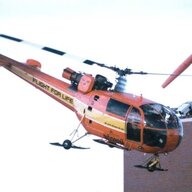


I'm a helicopter pilot. Shut up.KITT. You may be thinking about the B-2 bomber. Military planes may take that much maintenance. It’s closer to 1:3 or 1:4 for most civilian heli’s but your point well taken. Helicopters have a shitload of moving parts and they all have to work, every time.
Something more important is glide distance. An airplane’s wing generates its lift so they can glide a reasonable distance if their engine(s) stop. Typically a 10:1 ratio for a smaller plane meaning if they are 4 miles (20,000’) above the ground they can glide about 40 miles from the point they lose power. That offers quite a few options to land.
Helicopters generate lift by spinning their main rotor. When the engine(s) quit the pilot has to keep the rotor moving using its own momentum and air flowing over the rotor blades. It’s a dance. Done correctly this gives helicopters a glide ratio closer to that of a brick. 1:3 or 1:4 in a well executed autorotation. So for every foot you lose in altitude you can go 3-4’ forward.
Another problem with helicopters is they generally fly much lower than airplanes, like 1,000-2,000’ above the ground. This means you are pretty much fucked if you lose power.
Let’s take a helicopter that loses power at 1,500’. In the best of circumstances with a pilot doing everything right they will have about a 6,000 radius to chose a landing spot. Over a desert you may be ok. Over a big city not so ok.
The only advantage in a helicopter is that your forward speed will be close to zero when you touch down, so a parking lot or any other empty place will do to land.
In an airplane, where you will be going from 70-100mph or more when you touchdown you will need space to roll out, like 1 or 2,000 feet of clear space.
I know, thats long response to your maintenance comment, but you know me…