ARTICLE SOURCE:
 www.sciencealert.com
_________________________________________________
www.sciencealert.com
_________________________________________________
The Chernobyl exclusion zone may be off-limits to humans, but ever since the Unit Four reactor at the Chernobyl Nuclear Power Plant exploded nearly 40 years ago, other forms of life have not only moved in but survived, adapted, and appeared to thrive.
Part of that may be the lack of humans… but for one organism, at least, the ionizing radiation lingering inside the reactor's surrounding structures may be an advantage.
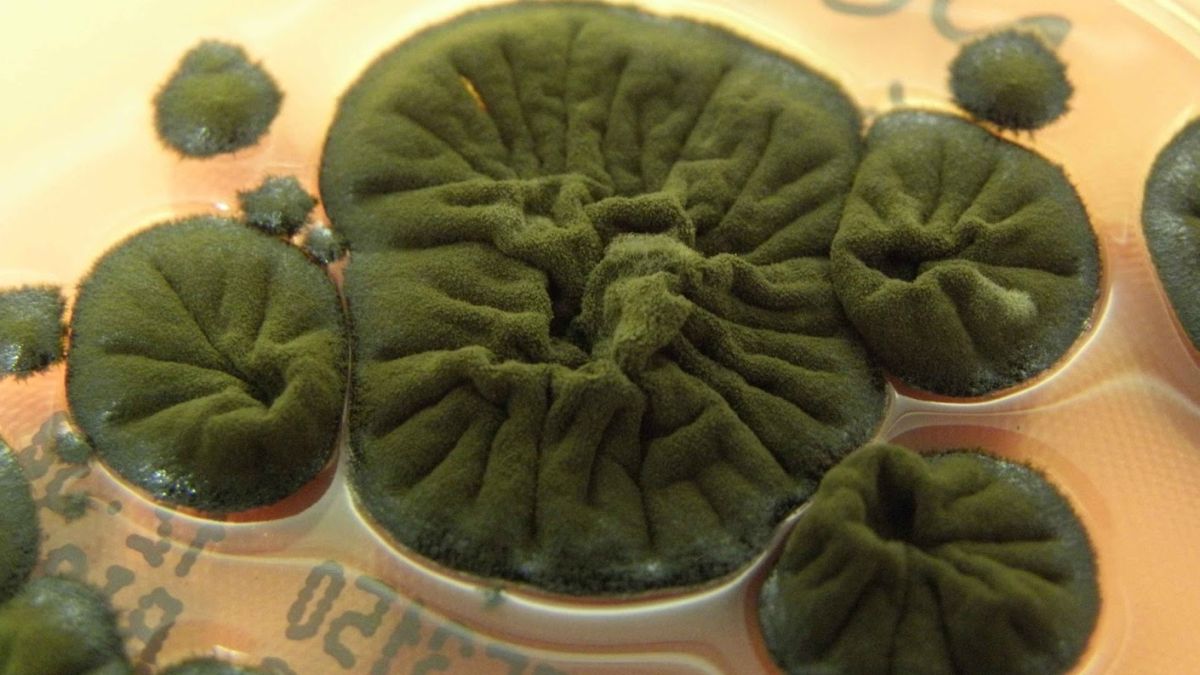
There, clinging to the interior walls of one of the most radioactive buildings on Earth, scientists have found a strange black fungus curiously living its best life.
That fungus is called Cladosporium sphaerospermum, and some scientists think its dark pigment – melanin – may allow it to harness ionizing radiation through a process similar to the way plants harness light for photosynthesis. This proposed mechanism is even referred to as radiosynthesis.
But here's the really funky thing about C. sphaerospermum: Although scientists have shown that the fungus flourishes in the presence of ionizing radiation, no one has been able to pin down how or why. Radiosynthesis is a theory, one that's difficult to prove.
The mystery began back in the late 1990s, when a team led by microbiologist Nelli Zhdanova of the Ukrainian National Academy of Sciences embarked on a field survey in the Chernobyl Exclusion Zone to find out what life, if any, could be found in the shelter surrounding the ruined reactor.
There, they were stunned to find a whole community of fungi, documenting an astonishing 37 species. Notably, these organisms tended to be dark-hued to black, rich with the pigment melanin.
C. sphaerospermum dominated the samples, while also demonstrating some of the highest levels of radioactive contamination.
As surprising as the discovery was, what happened next deepened the intrigue.
Radiopharmacologist Ekaterina Dadachova and immunologist Arturo Casadevall — both with posts at the Albert Einstein College of Medicine in the US – led a team of scientists that found exposing C. sphaerospermum to ionizing radiation doesn't harm the fungus the way it would other organisms
Ionizing radiation describes emissions of particles powerful enough to knock electrons from their atoms, turning them into their ionic forms.
That sounds pretty benign on paper, but in practice, ionization can break apart molecules, interfering with biochemical reactions and even shredding DNA. None of that is a good time for a human, although it can be exploited to destroy cancer cells, which are particularly vulnerable to its effects.
However, C. sphaerospermum seemed strangely resistant and even grew better when bathed in ionizing radiation. Other experiments showed ionizing radiation changed the behavior of fungal melanin – an intriguing observation that warranted further investigation.
The follow-up paper by Dadachova and Casadevall in 2008 is where they first proposed a biological pathway similar to photosynthesis.
The fungus – and others like it – appeared to be harvesting ionizing radiation and converting it into energy, with melanin performing a similar function to the light-absorbing pigment chlorophyll.
At the same time, the melanin behaves as a protective shield against the more harmful effects of that radiation.
It's not the only one, either. A black yeast, Wangiella dermatitidis, demonstrates enhanced growth under ionizing radiation. Meanwhile, another fungus species, Cladosporium cladosporioides, exhibits enhanced melanin production but not growth under gamma or UV radiation.
So the behavior observed in C. sphaerospermum is not universal to melanized fungi.
Does that suggest that it's an adaptation allowing the fungus to feast on powerful light that can kill other organisms? Or is it a stress response that enhances survival under extenuating, but not ideal, conditions?
At this point, it's impossible to tell.
What we do know is that this humble, velvety black fungus is doing something clever with ionizing radiation to survive and maybe even proliferate in a place too dangerous for humans to safely tread; that life does, indeed, find a way.


Chernobyl Fungus Appears to Have Evolved an Incredible Ability
The Chernobyl exclusion zone may be off-limits to humans, but ever since the Unit Four reactor at the Chernobyl Nuclear Power Plant exploded nearly 40 years ago, other forms of life have not only moved in but survived, adapted, and appeared to thrive.
www.sciencealert.com
The Chernobyl exclusion zone may be off-limits to humans, but ever since the Unit Four reactor at the Chernobyl Nuclear Power Plant exploded nearly 40 years ago, other forms of life have not only moved in but survived, adapted, and appeared to thrive.
Part of that may be the lack of humans… but for one organism, at least, the ionizing radiation lingering inside the reactor's surrounding structures may be an advantage.
There, clinging to the interior walls of one of the most radioactive buildings on Earth, scientists have found a strange black fungus curiously living its best life.
That fungus is called Cladosporium sphaerospermum, and some scientists think its dark pigment – melanin – may allow it to harness ionizing radiation through a process similar to the way plants harness light for photosynthesis. This proposed mechanism is even referred to as radiosynthesis.
But here's the really funky thing about C. sphaerospermum: Although scientists have shown that the fungus flourishes in the presence of ionizing radiation, no one has been able to pin down how or why. Radiosynthesis is a theory, one that's difficult to prove.
The mystery began back in the late 1990s, when a team led by microbiologist Nelli Zhdanova of the Ukrainian National Academy of Sciences embarked on a field survey in the Chernobyl Exclusion Zone to find out what life, if any, could be found in the shelter surrounding the ruined reactor.
There, they were stunned to find a whole community of fungi, documenting an astonishing 37 species. Notably, these organisms tended to be dark-hued to black, rich with the pigment melanin.
C. sphaerospermum dominated the samples, while also demonstrating some of the highest levels of radioactive contamination.
As surprising as the discovery was, what happened next deepened the intrigue.
Radiopharmacologist Ekaterina Dadachova and immunologist Arturo Casadevall — both with posts at the Albert Einstein College of Medicine in the US – led a team of scientists that found exposing C. sphaerospermum to ionizing radiation doesn't harm the fungus the way it would other organisms
Ionizing radiation describes emissions of particles powerful enough to knock electrons from their atoms, turning them into their ionic forms.
That sounds pretty benign on paper, but in practice, ionization can break apart molecules, interfering with biochemical reactions and even shredding DNA. None of that is a good time for a human, although it can be exploited to destroy cancer cells, which are particularly vulnerable to its effects.
However, C. sphaerospermum seemed strangely resistant and even grew better when bathed in ionizing radiation. Other experiments showed ionizing radiation changed the behavior of fungal melanin – an intriguing observation that warranted further investigation.
The follow-up paper by Dadachova and Casadevall in 2008 is where they first proposed a biological pathway similar to photosynthesis.
The fungus – and others like it – appeared to be harvesting ionizing radiation and converting it into energy, with melanin performing a similar function to the light-absorbing pigment chlorophyll.
At the same time, the melanin behaves as a protective shield against the more harmful effects of that radiation.
It's not the only one, either. A black yeast, Wangiella dermatitidis, demonstrates enhanced growth under ionizing radiation. Meanwhile, another fungus species, Cladosporium cladosporioides, exhibits enhanced melanin production but not growth under gamma or UV radiation.
So the behavior observed in C. sphaerospermum is not universal to melanized fungi.
Does that suggest that it's an adaptation allowing the fungus to feast on powerful light that can kill other organisms? Or is it a stress response that enhances survival under extenuating, but not ideal, conditions?
At this point, it's impossible to tell.
What we do know is that this humble, velvety black fungus is doing something clever with ionizing radiation to survive and maybe even proliferate in a place too dangerous for humans to safely tread; that life does, indeed, find a way.