

When a woman named Alana coined the term “incel” in the late 90s, she couldn’t have predicted the outcome. What started as a harmless website to connect lonely, “involuntary celibate” men and women has morphed into an underground online movement associated with male violence and extreme misogyny.
…
But it is not just incel men who struggle to find sexual connections in the modern world. Some young women are turning to online “femcel” spaces to discuss the challenges they face as involuntary celibates.
Theirs is a non-violent resistance. Rather than blaming the opposite sex for their unhappiness, as some of their male counterparts do, femcels tend to believe their own “ugliness” is the root cause of their loneliness. Posting anonymously on platforms they have designed for themselves, they argue that they are invisible due to their abnormal appearance, and that our beauty-centric, misogynistic culture prevents them from being accepted. There is anger and open grappling with self-esteem, but no extreme hatred and no sense of entitlement within the community.
Meanwhile, a far greater number of women would not describe themselves as femcels, but live unintentionally celibate lives. They share many of the femcels’ concerns.
Caitlin, 39, doesn’t call herself a femcel, but she hasn’t had sex for almost eight years and doesn’t think she will find another sexual partner. “I’m not conventionally attractive and I never get approached by men,” she says. “They don’t look at me. I’ve had therapy to try to address these issues, but dating feels like a barren wasteland. It’s worse as I get older, because I’ve missed that short window to marry and have a family.”
She never tells people that she is celibate, because it makes her feel “abnormal” and inadequate. “I feel a lot of anger and hurt that my life has ended up this way. I struggle to cope with the fact I may never find a partner. Society makes it harder because, after a certain age, people tend to pair off and form their own insular units and life gets lonely for single people.”
Although Caitlin is not morally opposed to casual sex, it is not an experience that feels right for her. She has had two short-term relationships, which ended in heartbreak. There is a popular notion among incel communities – and even in wider society – that women are privileged because they can get sex at any time. Not only is that untrue, as many women will testify, but also, as Caitlin points out, not all sex is enjoyable. “Generally, men who aren’t in a relationship with you don’t make it a pleasurable experience,” she says. “The risk of rejection afterwards is high, which makes the sex even less enjoyable. As a woman, you want to be desired, not treated like a piece of meat.”
Caitlin is aware that men also struggle with self-esteem issues linked to appearance, but believes the pressure is greater for women. “I’m not especially drawn to someone’s looks or height. I prefer to get to know someone and develop an attraction. But I feel that a man who didn’t find me attractive straight away would never learn to become attracted to me. I see lots of beautiful women dating men who aren’t good-looking, but rarely the other way around. Men have more ways to attract a partner than looks.”
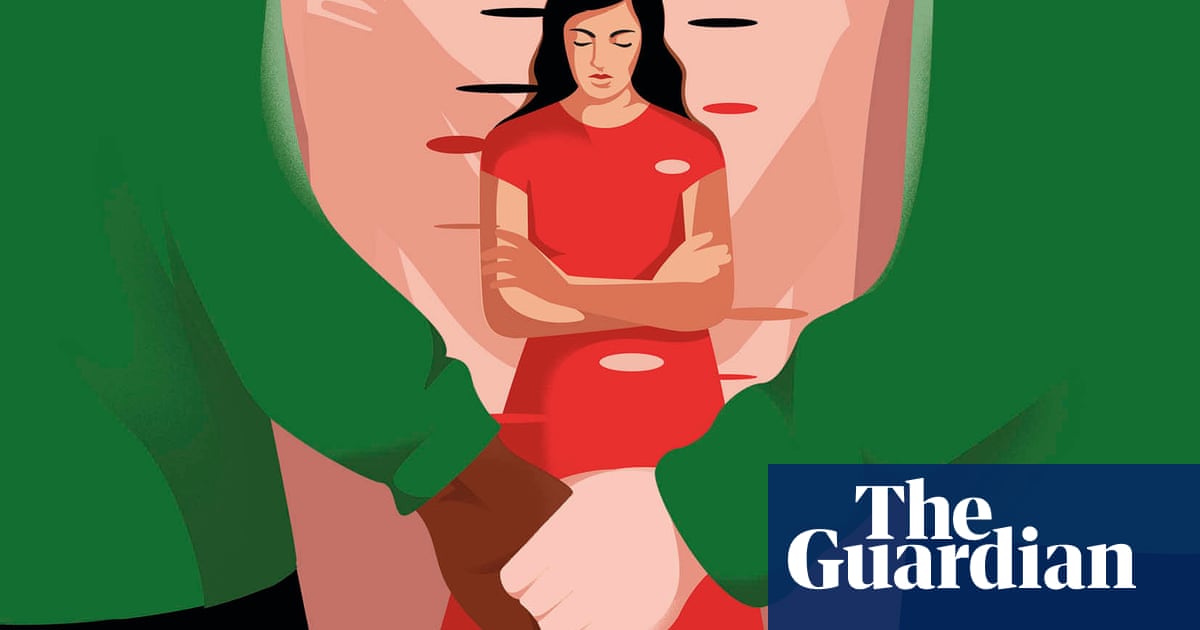
‘I feel hurt that my life has ended up here’: The women who are involuntary celibates
What is it like to go without a partner when you long for one – and when even a fleeting sexual connection feels impossible?
 www.theguardian.com