• Adults Only Website 18+

    If you are under 18 you are not permitted to submit personal information to us or use this website. If discovered you will be banned.

    We will ban and report anyone posting illegal content.

    We will ban any forum user who breaks our terms.

    Freedom of speech should be wide open as long as it doesn't incite violence.

    We have a 15 year old thriving community here with 400,000+ members and hundreds of people online at any given moment, we encourage you to join!, there are 1000's of topics to discuss. Please be aware before registering and read our terms of service and privacy policy.

    By dismissing this notice and proceeding, you agree to the above.

FYI View Into Holocaust Deniers Valid Perspective Points VS. Holocaust Historian Valid Documention Sites/Points (Glimpse Into Both Sides)

AsTRaLNaUT🌈⃤╱

𖠰𖣂𓍊𓋼𓍊𓋼𓍊 𓆏 𓍊𓋼𓍊𓋼𓍊𖣂𖠰
This is a post showing both sides perspective on this point. Not me saying that I am a Holocaust denier, I may not or I may be may or maybe. That's not the point. You should always study both sides before coming to conclusion. In ANY situation
______________________________________________________________________________
Holocaust Denial Perspective Points

1. Why did Elie Wiesel and countless other Jews survive the Holocaust if it was the intention of the Third Reich to eliminate every Jew they got their hands on? Elie was a prisoner for several years; other Jews survived even longer. Most of these "survivors" were ordinary people who did not have any unique expertise that the Germans could have exploited for their war effort. There was no logical reason for them to be kept alive. The very existence of more than a million survivors even today, some sixty years later, contradicts one of the basic components of the Holocaust, i.e., that the Germans had a policy to eliminate every Jew they got their hands on.

2. Why is there no mention of the Holocaust in Churchill's six-volume History of the Second World War or the wartime memoirs of either De Gaulle or Eisenhower or any other lesser luminaries who wrote about the Second World War? Keep in mind all these were written years after the war ended and thus after the Holocaust had been allegedly proven by the Nuremberg Trials. With regard to the Holocaust, the silence of these "conoscenti" is deafening!

3. What was an inmate infirmary (and a brothel) doing in Auschwitz if in fact it was a death camp?

4. Why would the Germans round up Jews from their far-flung empire, thereby tying up large numbers of personnel and rolling stock, while fighting a war on two fronts, to deliver people to "death camps" hundreds of miles away who were then executed upon arrival? Wouldn't a bullet on the spot have appealed to the legendary German sense of efficiency?

5. Why after sixty years have historians not been able to come up with a single German document that points to a Holocaust? Should we believe the likes of Raul Hilberg that in the place of written orders there was an "incredible meeting of the minds" by the literally tens of thousands of people who would have had to coordinate their actions in order to carry out an undertaking of this magnitude?

6. How come it is still insisted upon that six million Jews were killed when the official Jewish death toll at Auschwitz, the flagship of the Holocaust gulag, from an immediate post-war figure of 3 million to a figure of somewhat less than one million? Why do many respond to this observation by saying "what's the difference if it was six million or one million." The answer is that the difference is five million. Another difference is that saying so can get you three years in an Austrian jail. Just ask David Irving!

7. All of Germany's wartime codes were compromised including the ones used to send daily reports from Auschwitz to Berlin. The transcripts of these messages make no mention of mass executions or even remotely suggest a genocidal program in progress. Furthermore it has been insisted that the Germans used a kind of euphemistic code when discussing their extermination program of the Jews, e.g., final solution, special treatment, resettlement, etc. Why was it necessary for them to use such coded euphemisms when talking to each other unless they thought their codes had been cracked by the Allies?

8. The watertable at Auschwitz lies a mere 18 inches below the surface which makes claims of huge burning pits for tens of thousands of bodies untenable.

9. Initially, claims were made that mass executions in homicidal gas chambers had taken place in camps located within the boundaries of the old Reich, e.g., Dachau, Bergen-Belsen. "Evidence" to that effect was every bit as compelling as what was offered for other camps, located in occupied Poland, yet without explanation in the early sixties we were told that this was not the case and that all the "death camps" were located in the east, i.e., Poland outside (some would say conveniently) of the probing eyes of Western scholars.

10. No one has been able to reconcile the eyewitness accounts that personnel entered the gas chambers after twenty minutes without any protective gear and the fact that Zyclon B was a "time-release" fumigant that would have had a lethal capability for at least another twenty-four hours. And that even after twenty-four hours the corpses would have remained sufficiently contaminated by the hydrogen cyanide gas that they would have had the capacity to kill anyone who touched them who was not wearing protective gear.

11. Why do we no longer hear the claims that the Germans manufactured soap, lamp shades and riding britches from the bodies of dead Jews? Could it be that in light of modern forensics and DNA knowledge that these claims are totally untenable?

12. Why do we no longer hear claims that huge numbers of Jews were exterminated in massive steam chambers or electrocuted on special grids? "Evidence" of this was presented at Nuremberg. Evidence that sent men to the gallows.

13. Elie Wiesel has been described as the "Apostle of Remembrance" yet in his memoir, "Night," which deals with his stay at Auschwitz, he makes no mention of the now infamous homicidal gas chambers. Isn't this a bit like one of the gospels making no mention of the cross?

14. Virtually every survivor who was examined at Auschwitz says he or she was examined by Dr. Joseph Mengele.

15. According to survivor testimony, hundreds of thousands of Jews were executed at Treblinka and then buried in mass graves in the surrounding area. Why is it that extensive sonar probing of these burial grounds reveals that this final resting place for Holocaust victims has remained undisturbed since at least the last ice age?

16. "Proof" of the Holocaust rests largely on survivor testimony; there is little if any hard evidence. The best of this has been described by Jean Claude Pressac as merely "criminal traces." Even Judge Grey who presided at the Irving-Lipstadt trial commented that he was surprised the evidence pointing to the Holocaust was "extremely thin." To paraphrase Arthur Butz, "a crime of this magnitude would have left a mountain of evidence. Where is it? There was more hard evidence found against OJ Simpson at his trial and he was found innocent!"

17. Why has Holocaust Revisionism been criminalized in at least eleven countries? What other historic truth needs the threat of prison or the destruction of one's career to maintain itself? Should someone be sent to prison for expressing skepticism about the official Chinese claim that they suffered thirty-five million dead in World War II?

18. Why do the court historians insist that "denying the Holocaust" is like denying slavery or saying the earth is flat, when it is nothing of the sort? The leading Revisionists are first-rate scholars who hold advanced degrees from the world's leading universities. Is there anyone comparable among those who would say the earth is flat or that slavery never existed?

19. Promoters of the Holocaust have expressed concern about remembering the Holocaust once the last survivors die. Why haven't Civil War historians expressed similar concerns since the last survivor of that conflict died in 1959?

20. Survivors of the Holocaust testified that smoke billowed from the crematoria as they consumed the bodies of murdered victims. Some eyewitnesses even claimed they could detect national origins by the color of the smoke. How can this be reconciled with the fact that properly operating crematoria do not emit smoke of any color?

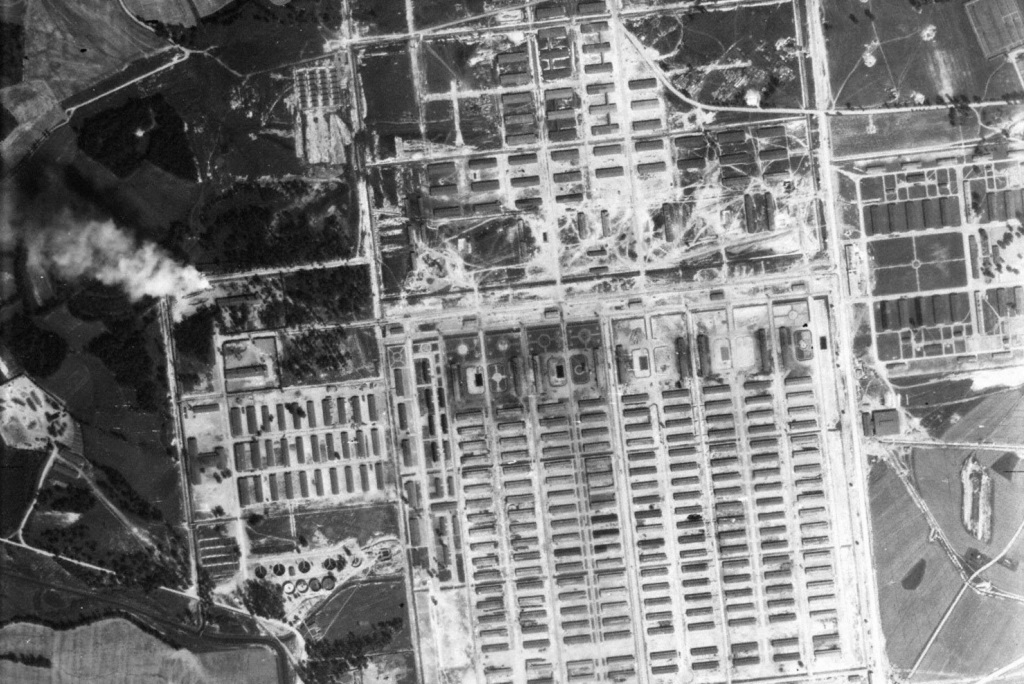
21. According to the offical version of the Holocaust hundreds of thousands of Hungarian Jews were rounded up in mid-1944 and sent to Auschwitz, where most were gassed immediately upon arrival and their bodies disposed of by burning in huge open air pits using railroad ties and gasoline. Why is there no evidence of these huge funerary pyres in the high resolution surveillance photos taken by Allied aircraft who were overflying the camp on a daily basis? Furthermore, why have no remains been found, since open pit burning, even when gasoline is used, generates insuffienct heat to totally consume a body?

22. All of the liberated camps were littered with corpses; is there a single autopsy report or any other forensic evidence that shows that even a single death was as a consequence of poison gas?

23. The death toll for the Holocaust lies exclusively on population statistics provided by Jewish sources; has any independent demographic study been produced that shows that 6 million Jews were "missing" at the end of the war?

24. Why do the wartime inspection reports of the camps made by the International Red Cross contain no references to mass executions? It strains credulity that such monumental crimes could be hidden. The only explanations are that these crimes were not occurring or that the Red Cross was complicit in a cover-up.

25.Why has there been no effort to respond to the Leuchter report?

26. "The Holocaust was technically possible because it happened." Why is this intellectually bankrupt argument, which turns scholarship on its head, considered by the promoters of the Holocaust as historical truth, considered a sufficient response to the mounting Revisionist evidence to the contrary?

27. What other historical truths rely to the extent that the Holocaust does rely on eyewitness testimony, and why have none of these eyewitnesses every been cross examined?

28. According to the official version of the Holocaust, the Jews remained ignorant of their fate until the very end, so skillful were their Nazi murders in deceiving their victims. How can this ignorance be reconciled with the fact that the Jews have historically been as a group the most literate and highly informed people on the planet with legendary access to the highest levels of government?

Source Article Here 👇

The Militant Atheist: 28 Reasons Against The Holocaust

_______________________________________________________________________________
Opposing Perspective 👇

1. Index of Published Evidence on Mass Extermination in Auschwitz and Auschwitz-Birkenau

2 Holocaust archaeology: uncovering vital evidence to prove the deniers wrong

 
A very interesting read but alas filled with potholes and inaccuracies. If you want i could go through every point , but i cant be arsed . Here are a couple though to get you thinking.

"2. Why is there no mention of the Holocaust in Churchill's six-volume History of the Second World War or the wartime memoirs of either De Gaulle or Eisenhower or any other lesser luminaries who wrote about the Second World War? Keep in mind all these were written years after the war ended and thus after the Holocaust had been allegedly proven by the Nuremberg Trials. With regard to the Holocaust, the silence of these "conoscenti" is deafening!"

Churchill actually did write about the Holocaust, though he didn't use that exact term. In his memoirs, The Second World War, he condemned the atrocities as "one of the greatest and most horrible crimes ever committed" and specifically detailed the "systematised processes of six or seven millions" of murders in German camps.
Historians note that he dedicated less page-space to these events than expected due to several factors:

. The Term Didn't Exist: The word "Holocaust" was not popularized until decades after he wrote the memoirs in the late 1940s and early 1950s
. Focus on Grand Strategy: His six-volume work was primarily a geopolitical and military history of the British war effort, rather than a comprehensive sociological account of the war's civilian casualties.
. Diplomatic Relations: He was reluctant to criticize the United States or its officials (such as John McCloy) in print for their refusal to bomb the railway lines to Auschwitz.
. Intelligence Restrictions: Wartime security classifications on intelligence (such as Bletchley Park) and ongoing Nuremberg war crimes trials prevented him from disclosing certain facts at the time of writing.

"According to the offical version of the Holocaust hundreds of thousands of Hungarian Jews were rounded up in mid-1944 and sent to Auschwitz, where most were gassed immediately upon arrival and their bodies disposed of by burning in huge open air pits using railroad ties and gasoline. Why is there no evidence of these huge funerary pyres in the high resolution surveillance photos taken by Allied aircraft who were overflying the camp on a daily basis? Furthermore, why have no remains been found, since open pit burning, even when gasoline is used, generates insuffienct heat to totally consume a body?"

1. The Myth of the "Missing" Aerial Photos​

The claim that Allied reconnaissance planes did not capture these pyres is entirely false. In fact, Allied aerial photography provides some of the most definitive proof of the mass murder of Hungarian Jews in the summer of 1944.

.Captured on Film: On August 23, 1944, a South African Air Force plane on a reconnaissance mission (targeting nearby factories) photographed Auschwitz-Birkenau. The high-resolution images clearly show smoke billowing from open-air incineration pits next to Crematorium V, as well as ground disturbances where the pits were dug.
.Corroborating Evidence: These aerial photographs perfectly match ground-level evidence. Earlier that same month (August 1944), members of the Sonderkommando (prisoners forced to work in the crematoria) risked their lives to secretly take four photographs. Two of those photos explicitly show the open-air burning of bodies in pits right behind Crematorium V.
.Not "Daily" Surveillance: The question falsely implies the Allies flew over the camp daily to monitor it. The Allies were flying reconnaissance missions to map out nearby German war industries (like the IG Farben rubber plant at Monowitz). Because Auschwitz happened to be nearby, it was occasionally caught in the frame.

2. The Science of Open-Pit Burning​

The claim that open-pit burning with gasoline cannot generate enough heat to consume a body is scientifically and historically inaccurate.

.Self-Sustaining Fuel: The SS did not rely solely on gasoline, which burns off too quickly. They used wood (including railroad ties) to ignite the pits, but once a massive fire is established, the rendered human fat from the bodies acts as a highly effective, high-calorie fuel source that sustains intensely high temperatures.
.Pit Design: The pits were dug specifically to trap and concentrate heat, acting like natural furnaces. Special channels were dug into the bottom of the pits to allow air to circulate (providing oxygen to fuel the fire) and to collect draining human fat, which was then scooped back onto the fire to keep the temperature burning at maximum intensity.
.Bone Degradation: While open fires do not always turn bones entirely to dust, they make them incredibly brittle. Sonderkommando testimonies and forensic evidence confirm that after the burning was complete, prisoners were forced to use heavy mallets and mortar tools to pulverize the remaining bone fragments into fine ash.

3. Why Large Piles of Remains Weren't Left Behind​

The question asks why "no remains have been found." The Nazis went to great lengths to hide the evidence of their crimes, but they did not completely succeed.

.Disposal in Rivers: To hide the sheer volume of murder, the ashes and pulverized bones of hundreds of thousands of victims were systematically loaded into trucks and dumped directly into the nearby Sola and Vistula Rivers, washing them away.
.Physical Evidence Remaining: Despite these efforts, remains were found. When Soviet forces liberated the camp in January 1945, they found massive human ash heaps and human bone fragments in and around the camp's backyard, including the ponds near Crematorium V where ash was also discarded. Forensic examinations of the soil and water surrounding Birkenau have repeatedly confirmed the presence of human ash and bone fragments.

"All of the liberated camps were littered with corpses; is there a single autopsy report or any other forensic evidence that shows that even a single death was as a consequence of poison gas?"

Yes, extensive forensic evidence—including toxicological reports, chemical analyses, and physical evidence—exists that proves deaths occurred as a direct consequence of poison gas.
The premise of the question relies on a common misconception: that the bodies found scattered across the camps upon liberation were the victims of gassing. In reality, the vast majority of the corpses discovered by Allied soldiers when they entered camps like Bergen-Belsen, Dachau, and Buchenwald were victims of typhus, starvation, and extreme neglect during the final chaotic months of the war. These were concentration camps, not primary extermination (death) camps.
The primary gassing centers—such as Belzec, Sobibor, Treblinka, and Auschwitz-Birkenau—were located further east. At these sites, the Nazis systematically cremated or buried the victims immediately after gassing to hide the evidence. However, forensic science successfully uncovered the truth.

Here is the specific forensic and medical evidence proving the use of poison gas:

1. Post-War Forensic and Toxicological Reports​

Immediately following the liberation of Auschwitz, Soviet and Polish authorities convened expert commissions to conduct forensic investigations.

The Kraków Forensic Institute (1945): Dr. Jan Sehn led a comprehensive forensic investigation under the Polish Main Commission. They collected physical evidence from the camp, including human hair shorn from victims before or after they were murdered, as well as metal ventilation components from the ruins of the gas chambers.
Chemical Proof: The Forensic Research Institute in Kraków analyzed these samples and detected the presence of hydrogen cyanide and its derivative compounds (Prussian blue). The concentration of these compounds in the hair of the victims and on the structures matched the chemical signature of Zyklon B.

Autopsies and Medical Testimony on Carbon Monoxide Gassing​

At other camps, such as Majdanek and the Aktion T4 euthanasia centers (where the gas chambers were first developed), carbon monoxide was used.

Autopsy Records: In the early stages of the Nazi killing program (the T4 program), detailed medical autopsies were performed on victims killed by carbon monoxide. Pathologists noted the distinct cherry-red discoloration of the blood and skin, which is a definitive physiological marker of lethal carbon monoxide poisoning (as it prevents oxygen from binding to hemoglobin)

When the program scaled up to mass extermination camps, the Nazis abandoned individual autopsies because the sheer volume of murders made them impossible, and their goal shifted entirely to erasing physical traces.

3. Structural and Physical Artifacts​

Forensic architects and engineers have thoroughly analyzed the physical remains of the gas chambers.

Blueprints and Invoices: Investigators recovered German industrial documents, including architectural blueprints for the crematoria that explicitly labeled rooms as Gaskammer (gas chamber) and included specialized, high-powered ventilation systems designed to quickly extract lethal gas so that the bodies could be removed.

The Intact Gas Chambers: While the SS blew up the massive crematoria at Birkenau before retreating, other gas chambers, such as the one at Auschwitz I (the main camp) and Majdanek, were captured largely intact. Forensic mapping has matched the physical modifications of these rooms—such as sealed doors, peepholes, and specialized ceiling inlets—directly with the testimony of both survivors and the SS perpetrators who operated them.

Now aren't we lucky that the NAZIS kept very detailed reports.

"Why do the wartime inspection reports of the camps made by the International Red Cross contain no references to mass executions? It strains credulity that such monumental crimes could be hidden. The only explanations are that these crimes were not occurring or that the Red Cross was complicit in a cover-up."

The assertion that the International Committee of the Red Cross (ICRC) inspected the camps and found no evidence of mass executions is factually incorrect. It misrepresents the legal limitations, historical failures, and actual wartime experiences of the Red Cross.
The ICRC has since publicly apologized for its actions during World War II, calling its inability to speak out and protect the victims of the Holocaust a profound moral failure.

The historical reality behind the Red Cross reports involves several key factors:

1. The Red Cross Did Not Inspect Extermination Camps​

The claim that the Red Cross gave the camps an "all-clear" implies that they were allowed to freely inspect them. In reality, the Nazi regime categorically denied the ICRC access to the primary extermination centers in occupied Poland (such as Belzec, Sobibor, Treblinka, and Auschwitz-Birkenau).

The Auschwitz Misconception: Holocaust denial arguments often point to a letter or visit by ICRC delegate Maurice Rossel in September 1944. However, Rossel was never permitted to inspect the camp. He was restricted to an administrative office in Auschwitz I to discuss food package deliveries. He never entered Auschwitz II-Birkenau, the actual extermination center located miles away, and he later confirmed he was entirely unaware of the gas chambers during his brief visit.
Legal Limitations: The 1929 Geneva Convention gave the ICRC the mandate to protect prisoners of war (POWs), but it provided no legal authority to intervene on behalf of civilians detained within a sovereign nation's borders. The Nazi regime routinely told the Red Cross that the treatment of Jewish civilians was a strictly internal German police matter.

2. The Theresienstadt "Beautification" Hoax​

The most famous wartime interaction between the Red Cross and the camp system occurred at the Theresienstadt (Terezín) ghetto in Czechoslovakia in June 1944. This visit is the prime example of how the Nazis successfully deceived the organization.

The Farce: Before the arrival of the Danish and International Red Cross delegates, the SS embarked on a massive "beautification" campaign. They painted buildings, planted gardens, opened fake shops, and forced prisoners to perform in a soccer match and a children's opera to simulate a normal community.
Removing the Sick: To conceal the extreme overcrowding and starvation, the SS deported thousands of sick and elderly prisoners to Auschwitz right before the inspection.
The Report: The Red Cross delegates fell for the staging. Maurice Rossel wrote a favorable report, infamously describing it as a "community" where prisoners were treated relatively well. Shortly after the delegates left, the deportations to the gas chambers resumed, and many of the prisoners who had spoken to the Red Cross were murdered to ensure their silence.

3. What the Red Cross Actually Knew​

The Red Cross was not complicit in a deliberate pro-Nazi conspiracy, but its leadership made a calculated decision to remain publicly silent—a decision that is widely condemned today.

Knowledge of the Genocide: Historical records show that by the spring and summer of 1942, the ICRC leadership in Geneva had received detailed, reliable intelligence regarding the "Final Solution" and the systematic mass murder of European Jews.
The Strategy of Silence: In the fall of 1942, the ICRC debated making a public, global appeal to condemn the Nazi atrocities against civilians. Ultimately, the leadership decided against it. They feared that publicly confronting Adolf Hitler would provoke the regime into blocking the Red Cross from delivering food and medical aid to millions of Allied prisoners of war, which they viewed as their primary legal obligation.

I could go on, but i think i have given you a decent counter argument to some of your statements.
 
A very interesting read but alas filled with potholes and inaccuracies. If you want i could go through every point , but i cant be arsed . Here are a couple though to get you thinking.

"2. Why is there no mention of the Holocaust in Churchill's six-volume History of the Second World War or the wartime memoirs of either De Gaulle or Eisenhower or any other lesser luminaries who wrote about the Second World War? Keep in mind all these were written years after the war ended and thus after the Holocaust had been allegedly proven by the Nuremberg Trials. With regard to the Holocaust, the silence of these "conoscenti" is deafening!"

Churchill actually did write about the Holocaust, though he didn't use that exact term. In his memoirs, The Second World War, he condemned the atrocities as "one of the greatest and most horrible crimes ever committed" and specifically detailed the "systematised processes of six or seven millions" of murders in German camps.
Historians note that he dedicated less page-space to these events than expected due to several factors:

. The Term Didn't Exist: The word "Holocaust" was not popularized until decades after he wrote the memoirs in the late 1940s and early 1950s
. Focus on Grand Strategy: His six-volume work was primarily a geopolitical and military history of the British war effort, rather than a comprehensive sociological account of the war's civilian casualties.
. Diplomatic Relations: He was reluctant to criticize the United States or its officials (such as John McCloy) in print for their refusal to bomb the railway lines to Auschwitz.
. Intelligence Restrictions: Wartime security classifications on intelligence (such as Bletchley Park) and ongoing Nuremberg war crimes trials prevented him from disclosing certain facts at the time of writing.

"According to the offical version of the Holocaust hundreds of thousands of Hungarian Jews were rounded up in mid-1944 and sent to Auschwitz, where most were gassed immediately upon arrival and their bodies disposed of by burning in huge open air pits using railroad ties and gasoline. Why is there no evidence of these huge funerary pyres in the high resolution surveillance photos taken by Allied aircraft who were overflying the camp on a daily basis? Furthermore, why have no remains been found, since open pit burning, even when gasoline is used, generates insuffienct heat to totally consume a body?"

1. The Myth of the "Missing" Aerial Photos​

The claim that Allied reconnaissance planes did not capture these pyres is entirely false. In fact, Allied aerial photography provides some of the most definitive proof of the mass murder of Hungarian Jews in the summer of 1944.

.Captured on Film: On August 23, 1944, a South African Air Force plane on a reconnaissance mission (targeting nearby factories) photographed Auschwitz-Birkenau. The high-resolution images clearly show smoke billowing from open-air incineration pits next to Crematorium V, as well as ground disturbances where the pits were dug.
.Corroborating Evidence: These aerial photographs perfectly match ground-level evidence. Earlier that same month (August 1944), members of the Sonderkommando (prisoners forced to work in the crematoria) risked their lives to secretly take four photographs. Two of those photos explicitly show the open-air burning of bodies in pits right behind Crematorium V.
.Not "Daily" Surveillance: The question falsely implies the Allies flew over the camp daily to monitor it. The Allies were flying reconnaissance missions to map out nearby German war industries (like the IG Farben rubber plant at Monowitz). Because Auschwitz happened to be nearby, it was occasionally caught in the frame.

2. The Science of Open-Pit Burning​

The claim that open-pit burning with gasoline cannot generate enough heat to consume a body is scientifically and historically inaccurate.

.Self-Sustaining Fuel: The SS did not rely solely on gasoline, which burns off too quickly. They used wood (including railroad ties) to ignite the pits, but once a massive fire is established, the rendered human fat from the bodies acts as a highly effective, high-calorie fuel source that sustains intensely high temperatures.
.Pit Design: The pits were dug specifically to trap and concentrate heat, acting like natural furnaces. Special channels were dug into the bottom of the pits to allow air to circulate (providing oxygen to fuel the fire) and to collect draining human fat, which was then scooped back onto the fire to keep the temperature burning at maximum intensity.
.Bone Degradation: While open fires do not always turn bones entirely to dust, they make them incredibly brittle. Sonderkommando testimonies and forensic evidence confirm that after the burning was complete, prisoners were forced to use heavy mallets and mortar tools to pulverize the remaining bone fragments into fine ash.

3. Why Large Piles of Remains Weren't Left Behind​

The question asks why "no remains have been found." The Nazis went to great lengths to hide the evidence of their crimes, but they did not completely succeed.

.Disposal in Rivers: To hide the sheer volume of murder, the ashes and pulverized bones of hundreds of thousands of victims were systematically loaded into trucks and dumped directly into the nearby Sola and Vistula Rivers, washing them away.
.Physical Evidence Remaining: Despite these efforts, remains were found. When Soviet forces liberated the camp in January 1945, they found massive human ash heaps and human bone fragments in and around the camp's backyard, including the ponds near Crematorium V where ash was also discarded. Forensic examinations of the soil and water surrounding Birkenau have repeatedly confirmed the presence of human ash and bone fragments.

"All of the liberated camps were littered with corpses; is there a single autopsy report or any other forensic evidence that shows that even a single death was as a consequence of poison gas?"

Yes, extensive forensic evidence—including toxicological reports, chemical analyses, and physical evidence—exists that proves deaths occurred as a direct consequence of poison gas.
The premise of the question relies on a common misconception: that the bodies found scattered across the camps upon liberation were the victims of gassing. In reality, the vast majority of the corpses discovered by Allied soldiers when they entered camps like Bergen-Belsen, Dachau, and Buchenwald were victims of typhus, starvation, and extreme neglect during the final chaotic months of the war. These were concentration camps, not primary extermination (death) camps.
The primary gassing centers—such as Belzec, Sobibor, Treblinka, and Auschwitz-Birkenau—were located further east. At these sites, the Nazis systematically cremated or buried the victims immediately after gassing to hide the evidence. However, forensic science successfully uncovered the truth.

Here is the specific forensic and medical evidence proving the use of poison gas:

1. Post-War Forensic and Toxicological Reports​

Immediately following the liberation of Auschwitz, Soviet and Polish authorities convened expert commissions to conduct forensic investigations.

The Kraków Forensic Institute (1945): Dr. Jan Sehn led a comprehensive forensic investigation under the Polish Main Commission. They collected physical evidence from the camp, including human hair shorn from victims before or after they were murdered, as well as metal ventilation components from the ruins of the gas chambers.
Chemical Proof: The Forensic Research Institute in Kraków analyzed these samples and detected the presence of hydrogen cyanide and its derivative compounds (Prussian blue). The concentration of these compounds in the hair of the victims and on the structures matched the chemical signature of Zyklon B.

Autopsies and Medical Testimony on Carbon Monoxide Gassing​

At other camps, such as Majdanek and the Aktion T4 euthanasia centers (where the gas chambers were first developed), carbon monoxide was used.

Autopsy Records: In the early stages of the Nazi killing program (the T4 program), detailed medical autopsies were performed on victims killed by carbon monoxide. Pathologists noted the distinct cherry-red discoloration of the blood and skin, which is a definitive physiological marker of lethal carbon monoxide poisoning (as it prevents oxygen from binding to hemoglobin)

When the program scaled up to mass extermination camps, the Nazis abandoned individual autopsies because the sheer volume of murders made them impossible, and their goal shifted entirely to erasing physical traces.

3. Structural and Physical Artifacts​

Forensic architects and engineers have thoroughly analyzed the physical remains of the gas chambers.

Blueprints and Invoices: Investigators recovered German industrial documents, including architectural blueprints for the crematoria that explicitly labeled rooms as Gaskammer (gas chamber) and included specialized, high-powered ventilation systems designed to quickly extract lethal gas so that the bodies could be removed.

The Intact Gas Chambers: While the SS blew up the massive crematoria at Birkenau before retreating, other gas chambers, such as the one at Auschwitz I (the main camp) and Majdanek, were captured largely intact. Forensic mapping has matched the physical modifications of these rooms—such as sealed doors, peepholes, and specialized ceiling inlets—directly with the testimony of both survivors and the SS perpetrators who operated them.

Now aren't we lucky that the NAZIS kept very detailed reports.

"Why do the wartime inspection reports of the camps made by the International Red Cross contain no references to mass executions? It strains credulity that such monumental crimes could be hidden. The only explanations are that these crimes were not occurring or that the Red Cross was complicit in a cover-up."

The assertion that the International Committee of the Red Cross (ICRC) inspected the camps and found no evidence of mass executions is factually incorrect. It misrepresents the legal limitations, historical failures, and actual wartime experiences of the Red Cross.
The ICRC has since publicly apologized for its actions during World War II, calling its inability to speak out and protect the victims of the Holocaust a profound moral failure.

The historical reality behind the Red Cross reports involves several key factors:

1. The Red Cross Did Not Inspect Extermination Camps​

The claim that the Red Cross gave the camps an "all-clear" implies that they were allowed to freely inspect them. In reality, the Nazi regime categorically denied the ICRC access to the primary extermination centers in occupied Poland (such as Belzec, Sobibor, Treblinka, and Auschwitz-Birkenau).

The Auschwitz Misconception: Holocaust denial arguments often point to a letter or visit by ICRC delegate Maurice Rossel in September 1944. However, Rossel was never permitted to inspect the camp. He was restricted to an administrative office in Auschwitz I to discuss food package deliveries. He never entered Auschwitz II-Birkenau, the actual extermination center located miles away, and he later confirmed he was entirely unaware of the gas chambers during his brief visit.
Legal Limitations: The 1929 Geneva Convention gave the ICRC the mandate to protect prisoners of war (POWs), but it provided no legal authority to intervene on behalf of civilians detained within a sovereign nation's borders. The Nazi regime routinely told the Red Cross that the treatment of Jewish civilians was a strictly internal German police matter.

2. The Theresienstadt "Beautification" Hoax​

The most famous wartime interaction between the Red Cross and the camp system occurred at the Theresienstadt (Terezín) ghetto in Czechoslovakia in June 1944. This visit is the prime example of how the Nazis successfully deceived the organization.

The Farce: Before the arrival of the Danish and International Red Cross delegates, the SS embarked on a massive "beautification" campaign. They painted buildings, planted gardens, opened fake shops, and forced prisoners to perform in a soccer match and a children's opera to simulate a normal community.
Removing the Sick: To conceal the extreme overcrowding and starvation, the SS deported thousands of sick and elderly prisoners to Auschwitz right before the inspection.
The Report: The Red Cross delegates fell for the staging. Maurice Rossel wrote a favorable report, infamously describing it as a "community" where prisoners were treated relatively well. Shortly after the delegates left, the deportations to the gas chambers resumed, and many of the prisoners who had spoken to the Red Cross were murdered to ensure their silence.

3. What the Red Cross Actually Knew​

The Red Cross was not complicit in a deliberate pro-Nazi conspiracy, but its leadership made a calculated decision to remain publicly silent—a decision that is widely condemned today.

Knowledge of the Genocide: Historical records show that by the spring and summer of 1942, the ICRC leadership in Geneva had received detailed, reliable intelligence regarding the "Final Solution" and the systematic mass murder of European Jews.
The Strategy of Silence: In the fall of 1942, the ICRC debated making a public, global appeal to condemn the Nazi atrocities against civilians. Ultimately, the leadership decided against it. They feared that publicly confronting Adolf Hitler would provoke the regime into blocking the Red Cross from delivering food and medical aid to millions of Allied prisoners of war, which they viewed as their primary legal obligation.

I could go on, but i think i have given you a decent counter argument to some of your statements.
Using starter statements like ‘in fact,’ and ‘in reality,’ weakens the content that follows. Bc without proof (cited sources and actual proof of findings) it is just a contrary supposition.
 
Using starter statements like ‘in fact,’ and ‘in reality,’ weakens the content that follows. Bc without proof (cited sources and actual proof of findings) it is just a contrary supposition.
Sorry I did not cite sources and actual proof of findings. I didn't think anyone would be arsed to read them . Here are a few links for you though.
Ill post more if you wish 👍


The aerial reconnaissance photograph taken on August 23, 1944, provides some of the most critical and undeniable documentary evidence of the mass extermination process at Auschwitz-Birkenau
1944_ef9b66fe32da252e.webp


The Mission: The photo was captured by an Allied reconnaissance aircraft (specifically a South African Air Force Mosquito bomber on a mission to map nearby industrial infrastructure)


About Churchill

 
Last edited:
A very interesting read but alas filled with potholes and inaccuracies. If you want i could go through every point , but i cant be arsed . Here are a couple though to get you thinking.

"2. Why is there no mention of the Holocaust in Churchill's six-volume History of the Second World War or the wartime memoirs of either De Gaulle or Eisenhower or any other lesser luminaries who wrote about the Second World War? Keep in mind all these were written years after the war ended and thus after the Holocaust had been allegedly proven by the Nuremberg Trials. With regard to the Holocaust, the silence of these "conoscenti" is deafening!"

Churchill actually did write about the Holocaust, though he didn't use that exact term. In his memoirs, The Second World War, he condemned the atrocities as "one of the greatest and most horrible crimes ever committed" and specifically detailed the "systematised processes of six or seven millions" of murders in German camps.
Historians note that he dedicated less page-space to these events than expected due to several factors:

. The Term Didn't Exist: The word "Holocaust" was not popularized until decades after he wrote the memoirs in the late 1940s and early 1950s
. Focus on Grand Strategy: His six-volume work was primarily a geopolitical and military history of the British war effort, rather than a comprehensive sociological account of the war's civilian casualties.
. Diplomatic Relations: He was reluctant to criticize the United States or its officials (such as John McCloy) in print for their refusal to bomb the railway lines to Auschwitz.
. Intelligence Restrictions: Wartime security classifications on intelligence (such as Bletchley Park) and ongoing Nuremberg war crimes trials prevented him from disclosing certain facts at the time of writing.

"According to the offical version of the Holocaust hundreds of thousands of Hungarian Jews were rounded up in mid-1944 and sent to Auschwitz, where most were gassed immediately upon arrival and their bodies disposed of by burning in huge open air pits using railroad ties and gasoline. Why is there no evidence of these huge funerary pyres in the high resolution surveillance photos taken by Allied aircraft who were overflying the camp on a daily basis? Furthermore, why have no remains been found, since open pit burning, even when gasoline is used, generates insuffienct heat to totally consume a body?"

1. The Myth of the "Missing" Aerial Photos​

The claim that Allied reconnaissance planes did not capture these pyres is entirely false. In fact, Allied aerial photography provides some of the most definitive proof of the mass murder of Hungarian Jews in the summer of 1944.

.Captured on Film: On August 23, 1944, a South African Air Force plane on a reconnaissance mission (targeting nearby factories) photographed Auschwitz-Birkenau. The high-resolution images clearly show smoke billowing from open-air incineration pits next to Crematorium V, as well as ground disturbances where the pits were dug.
.Corroborating Evidence: These aerial photographs perfectly match ground-level evidence. Earlier that same month (August 1944), members of the Sonderkommando (prisoners forced to work in the crematoria) risked their lives to secretly take four photographs. Two of those photos explicitly show the open-air burning of bodies in pits right behind Crematorium V.
.Not "Daily" Surveillance: The question falsely implies the Allies flew over the camp daily to monitor it. The Allies were flying reconnaissance missions to map out nearby German war industries (like the IG Farben rubber plant at Monowitz). Because Auschwitz happened to be nearby, it was occasionally caught in the frame.

2. The Science of Open-Pit Burning​

The claim that open-pit burning with gasoline cannot generate enough heat to consume a body is scientifically and historically inaccurate.

.Self-Sustaining Fuel: The SS did not rely solely on gasoline, which burns off too quickly. They used wood (including railroad ties) to ignite the pits, but once a massive fire is established, the rendered human fat from the bodies acts as a highly effective, high-calorie fuel source that sustains intensely high temperatures.
.Pit Design: The pits were dug specifically to trap and concentrate heat, acting like natural furnaces. Special channels were dug into the bottom of the pits to allow air to circulate (providing oxygen to fuel the fire) and to collect draining human fat, which was then scooped back onto the fire to keep the temperature burning at maximum intensity.
.Bone Degradation: While open fires do not always turn bones entirely to dust, they make them incredibly brittle. Sonderkommando testimonies and forensic evidence confirm that after the burning was complete, prisoners were forced to use heavy mallets and mortar tools to pulverize the remaining bone fragments into fine ash.

3. Why Large Piles of Remains Weren't Left Behind​

The question asks why "no remains have been found." The Nazis went to great lengths to hide the evidence of their crimes, but they did not completely succeed.

.Disposal in Rivers: To hide the sheer volume of murder, the ashes and pulverized bones of hundreds of thousands of victims were systematically loaded into trucks and dumped directly into the nearby Sola and Vistula Rivers, washing them away.
.Physical Evidence Remaining: Despite these efforts, remains were found. When Soviet forces liberated the camp in January 1945, they found massive human ash heaps and human bone fragments in and around the camp's backyard, including the ponds near Crematorium V where ash was also discarded. Forensic examinations of the soil and water surrounding Birkenau have repeatedly confirmed the presence of human ash and bone fragments.

"All of the liberated camps were littered with corpses; is there a single autopsy report or any other forensic evidence that shows that even a single death was as a consequence of poison gas?"

Yes, extensive forensic evidence—including toxicological reports, chemical analyses, and physical evidence—exists that proves deaths occurred as a direct consequence of poison gas.
The premise of the question relies on a common misconception: that the bodies found scattered across the camps upon liberation were the victims of gassing. In reality, the vast majority of the corpses discovered by Allied soldiers when they entered camps like Bergen-Belsen, Dachau, and Buchenwald were victims of typhus, starvation, and extreme neglect during the final chaotic months of the war. These were concentration camps, not primary extermination (death) camps.
The primary gassing centers—such as Belzec, Sobibor, Treblinka, and Auschwitz-Birkenau—were located further east. At these sites, the Nazis systematically cremated or buried the victims immediately after gassing to hide the evidence. However, forensic science successfully uncovered the truth.

Here is the specific forensic and medical evidence proving the use of poison gas:

1. Post-War Forensic and Toxicological Reports​

Immediately following the liberation of Auschwitz, Soviet and Polish authorities convened expert commissions to conduct forensic investigations.

The Kraków Forensic Institute (1945): Dr. Jan Sehn led a comprehensive forensic investigation under the Polish Main Commission. They collected physical evidence from the camp, including human hair shorn from victims before or after they were murdered, as well as metal ventilation components from the ruins of the gas chambers.
Chemical Proof: The Forensic Research Institute in Kraków analyzed these samples and detected the presence of hydrogen cyanide and its derivative compounds (Prussian blue). The concentration of these compounds in the hair of the victims and on the structures matched the chemical signature of Zyklon B.

Autopsies and Medical Testimony on Carbon Monoxide Gassing​

At other camps, such as Majdanek and the Aktion T4 euthanasia centers (where the gas chambers were first developed), carbon monoxide was used.

Autopsy Records: In the early stages of the Nazi killing program (the T4 program), detailed medical autopsies were performed on victims killed by carbon monoxide. Pathologists noted the distinct cherry-red discoloration of the blood and skin, which is a definitive physiological marker of lethal carbon monoxide poisoning (as it prevents oxygen from binding to hemoglobin)

When the program scaled up to mass extermination camps, the Nazis abandoned individual autopsies because the sheer volume of murders made them impossible, and their goal shifted entirely to erasing physical traces.

3. Structural and Physical Artifacts​

Forensic architects and engineers have thoroughly analyzed the physical remains of the gas chambers.

Blueprints and Invoices: Investigators recovered German industrial documents, including architectural blueprints for the crematoria that explicitly labeled rooms as Gaskammer (gas chamber) and included specialized, high-powered ventilation systems designed to quickly extract lethal gas so that the bodies could be removed.

The Intact Gas Chambers: While the SS blew up the massive crematoria at Birkenau before retreating, other gas chambers, such as the one at Auschwitz I (the main camp) and Majdanek, were captured largely intact. Forensic mapping has matched the physical modifications of these rooms—such as sealed doors, peepholes, and specialized ceiling inlets—directly with the testimony of both survivors and the SS perpetrators who operated them.

Now aren't we lucky that the NAZIS kept very detailed reports.

"Why do the wartime inspection reports of the camps made by the International Red Cross contain no references to mass executions? It strains credulity that such monumental crimes could be hidden. The only explanations are that these crimes were not occurring or that the Red Cross was complicit in a cover-up."

The assertion that the International Committee of the Red Cross (ICRC) inspected the camps and found no evidence of mass executions is factually incorrect. It misrepresents the legal limitations, historical failures, and actual wartime experiences of the Red Cross.
The ICRC has since publicly apologized for its actions during World War II, calling its inability to speak out and protect the victims of the Holocaust a profound moral failure.

The historical reality behind the Red Cross reports involves several key factors:

1. The Red Cross Did Not Inspect Extermination Camps​

The claim that the Red Cross gave the camps an "all-clear" implies that they were allowed to freely inspect them. In reality, the Nazi regime categorically denied the ICRC access to the primary extermination centers in occupied Poland (such as Belzec, Sobibor, Treblinka, and Auschwitz-Birkenau).

The Auschwitz Misconception: Holocaust denial arguments often point to a letter or visit by ICRC delegate Maurice Rossel in September 1944. However, Rossel was never permitted to inspect the camp. He was restricted to an administrative office in Auschwitz I to discuss food package deliveries. He never entered Auschwitz II-Birkenau, the actual extermination center located miles away, and he later confirmed he was entirely unaware of the gas chambers during his brief visit.
Legal Limitations: The 1929 Geneva Convention gave the ICRC the mandate to protect prisoners of war (POWs), but it provided no legal authority to intervene on behalf of civilians detained within a sovereign nation's borders. The Nazi regime routinely told the Red Cross that the treatment of Jewish civilians was a strictly internal German police matter.

2. The Theresienstadt "Beautification" Hoax​

The most famous wartime interaction between the Red Cross and the camp system occurred at the Theresienstadt (Terezín) ghetto in Czechoslovakia in June 1944. This visit is the prime example of how the Nazis successfully deceived the organization.

The Farce: Before the arrival of the Danish and International Red Cross delegates, the SS embarked on a massive "beautification" campaign. They painted buildings, planted gardens, opened fake shops, and forced prisoners to perform in a soccer match and a children's opera to simulate a normal community.
Removing the Sick: To conceal the extreme overcrowding and starvation, the SS deported thousands of sick and elderly prisoners to Auschwitz right before the inspection.
The Report: The Red Cross delegates fell for the staging. Maurice Rossel wrote a favorable report, infamously describing it as a "community" where prisoners were treated relatively well. Shortly after the delegates left, the deportations to the gas chambers resumed, and many of the prisoners who had spoken to the Red Cross were murdered to ensure their silence.

3. What the Red Cross Actually Knew​

The Red Cross was not complicit in a deliberate pro-Nazi conspiracy, but its leadership made a calculated decision to remain publicly silent—a decision that is widely condemned today.

Knowledge of the Genocide: Historical records show that by the spring and summer of 1942, the ICRC leadership in Geneva had received detailed, reliable intelligence regarding the "Final Solution" and the systematic mass murder of European Jews.
The Strategy of Silence: In the fall of 1942, the ICRC debated making a public, global appeal to condemn the Nazi atrocities against civilians. Ultimately, the leadership decided against it. They feared that publicly confronting Adolf Hitler would provoke the regime into blocking the Red Cross from delivering food and medical aid to millions of Allied prisoners of war, which they viewed as their primary legal obligation.

I could go on, but i think i have given you a decent counter argument to some of your statements.
Thanks for that perspective

Here is the dual perspective on the Luechter Report. (Only Certified Scientific Based evidence. Made by a executions equipment engineer)

1. AGAINST (Official Luechter Report From Internet Archive)

2. FOR (Official Auschwitz memorial site)
 
Thanks for that perspective

Here is the dual perspective on the Luechter Report. (Only Certified Scientific Based evidence. Made by a executions equipment engineer)

1. AGAINST (Official Luechter Report From Internet Archive)

2. FOR (Official Auschwitz memorial site)
Pardon Me, here is the luechter report


Above listed is AGAINST Luechter Report
 
Back
Top