• Adults Only Website 18+

    If you are under 18 you are not permitted to submit personal information to us or use this website. If discovered you will be banned.

    We will ban and report anyone posting illegal content.

    We will ban any forum user who breaks our terms.

    Freedom of speech should be wide open as long as it doesn't incite violence.

    We have a 15 year old thriving community here with 400,000+ members and hundreds of people online at any given moment, we encourage you to join!, there are 1000's of topics to discuss. Please be aware before registering and read our terms of service and privacy policy.

    By dismissing this notice and proceeding, you agree to the above.

How Long Would the Zombie Apocalypse Really Last?

So, here is my $0.02...

Back in the 1800's street performers would take a cadaver and use them for a necrophilia dance. This consisted of a DC electric current pulsating through a probe being inserted anally or vaginally. With each DC pulse the cadaver would "dance" for the audience. The only problem, depending on the time of cadaver pickup, the show would only have a star for 24 to 96hrs. After that the neural connections would be decomposed enough that a low amperage electrical pulse would not trigger a full body response in the body, the body would have to be replaced.

Lets look at this from a zombie related view... If we want to consider a zombie as a dead human that is still metabolically functional, we run into a few problems. The GI tract of a human turns over every 24 hours so if one were dead, within the first day they could not intake any new nutrients to help sustain life. Second and more importantly every aspect of maintaining life is based on the ability of our calls to regenerate. If this stops for 12 hours we can already see problems with overall health and eventually have death of the patient.

What does this mean? Within 48 hours all zombies would be dead or coming near death based on how we currently view science.

 
What does this mean? Within 48 hours all zombies would be dead or coming near death based on how we currently view science.

More likely immobilized. And I believe it would take no longer than 8 hours or less, rather than 48. I've googled Necrophilia Dance with no result, any source you can provide?

That's why the threat is not going to last that much long as the movie makes us think. I can understand your viewpoint too.

With all the scientific facts of human body, there is no room left for movie type zombies.
 
With all the scientific facts of human body, there is no room left for movie type zombies.
You heard that expression 'art imitates life'? well in this case it's vice versa. From a scientific standpoint, Z as portrayed in movies are improbable. What is not improbable however, is a dead person rising from the coffin/grave for a short period of time. (and i mean really dead - not faking dead or medical fuck ups)

Here is an example that received wide coverage last year - http://www.dailymail.co.uk/news/art...-wakes-funeral-asks-WATER-lying-lifeless.html
 
You heard that expression 'art imitates life'? well in this case it's vice versa. From a scientific standpoint, Z as portrayed in movies are improbable. What is not improbable however, is a dead person rising from the coffin/grave for a short period of time. (and i mean really dead - not faking dead or medical fuck ups)

Here is an example that received wide coverage last year - http://www.dailymail.co.uk/news/art...-wakes-funeral-asks-WATER-lying-lifeless.html

We had case alike discussed back in the med school long ago, suspended animation is not an unknown in medical science. Revival after clinically dead is possible, as long as the brain and the other vital organs are still in good condition.

We never know if the the boy from Brazil was really dead before that, but I'm sure that he was not. Neuron cerebral cortex dies in 2 - 3 minutes top, because blood O2 in the brain last for only 1-2 minutes. Without life support, revival after 3 minutes of death is out of this world.
 
We had case alike discussed back in the med school long ago, suspended animation is not an unknown in medical science. Revival after clinically dead is possible, as long as the brain and the other vital organs are still in good condition.
This is not uncommon. There is a term for it - 'near death experience' which mostly affects cardio patients and with recent developments in cardic resuscitation techniques, the number of reported NDEs has increased.

We never know if the the boy from Brazil was really dead before that, but I'm sure that he was not. Neuron cerebral cortex dies in 2 - 3 minutes top, because blood O2 in the brain last for only 1-2 minutes. Without life support, revival after 3 minutes of death is out of ths world.
For what it's worth, it is interesting that the 2-yo child in question was not suffering from Cardiac Arrest but died from Pneumonia. It is usually caused by infection with viruses or bacteria. Also, even if it was a case of an NDE, the timeframe far exceeded 3 minutes from being declared dead in hospital to the waking up at the funeral without any resuscitation assistance.
 
Last edited:
This is not uncommon. There is a term for it - 'near death experience' which mostly affects cardio patients and with recent developments in cardic resuscitation techniques, the number of reported NDEs has increased.

First of all, this subject is irrelevant and I'm no NDE expert. For what I know, NDE and Suspended Animation are different species. NDE is more like on the software side of the brain.

For what it's worth, it is interesting that the 2-yo child in question was not suffering from Cardiac Arrest but died from Pneumonia. It is usually caused by infection with viruses or bacteria. Also, even if it was a case of an NDE, the timeframe far exceeded 3 minutes from being declared dead in hospital to the waking up at the funeral without any resuscitation assistance.

If it was a case of NDE then it affirms the boy was still alive or it wouldn't be called as NDE ( Near Death Experience ).

Cause of "death" doesn't make any different, we have no evidence that the boy was really dead as in medical term. Sorry but I'm a skeptic, I believe only proven facts and scientific logic. Resurrection, revival or recovery after neuronal death is simply not possible. That why case of brain dead patient recovery is always assumed or flagged as false diagnose ( PVS bears some similarity to brain dead ) or equipment hardware malfunction.
 
Just have to watch the series The Walking Dead to see how long they would last.
 
First of all, this subject is irrelevant and I'm no NDE expert. For what I know, NDE and Suspended Animation are different species. NDE is more like on the software side of the brain.
what is the hardware side?
 
Just have to watch the series The Walking Dead to see how long they would last.
the last season robbed me. Rick spoke about a war (for three episodes) and it ended not with a bang but a whimper.
 
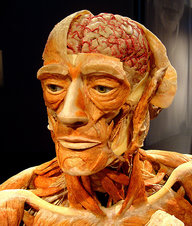
Imagine this coming after you:
ec84645496e837a5e05c0bd330825ad1.jpg
 
Out of curiosity, how is suspended animation attributed to hardware side/physical brain? and not an NDE?

Brain is like computer, it has hardware and software department. The hardware is the physical brain, that includes the lobes, nerves, neurons, blood vessels, brain tissue, brain chemistry, cerebellum, medula oblongata etc. What I said as the software side is the non physical environment. The cognitive abilities that made possible by the physical brain, like emotion, mood, dream, memory, fantasy, intelligent including NDE.

Suspended Animation only involve physical brain, physical organ function and the physical result of the function. Or in other words, physical life. It's pure hardware.
 
Brain is like computer, it has hardware and software department. The hardware is the physical brain, that includes the lobes, nerves, neurons, blood vessels, brain tissue, brain chemistry, cerebellum, medula oblongata etc. What I said as the software side is the non physical environment. The cognitive abilities that made possible by the physical brain, like emotion, mood, dream, memory, fantasy, intelligent including NDE.

Suspended Animation only involve physical brain, physical organ function and the physical result of the function. Or in other words, physical life. It's pure hardware.
True. But suspended animation occurs through/with the help of external means like extreme cold temperatures (hypothermia) etc am i right?
 
True. But suspended animation occurs through/with the help of external means like extreme cold temperatures (hypothermia) etc am i right?

There are two types of suspended animation, temperature induced and chemical induced.

Hypothermia occurs when the core body temperature dropped below the requirement temperature for body functions and metabolism to run, which is 95'F or 35'C, not extreme cold.

Deep Hypothermic Circulatory Arrest (DHCA) is a technique used in cardiac or neurosurgery. It's a very example of low temperature induced suspended animation. This procedure keeps the patient's core temperature at 54-65'F, without breathing, heartbeat or any brain activity up to 1 hour, usually less than 40 minutes. The patient is clinically dead during the procedure.
 
There are two types of suspended animation, temperature induced and chemical induced.

Hypothermia occurs when the core body temperature dropped below the requirement temperature for body functions and metabolism to run, which is 95'F or 35'C, not extreme cold.

Deep Hypothermic Circulatory Arrest (DHCA) is a technique used in cardiac or neurosurgery. It's a very example of low temperature induced suspended animation. This procedure keeps the patient's core temperature at 54-65'F, without breathing, heartbeat or any brain activity up to 1 hour, usually less than 40 minutes. The patient is clinically dead during the procedure.
Now that we know how suspended animation works and how it differs from NDE, explain me this:
  1. Could that 2-yo have been in suspended animation without any medical intervention? If so, how did he regain consciousness at his own strength? Surely if cardiac or neurosurgery procedures were used in his case, the medical team would have been well qualified and knew what they were doing?.
  2. Clinical death would be followed by death if left to its own devices.
  3. What state was the kid in? suspended animation/clinical death/sleeping?
Your assumption that he may not be dead is not corroboratory in any case since you cant base your arguments on a maybe
 
Now that we know how suspended animation works and how it differs from NDE, explain me this:
  1. Could that 2-yo have been in suspended animation without any medical intervention? If so, how did he regain consciousness at his own strength? Surely if cardiac or neurosurgery procedures were used in his case, the medical team would have been well qualified and knew what they were doing?.
  2. Clinical death would be followed by death if left to its own devices.
  3. What state was the kid in? suspended animation/clinical death/sleeping?
We don't know anything about the boy, so we don't have a case. Unless you can provide the detail autopsy report, the boy's medical history, last condition report before we was declared dead. then we may have something to discuss.

Your assumption that he may not be dead is not corroboratory in any case since you cant base your arguments on a maybe

My assumption is base on fact that dead people do not come back.

I said maybe because I wanted to give you something to think about. You came to a conclusion that the event was real out of nowhere, you're so sure that the boy is already dead prior to the event, yet you don't know nothing about it. So who's the one that making baseless assumption here?
 
We don't know anything about the boy, so we don't have a case. Unless you can provide the detail autopsy report, the boy's medical history, last condition report before we was declared dead. then we may have something to discuss.
Unfortunately I cant. According to "facts" the boy was suffering from pneumonia, was admitted in critical condition, and declared dead. This incident is just an example that even science has a difficult time grasping death - malpractice or otherwise, and that all that we studied/practiced/believed we have only scratched the surface.


My assumption is base on fact that dead people do not come back.

I said maybe because I wanted to give you something to think about. You came to a conclusion that the event was real out of nowhere, you're so sure that the boy is already dead prior to the event, yet you don't know nothing about it. So who's the one that making baseless assumption here?
The criterion for the determination of death has always been left to the physicians. A re-investigation was launched after the reports but the results were conclusive that the boy had been admitted to hospital in critical condition and was declared dead after suffering cardiac-respiratory failure. I am not the one saying he's dead - that is all on the doctors and the global media reports.
 
Back
Top